Would you believe I purchased this wonderful album pre-release, on vinyl in July, some two months before it was due for release. I had forgotten my impulse buy until I received an email confirming the record was on its way. Wamono A-Z Vol. I consists of a collection of Japanese funk fusion tunes compiled masterfully by DJ Yoshizawa Dynamite & Chintam. Yoshizawa is a renowned remixer compiler and producer. His career spans over three decades. DJ Chintam worked as a record buyer before opening his Blow Up shop in Tokyo’s Shibuya district in 2018. He is. specialist of soul, funk and rare grooves. Together, they wrote the Wamono A-Z record guide in 2015, which sold out instantly. This record focusses on rare funk fusion tunes between 1968 and 1980. It is not available on digital format which makes it all the more special to me.
A1 –Toshiko Yonekawa – Sōran Bushi
A2 –Takeo Yamashita – A Touch Of Japanese Tone
A3 –Tadaaki Misago & Tokyo Cuban Boys – Jongara Reggae
A4 –Chikara Ueda & The Power Station – Cloudy
A5 –Chumei Watanabe – Downtown Blues
B1 –Kifu Mitsuhashi – Hanagasa Ondo
B2 –Monica Lassen & The Sounds – Incitation
B3 –Norio Maeda, Jiro Inagaki & The All-Stars – Go Go A Go Go
B4 –Akira Ishikawa & Count Buffalo & The Jazz Rock Band – The Sidewinder
B5 –Masahiko Sato*, Jiro Inagaki & Big Soul Media – Sniper’s Snooze
Wamono means Japanese made or in the Japanese style. If you have ever been within a one mile radius of me, you will be keenly aware that I have visited Japan. Alas I did not have the time or desire then to explore Japanese music in any depth. So I was most pleased, years later, to find this album advertised on BandCamp quite by chance. Sadly I cannot embed any videos of this vinyl so you will have to take my word for it.
In light of the above, I shall condense this review to three standout tracks for me, the first being the opening number. With a genre as rare as obscure Japanese funk fusion, it stands to reason they should open with a showstopper. Soran Bushi is an amazing opener, beginning as an almost generic funk piece before being turbo charged by wonderful shamisen playing. The shamisen is a three stringed Japanese guitar. For reference, please see the video below. Overall the track is a terrific fresh take on the funk genre and took me completely by surprise.
My second highlight is also on side one of the record but is the last track. Downtown Blues promotes another traditional instrument, the fue or shinobue flute. This is a flute which emits a high pitched sound, integral to noh and kabuki theatre music. Please find a lovely performance below. The track itself is a beautifully structured, engaging and energetic funk fusion piece, which, once again, totally took me by surprise.
Hanagasa Ondo deserves a special mention. This track features a vibraphone which I came to love listening to early Lionel Hampton records when I was younger. This combined with the fue and outstanding drumming and a terrific groove, then catapulted by electric guitar make for a truly spectacular track. One is severely tempted to stand up and boogie. Also, by some miracle, I have managed to find a youtube video of the second track on side two, which is really outstanding. Please see it embedded below. This was the fifth track on the 1970 Japan release only album Woman! by Monica Lassen and the Sounds and was designed to be a study of female behaviour. To this end, I would ask you to ignore the vulgar sounds in the middle of the track and focus on the excellent groovy sound! This track is demonstrative of the overall excellence of this compilation.
Sidewinder is my final highlight of this album. I should like to say each track is uniquely joyous in it’s own way and really very cool. The sidewinder is a track I have been familiar with for some time. This reimagined Japanese funk fusion version by Akira Ishikawa & Count Buffalo & The Jazz Rock Band somehow manages to enhance an already excellent tune. The Sidewinder was originally a 10 1/2 minute whopping track by Lee Morgan, Jazz trumpeter, on the excellent 1964 album by the same name. This version is just excellent, lively, driven and funky.
Ultimately, this compilation is a whirlwind album which took me to all sorts of places, many of them new. I would ask you to buy it but I do not make a penny from this blog so I shall let you make the decision for yourselves. I for one have been bowled over by the originality and newness of this album. This will certainly be prime listening at my next dinner party, whenever that may be…
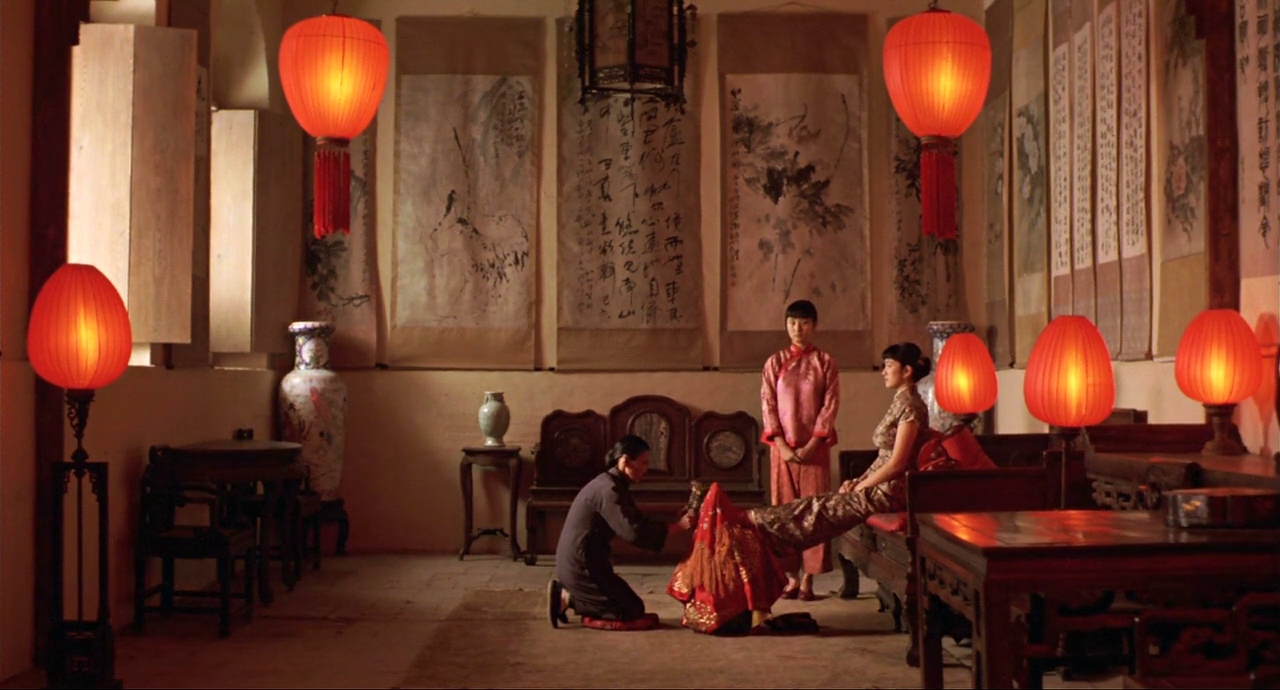
Raise the Red Lantern tells the story of a young university dropout who marries an ageing clan elder with multiple wives. The red lanterns are raised outside the home of the wife with whom the master chooses to spend his night. It becomes clear early on that the wife whose home the Master chooses most frequently controls the household. This unquestionable masterpiece was filmed by Zhang Yimou and completes his Confucian trilogy which opened with Red Sorghum and Ju Dou. All three of these films starred Gong Li who was propelled to superstardom. She is considered one of the most successful actresses in China today. Raise the Red Lantern is an unquestionable masterpiece and I shall now elaborate on, as Fry & Laurie put it ‘the whyness’.
No film had a more startling effect in the west than Yimou’s Raise the Red Lantern, which rushed Gong Li, a star after Red Sorghum and Ju Dou, into the superstar league. Li plays a student in northern China in the 20s who agrees to become the fourth wife of an ageing clan leader. Only 19, she finds herself confined to the old man’s palatial complex, where his other wives conspire with courtiers and intrigue is permanently in the air. Derek Malcolm
I am working my way through Derek Malcolm’s Top 100 Movies. I decided quite by chance to watch the oldest one on the list. Malcolm describes this film as “a marvellously structured, richly imagined and well-acted piece of work, with a central performance that holds the attention throughout.”. For me, this is spot on, though I would add that each of the performances were immaculate. Saifei He as Meishan (Third Wife) blew me away consistently, especially during her two or three opera performances. Cuifen Cao as Zhuoyan (Second Wife) was wonderful as the conniving outwardly friendly yet power hungry player. I was especially moved also by Lin Kong as Yan’er, robbed of place as Fourth Mistress by Songlian. Their enemy status confirmed early in the film, they would ultimately be each other’s demise.
Moreover, by filming mostly in long shot in lingering deep-focus takes, Zhang sought to suggest the isolation of the Chinese authorities and their entrenched positions regarding reform, while the consistent use of delimiting framing devices reinforced the overall sense of repression. However, this was also very much a film about both the historical and contemporary status of Chinese women. For all the delicate artistry of the décor and visuals, this is an uncompromising study of the part that women play in their own subjugation within a society that denigrates them from birth. Empire
In addition to a stellar cast, the location was absolutely stunning. The picture was filmed in the Qiao Family Compound. The tourist map is included below just to give you a scale of the thing. Throughout the film we get to see a lot of the compound, my favourite moment in the film being up above (near the Climate and Season part of the below map) where Gong Li hears the Young Master (her stepson) playing flute. There is a wonderful shot when they are parting where they turn around from outside both entrances and stare back at each other through the building.
This is a tale of power and the lengths to which people are willing to stoop to obtain it. It is told beautifully, and colourfully. The shots are long and do indeed exacerbate the loneliness of the principal characters in view of the enormity of the sacrifice they are making. The cinematography is outstanding, the music is wonderful and the moral is unclear. This is a monumental film which exhibits a wide panoply of human emotion. I encourage you to read Derek Malcolm’s review of this, which does it true justice. There is a reason why it appeared in 36 polls of most important films of the 1990s!
This wonderful offering by Thomas Eakins (1844-1916), a Philadelphian artist, depicts the events of a famed rowing race on the Schuylkill River in May 1872. Eakins was an important American painter, photographer, sculptor, and fine arts educator. H graduated from the Pennsylvania Academy of Fine Art in 1866. He is said to have carried American Realism to its height. The Gross Clinic (1875) is considered one of the most importance pieces of American art. But today, we shall focus on The Biglin Brothers, featured below.
Thomas Eakins was at the forefront of Realist painters who shifted the focus of American art from landscape to the figural subjects favoured by the European academies in the 19th century. Working in oil, watercolour, sculpture and photography, Eakins is renowned for his pictures of outdoor activities and portraits of intense, brooding figures—many of whom were his friends and acquaintances—pictured in darkened interiors. Influenced by the motion studies of Eadweard Muybridge [(1830-1904)], Eakins was fascinated by the male physique, often unabashedly photographing his models in full nudity while boxing or wrestling. Artsy
For me this is a triumph in composition. The way motion is depicted is just superb. Observe the way the rowers’ arms are locked and the clarity with which their hands gripping the oars is depicted. This is even correct down to the thumb detail on the first rower’s right hand. Following on from the earlier point of Eakins being inspired by Eadweard Muybridge’s motion studies; look at the four different sets of rowers shown in this picture, all at different stages of motion. We can draw a direct parallel here with Muybridge’s motion studies, one of which is included below. I have chosen the camel in motion because the others are mostly nude and this post will be going up before watershed.
Another aspect of this which I think is executed very well is the reflection in the water. It cannot be overstated that it is very difficult to depict water. The detailed split reflection in the foreground of the painting helps us to focus on the rowers in the foreground. In addition, the luminosity of this piece is excellent. Eakins has portrayed the two rowers with light coming from their right and created a sort of spot light for them, while also allowing shadows of the other rowers to be cast in the water in less detail.
Finally, I love the addition of the blue flag matching their hats and the steamboat in the right hand corner of the painting. Seen together as a whole, the elements of this painting meld to make a delightful picture of a day at the races in Philadelphia.
Eadweard Muybridge – A Camel in Motion
I shall endeavour to investigate Eakins’ work with added zeal and may well take on the task of reviewing his masterpiece. But for now, I hope you have enjoyed this small tribute to a magnificent painting.
Camille Pissarro (1830-1903) was a key figure in the impressionist and post impressionist movement. His works were key in the progression of both. He counted amount his great friends and colleagues Claude Monet and Edgar Degas. He preferred to work in the outside, capturing gorgeous moments like the one below. An interesting fact about Pissarro is that he married his mother’s maid and had eight children with her.
The painter Camille Pissarro was the most artistically innovative and socially concerned, most revered, and eldest of the famed and courageous group of French painters known as the Impressionists and Post-Impressionists, and the only Jew among them. Mentor, friend, enthusiast, perhaps their leader, he was a major figure in this French art world. At his memorial in 1904 Octave Mirbeau proclaimed, “Camille Pissarro was one of the greatest painters of this century, and of all centuries.” WideWalls
Late Afternoon in our Meadow is an excellent example of Pointillism. Pointillism is a technique of neo-impressionist painting using tiny dots of various pure colours, which become blended in the viewer’s eye. Seurat developed this art form most and we will discuss one of his pieces in a short while. I saw one of Pissarro’s Pointillist pieces in Birmingham Museum and Art Gallery. The Pont Boieldieu, Rouen, Sunset was a sensational piece and I look forward to when the gallery opens again. The great thing about Pointillism is that the further away you are from the painting, the clearer it becomes. The closer you get the more vivid the colours become. It’s a win win.
I was drawn to Late Afternoon in our Meadow because of the rich purple in the centre. I was then taken by the way Pissarro has succeeded in bringing to life so may elements in this meadow, from the woman in white to the young trees in the foreground, extending to the single cypress tree in the background. I think it is a lovely painting and a lovely example of pointillism.
The Channel of Gravelines, Petit Fort Philippe, George Seurat 1890
This for me is the high mark of Pointillism. Seurat has depicted a beautiful scene at the Petit Fort Phillipe. The boats are just gorgeous, the variety of boats depicted is lovely. The shadows depicted by the walls are masterly. The scope of the painting and the depth is also impressive. I like the way the whole painting is framed by slightly darker pigment dots around the borders is great. There is a sense of refinement and beautiful luminosity in this painting. I especially like the reflection of the lighthouse in the water.
His systematic application of dots in colours carefully chosen according to laws of chromatic harmony results in unparalleled luminosity. Seurat painted a narrow border of darker dots around the edge of the canvas, heightening the brilliance of the light. Indianapolis Museum of Art Collections Handbook.
Palais Ducale, Monet (The Doge’s Palace) 1908
Moving from Pointillism, I wanted to highlight a Monet piece, following in the Impressionist theme, the Palais Ducale. This piece came to my attention following a piece in Art Newspaper. I was spellbound by it. The way that the palace is reflected on the water. The crude visible brushstrokes depicting so much motion and so many intricate details on the palace itself without the need for absolute precision is masterly to me. One even gets a glimpse of the well to do people wandering the corridor beneath the arches middle of the painting. This is so wonderful to me I felt I should share it with you.
I hope you have enjoyed these three Impressionist masters as much as I have. Until next we meet…
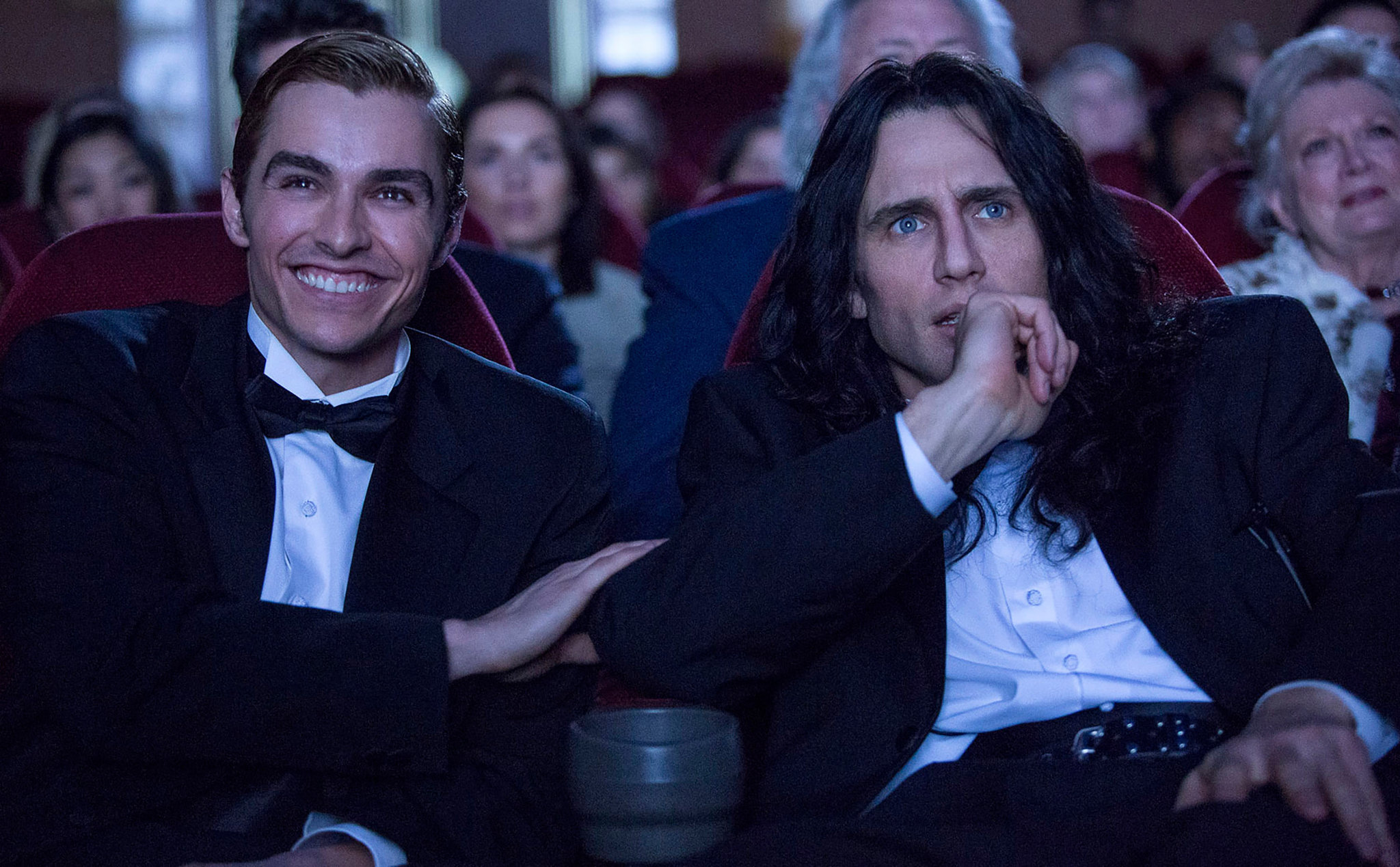
There are two distinct period in my life: Before The Room and After The Room. Widely considered the worst film of all time, The Room is a piece of cinematic history. I believe it is a masterpiece, not one of exquisite taste, plot or cinematography, but one of commerciality. Wiseau, who directed, produced, and starred in The Room set out to make a hard hitting picture of betrayal and its effects on the human psyche but ended up making something so dire that it was brilliant. This now consistently sells out midnight screenings all over the world and provides the lion’s share of both Wiseau and Sestero’s incomes. The Disaster artist is an excellent exploration of Greg Sestero’s ((“oh hi”)Mark in The Room) book of the same name. James Franco directed and starred alongside his brother, Dave Franco and his wife Alison Brie (Community, Mad Men, Glow).
The Room is a bad movie. No question. Whether or not it is officially The Worst Movie Of All Time is a matter of taste (countless films, from Sex Lives Of The Potato Men to Superman IV, could easily jostle for that crown of thorns), but cult status and midnight screenings have turned it into something else entirely: a latter-day Plan 9 From Outer Space, an icon of so-bad-it’s-good cinema, reaching beyond its meagre ambitions to become a timeless slice of outsider art. The question at its heart: how could a film so oddly incompetent ever exist in completed form? Empire
The Disaster Artist answers this question. It tells the story of how Sestero and Wiseau met at an acting class and became fast friends, ultimately facing mass rejection after moving to Los Angeles and getting the idea of making their own film. This is where the Room begins. One of my favourite scenes in the film is when Wiseau hands Sestero a script of The Room in a diner, Sestero’s expression goes from excited to frightened when Tommy asks him to read the entire script there and then!
Franco allows himself the occasional snark, mostly through Sandy Schklair, the weary script supervisor played by Seth Rogen, hat-tipping the irony that the original film is usually viewed through. But elsewhere, it’s a surprisingly serious ode to the Quixotic chase of the Hollywood dream. It’s like La La Land for losers, where following your dream leads to failure and ridicule instead of romance and success. Empire
The film’s making is unusually excessive. Wiseau spent some $6million on the production, choosing to purchase filming equipment instead of renting it, construct a set of a back alley identical to one directly outside the studio and hiring a full crew for the film’s production. The filming took place over 58 days and The Disaster Artist makes us privy to the beautifully incremental tension which builds between the two main protagonists during those days.
Ultimately, The Disaster Artist culminates in a screening of The Room, initially taken seriously but quickly succumbing to the unintended comedy (for example Lisa’s mother getting breast cancer “I got the results of the test back. I definitely have breast cancer.” – never to be mentioned again in the rest of the film). This comedic take on Wiseau’s work sustains it to this day and makes it the legend of B movie excellence that it is.
Overall, this is a moving tribute to one of the best worst films of all time. I cannot recommend this enough.