The time has come again for Almost Album of the month, a collation of the albums which have marked me this year but for a number of reasons could not hold the title of album of the month. See below 6 albums (as I no longer have enough time to write 12 like last year) which I consider to be uniquely splendid.
Headspace – Levitation Room 2019
The above was my most played track of 2020 and it is not difficult to see why. This album is one which I played over and over and over throughout the year. It is wonderfully inventive, cohesive and offers a very strong sound. This is the height of ‘nondescript modern’ pop.
Marillion – Clutching at Straws 1987
Marillion are a powerhouse British punk/progressive rock band to which my father introduced me while I went to France in the summer, in between quarantines. You will be aware that Misplaced Childhood was album of the month in July and with good reason. I could have chosen any of Marillion’s other albums with Fish as lead singer as well as FEAR with the new singer Steve Hogarth. Fugazi, Script For a Jester’s Tear, or FEAR could have been chosen but I listened to Clutching at Straws most. It is a masterpiece. Please do listen to it.
Steve Harley – Timeless Flight 1976
This album is one which would fit into the album of the year category. I have not in my possession words to describe the masterful work of beauty that is Timeless Flight. It is only not album of the year because the album I have picked this year shook my musical foundations and I have been listening to Timeless Flight since I was 14 and got my first record player. Nothing is Sacred is one of the most beautiful songs I have ever heard.
Nina Hagen – NunSexMonkRock 1982
This marvellous 1982 offering is a splendid and oftentimes confusing album can be categorised as psycho-germanic experimental pop. Rolling Stone called it the “most unlistenable” album ever made, while others praised its experimental nature and Hagen’s theatrical vocals. If you can get past the gauche title, I highly recommend this album which has brought me much joy over the last year.
UB40 Live – 1983
UB40 Live is another excellent example of Birmingham brilliance in pop. This album sees the Brummy band perform songs from its first three studio albums, Signing Off, Present Arms and UB44. I am a fan of UB40 so this album really appeals to me. Nick, Louise and I tried to visit their bar, The Garden Lounge in Zadar, Croatia (in the Before Time) but it was closed at the time. Watch out for tracks such as One In Ten, Folitician, Tyler and the mega Sardonicus, which gives me goosebumps still.
Telekon Live – 2008
2020 was the year of the live album for me. Peter Gabriel’s Plays Live being the crowning jewel of live albums. I have also enjoyed The Allman Brothers’ At Fillmore East, B.B. King’s Live in Cook County Jail, Peter Framton Comes Alive (wonderful), Kiss! Alive, Sparks Live at the Record Plant 1974 (mega for Sparks fans) and recently both of Thomas Dolby’s live albums. But none have knocked me over quite so conclusively as Telekon Live. I am a huge fan of Gary Numan and must have about ten of his records on vinyl. This album was released in 2008 by Mortal Records and is a recording of Numan’s 9 December 2006 Telekon concert at the London Forum, 26 years after it was first released. Critics have argued that Numan himself is the only weak link in the album and I am minded to agree. However, together, it is a wonderful contribution to the musical gene pool, as it were. The last track in particular blows me away every time.
Overall these are a few of the albums which have made my year more bearable. I hope they bring you some joy also.
George A. Romero will be remembered in cinematic circles for inventing the zombie horror genre. Night of the Living Dead is and remains the inspiration for the slew of zombie related horrors which follow. It is not without its unique issues, but these are more a product of the time in which it was produced, than serious indictments of the character of the film. The plot is thus: Barbara and her brother Johnny are laying flowers at their parents’ grave when suddenly a lone zombie comes up and attacks them. This spawned the iconic line “They’re coming for you Barbra” which I have included in the clip below.
Barbra escapes to a nearby farm house where she finds herself locked in with Ben, Harry and Helen Cooper, their sick daughter Karen and Tom and Judy, a couple. Will they escape intact?
Duane Jones … Ben
Judith O’Dea … Barbra
Karl Hardman … Harry Cooper
Marilyn Eastman … Helen Cooper
Keith Wayne … Tom
Judith Ridley … Judy
Kyra Schon … Karen Cooper / Corpse in House
As with all seminal horror films, we have become desensitised to the comparatively demure techniques used to evoke terror. However, it must be recognised that this was the first zombie movie and as such would have terrified audiences then. M and I wondered what it would be like for us to travel back in time and show the same audience The Conjuring. I suspect they would not have slept for many weeks. Romero established the core facets of zombification in this movie, that is to say the resurrection of the bodies from graves, eating the flesh of their victims, needing to shoot the zombie in the head to kill the brain and thus neutralise the threat. These all came from this film and can be seen featured invariably in the zombie horrors which followed.
An independent film shot in grainy black-and-white on a shoestring budget, Romero delivered a stark and subversive horror that established the most important facets of zombie lore (bodies returning from the grave, destroying the brain to kill them for good) and proved the director as a filmmaker adept at genre-infused social commentary. As Ben, Barbra and more hide away from the rising corpses in a rural farmhouse, Romero reflects ideas of racism in the USA, the ongoing trauma of the Vietnam War, and the American public facing up to the realisation that their greatest enemy might actually be themselves. Empire
I was somewhat concerned at the portrayal of Barbra as an incapable, panic stricken mess throughout the film. I suppose this is again a product of the time of the film. I was impressed by the consistent drama between the guests of the house, namely Ben and Mr Cooper (the latter of which obsessively insisting that everyone would be safer in the basement of the house – they were not). This drama and the tendency for Ben to be correct more often in his strategic thinking leant itself to some stellar drama and dialogue.
Overall, without spoiling any of the surprises of this film, I must admit it ended exactly how I suspected it would. I am deeply impressed by this movie and encourage you to watch it to gain an understanding of all the zombie films which followed. Please see below a more modern trailer for The Night of the Living Dead.
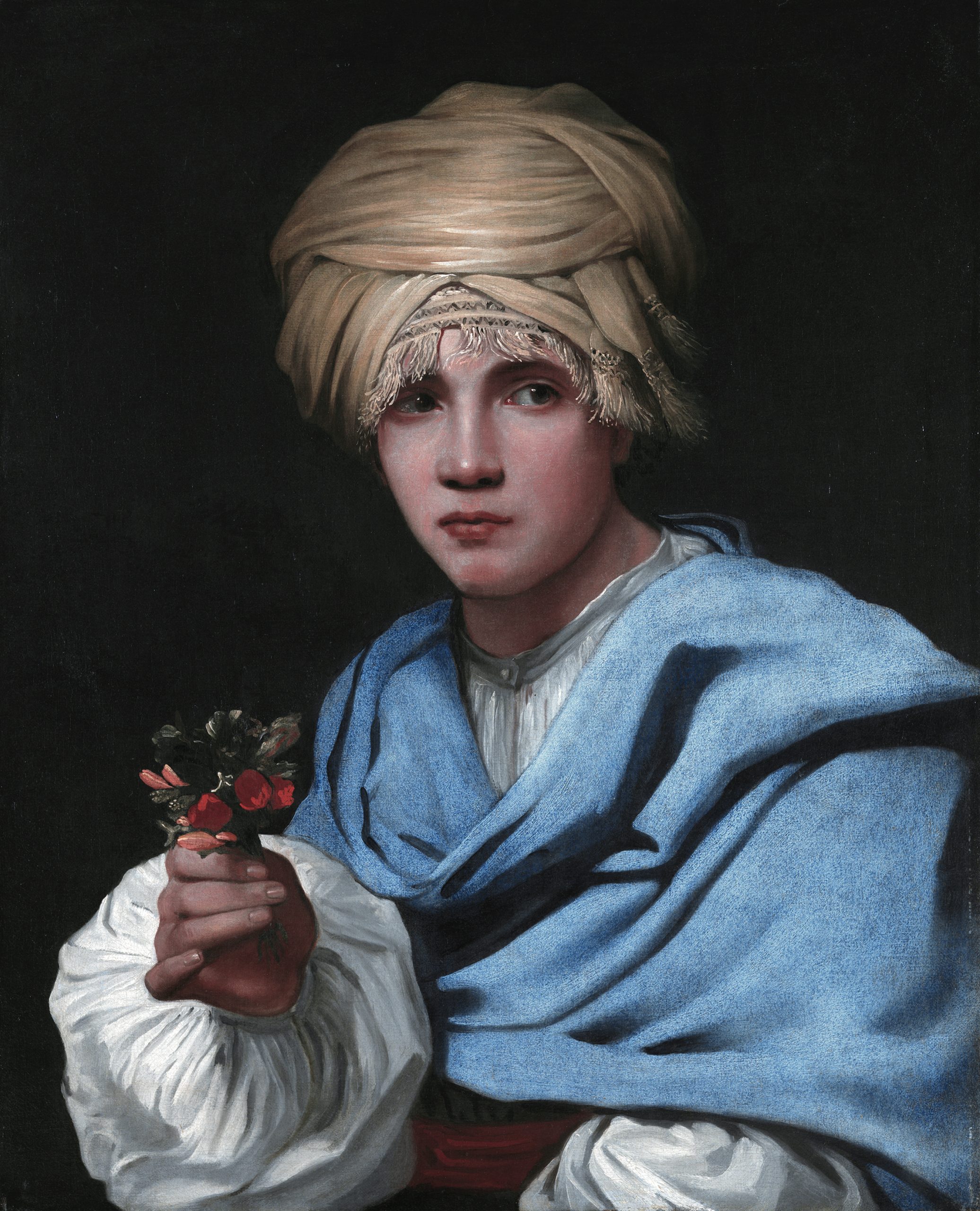
Housed at the extraordinary Museo Nacional Thyssen-Bornemisza, Madrid, Boy in a Turban Holding a Nosegay is a masterpiece by Michael Sweerts (1618-1664). Sweerts was a Flemish painter most recognised for his allegorical and genre paintings as well as portraits and tronies (common type, or group of types, of works common in Dutch Golden Age painting and Flemish Baroque painting that show an exaggerated facial expression or a stock character in costume.) Sweerts was rather a busy painter, having worked in Rome, Brussels, Amsterdam, Persia and India (Goa). It may interest the reader to know I have been to all of these places except Persia, but the night is young. Equally I did go to Bruges rather than Brussels in the Before Time but these are small details.
Boy in a Turban holding a Nosegay has been associated with the group of paintings that Sweerts executed at the end of his Amsterdam period. The subject of the present painting and the sex of the figure have been the focus of debate and have given rise to different interpretations. The gentle, delicate features and the turban hiding the hair make it difficult to define the subject precisely, and the canvas was previously entitled Figure in a Turban. It was only in 1958, when the painting was included in an exhibition on Sweerts in Rotterdam, that the sitter was described as a boy, a reading that has been maintained in the present day.
The fact that the boy is holding a nosegay has led to the suggestion that this is a representation of the sense of Smell. Sweerts executed two, now dispersed, series on the Five Senses. In one series, which uses a similar format to the present painting, five male figures in exotic dress hold objects and animals related to the senses. Museo Thysen
When I was last in Madrid I did not take the opportunity to visit this museum preferring instead to go to the Prado and the Royal Palace where I saw a miniature version of my favourite sculpture in the world, which can be found in the Cappella Sansevero in Naples. See the miniature below, which I first beheld in the Carlos III. Majestad y Ornatos exhibition.
But I digress, see below the painting which is the subject of this post:
This for me is absolutely astounding work. The clarity of the skin is lovely, the light falling on the turban is particularly gorgeous. If you look at the eyes you can see them watering slightly. The strands of the patterned undergarment of the turban is exceptionally well done.
The highlight of this painting for me is the nail depiction. The flowers in the nose gay are a little crude in comparison to this. But with the overall impression this has left on me I can forgive Mr Sweerts. The nails are just immaculate. The colour is perfect, the shape is perfect, the sheen is extraordinary. And the shade from the nose gay onto the hands is a particularly fine detail.
Why have I chosen this as my birthday post, I hear you ask? Well this painting has given me a reason to reminisce about the wonderful time I spend in Madrid and made me consider a future trip with M. Equally it is undeniably a masterly work of supreme skill from my preferred period in art. I cannot but appreciate the overall excellence of this painting. In short, it has made me rather happy. And being rather happy is all I want on this most special milestone in my headlong journey towards the grave.
I’ll begin with something I dislike in food recipe posts. For reasons unknown to me, bloggers seem to make every effort to write 90% of the post about the origins or main consumers of the beverage or meal without telling you how it is made or which ingredients you need! the guide itself is almost an afterthought. Not on Cedric Suggests! I shall keep inane and irrelevant descriptions to one paragraph. Karak Chai is made with black loose tea leaves, crushed cardamom, saffron and sugar and evaporated milk. It is possible to use cardamon flavoured evaporated milk but I do not believe such a luxury to be available in the Tesco Metro near me.
Its origins lie in South Asia, and though this flavourful and milky tea is part of the Qatari tradition today, it actually comes from Indian and Pakistani households were this Karak is a part of their everyday lives and is known mostly as ‘Masala Chai’, roughly translated as tea with spices, or ‘Karak Chai’, roughly translated as strong tea with the word ‘Chai’ coming from the Chinese word for tea ‘Cha’.
It’s believed that when the workers came down to Qatar from India and Pakistan in the 1950s – 1960s to take part in building the country’s infrastructure around the time when oil had just been discovered, they found it hard to leave their love of this sweet milky tea behind and bought the recipe with them to Qatar to remind them of home. I Love Qatar
Ingredients – makes 2 cups of tea
2 cups water (475 ml)
3 teaspoons of loose leaf black tea (three teabags are also effective)
1.3 cups evaporated milk (300ml)
2 teaspoons of sugar (sweeteners also an option)
4-5 cardamon pods crushed
1 small piece of cinnamon
3-4 strands saffron (optional)
Recipe
Boil the water and pour it into a saucepan
Add the cardamom pods, cinnamon, and tea. I put these in my tea infuser to minimise mess.
Bring it to boil, with the tea infuser, then once the water is boiled add milk and sugar.
Let the mixture come to boil again
Set a timer for 4 minutes. Once the mixture is boiling it will boil over so remove it from the heat when it does. Once it has calmed down put it back on the heat. Repeat this for the duration of the 4 minutes.
Once you see the tea has a dark caramel colour, turn off the heat.
Pour the tea into a mug and enjoy!
Apologies for the wretched weather in the above photograph. I was surprised at how sweet this recipe was so would advise using less sweet black loose leaf tea to begin with and evaporated milk instead of condensed milk. Then you can add the sugar to regulate it to your liking. Overall, this is a sterling winter beverage and I believe this one is superior to the one at Damascena!
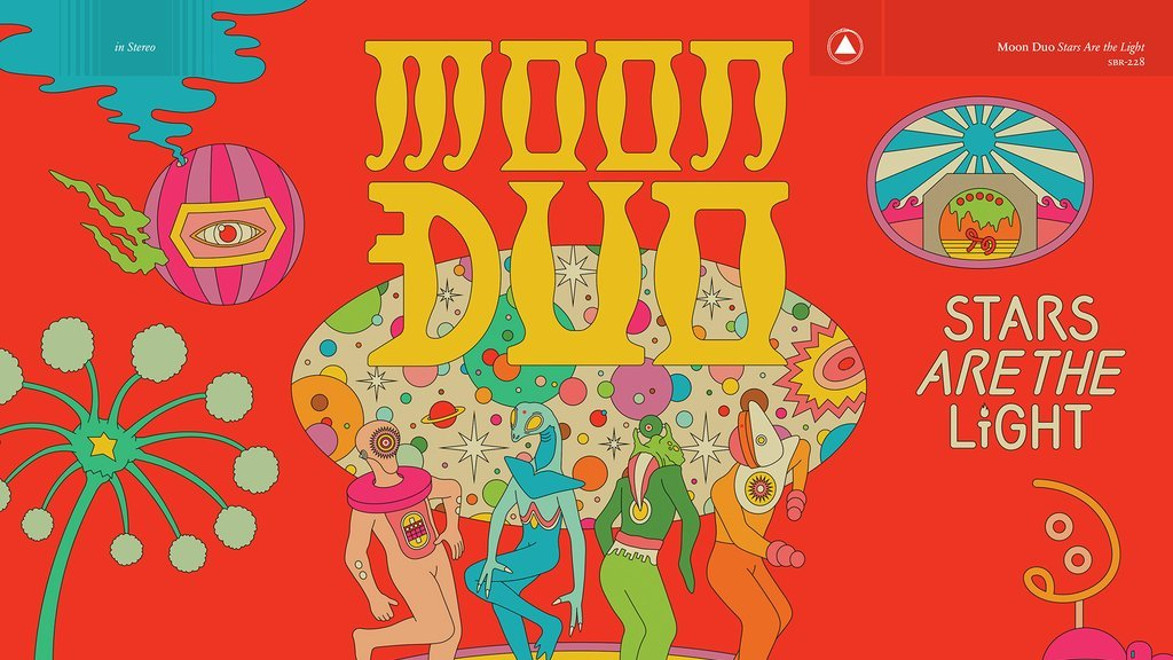
Moon Duo is a group formed in 2009 and comprises of San Francisco-based guitarist Ripley Johnson (Wooden Shjips) and keyboardist Sanae Yamada. The result of this fortuitous combination is a heady mix of swirling psychedelic space rock. Interestingly Moon Duo’s members are married. Perhaps this chemistry is what makes the sound so rich and consistent.
This post is in part a gift to my father on his birthday. I won’t tell you how old he is as this would breach parent doctor confidentiality. So thank you father, for introducing me to this wonderful album. I trust this review is to your standards. And happy birthday.
While Stars Are the Light is completely different than other Moon Duo albums, it is by no means a disappointment. It is a very groovy record, full of disco and funk beats. It was also brought to life with the help of Sonic Boom, a former member of Spaceman 3, who has also worked with Beach House. Any fan of Moon Duo or psych-rock will not be let down by Stars Are the Light. Glide
Moon Duo is split into eight tracks. The first of which is Flying. The bossanova beats and funky grooves throughout mark the opening track as quite singular in the Moon Duo cannon. Its driving bass marks the generally impressive consistency of all the tracks in this album.
The titular track follows which, for me, demonstrates the lighter more airy side of Moon Duo without compromising on the integrity or quality of the central sound. The sound is refined, positive and consuming. It envelops the listener, in part thanks to the wonderful synth stylings of Yamada.
By using splashes of guitar as punctuation points, synth work is pushed to the forefront, this works wonders on “The World And The Sun” which takes a funky but meandering electronic track which goes nowhere, albeit pleasantly until washes of atmospheric synth work elevates the track into glorious synthesised euphoria. Even better, “Lost Heads” has the duo’s vocals intertwining sweetly over the monotonous structure of electronica and nagging keyboard riffs, the otherworldy nature is akin to being awake in a dream. The Line of Best Fit
Eternal Shore is delightful and upbeat. The guitar work, as seen in Wooden Shjips, is wonderful and complex. Once again the drive in this track is consistent with the rest of those in this album.
Finally, Fever Night is a suitably grand ending to this album. It encapsulates the enveloping sound of Moon Duo and is a track very much in line with the musical aesthetic of the band.
My final three reflections on this album are as follows:
Stars Are the Light provides a precise, enveloping synth sound
Moon Duo have provided a wonderfully idiosyncratic album
This album is a big concept with excellent execution
Overall I remain impressed by this album and listen to it often, especially when I have to concentrate on complex legal texts. I hope you do too, though I hope you do not have to be subject to legal analysis while listening to any music.