Kraftwerk is a German band formed in Düsseldorf in 1970 by Ralf Hütter and Florian Schneider, who both produced Techno Pop with Karl Bartos in 1986. Techno Pop was Kraftwerk’s 9th studio album. Originally released as Electric Cafe, Techno Pop is the original working title of this album, re-released in 2009. Techno Pop was my album of November and December 2020 but required its own separate post to highlight just how enjoyable it is. This is the album which has seen me at my most productive. My usual revision album would be Tour De France by Kraftwerk while I was in school, however, this has now been superseded and with good reason. The only difference in the 2009 re-issue is that there is an additional track, House Phone, previously released as the B-Side of “The Telephone Call” or “Der Telefon-Anruf” 12-inch single in 1987.
This was the first album Kraftwerk released in the three years since Tour De France. The possible reason for this is below. Listening to this now without the pressure of the years of waiting Most of the album was recorded using the same instrument as Tour De France, an Emu-Emulator, which is a digital sampling synthesizers using floppy disk storage, if you can believe it. This is pictured below. As you’ll be aware I am a big fan of synth of all descriptions so this was a great discovery. From the opening notes of the first track, above, you can see this wonderful instrument at work.
When Electric Cafe was reissued on CD in 2004 with the name Techno Pop it put an end to such speculations and confirmed the sorry truth: Techno Pop had been recorded and slated for release in 1983, but a crisis of confidence – as well as a serious cycling injury sustained by Ralf Hütter – had seen its release postponed. After the album had been mixed in New York none of the band was happy with it, and the decision was taken to scrap it and start again. The change of name to Electric Cafe was presumably born of embarrassment that even as fastidious a group as Kraftwerk had taken the best part of five years to produce 35 minutes of music. And not very good music at that. Or so went the critical judgement of the time as far as the last point is concerned. Drowned In Sound
The first three tracks on this album are variations on the same theme, described as a masterpiece of “monomaniacal rhythmical development” by Drowned In Sound. Transitions between tracks are sublime and barely noticeable. The final part of the second track is a superb low end synth line which moves beneath synthesised marimba and xylophone patterns quite deftly. The band continue with the intensity of the end of track 2 into Musique Non Stop. This was a sparse rhythm track which is impressive seen alone but uniquely so seen as part of the album as a whole.
The final four tracks always fly by for me. House Phone was added to the re-release for reasons I am not fully clear on. The Telephone Call is a wonderful track and is the only Kraftwerk song which features Bartos as lead vocalist. This track on the Kraftwerk live album Minimum Maximum is one of my favourites on that album. Sex Object is a bit more divisive and certainly not what one would expect given the previous Kraftwerk Catalogue.
If techno, according to Derrick May’s famous definition, was the sound of Kraftwerk and George Clinton trapped in an elevator with nothing but a sequencer to occupy them, then ‘Sex Object’ is what happened when Clinton got swapped out for Mark King. Drowned In Sound
Ending with Electric Cafe, a sort of Franco Germanic techno meld, the album always leaves me feeling satisfied. It is balanced, has some wicked and novel synth work, and is a remarkably fully realised vision. It spurns me on and has been at my side through some of my best work. I cannot recommend it highly enough.
Rest in peace Florian Schneider-Esleben (7 April 1947 – 21 April 2020), immortal of pop.
I am often skeptical when Pater suggests films to me but my spidey senses were tingling with this title. Once again they did not let me down. All credit to Pater on this one, mind. An excellent find. Ready or Not tells the odd story of Grace, an orphan who marries into the wealthy Le Domas family. On her wedding night to Alex, she is made to play a game, as is family tradition, without realising the horror that was to come.
Samara Weaving … Grace
Adam Brody … Daniel
Mark O’Brien … Alex
Henry Czerny … Tony
Andie MacDowell … Becky
Nicky Guadagni … Aunt Helene
Prepare yourself for 90 minutes of brilliantly realised thrilling horror. Ready or Not was filmed at various locations around Toronto, including Casa Loma, Sunnybrook Park and the Claireville Conservation Area, as well as the Parkwood Estate in Oshawa, Ontario. Somehow they managed to complete filming in 26 days, which does not at all show in the quality of the finished product.
The set-up is delicious in its absurdity. Grace (Weaving), an orphan brought up in foster homes, is marrying Alex (O’Brien) and into the wealthy Le Domas family, whose fortune has been made in board games. On her wedding night she has to take part in a bizarre ritual: every time someone new joins the family, they partake in a midnight game mechanically selected from a scary antique box. If not thrilled by the prospect, Grace plays along when the card selected is ‘hide and seek’. What she doesn’t realise is that she is now the prey for the rest of the family to hunt and kill by sunrise or they will all perish. Empire
Stellar acting on the part of Weaving, Czerny and MacDowell, together with Jutkiewicz’s restless camera and Tyler’s wonderful score drive the film forward without impacting the gothic soul of the film. I had all but written off Weaving after seeing The Babysitter and Killer Queen but she was on spectacular form here. Running from a cabal of related maniacs in a ruined wedding dress escaping her attackers was a constant thrill. Ready or Not even destroyed the getaway car trope in horror films. I shall leave you to find out what I mean by this while watching the film.
Within the mêlée, Gillett and Bettinelli-Olpin allow just enough time to sketch the personalities and dynamics of the crazy clan: frenzied patriarch (Czerny), a stern matriarch (MacDowell), a good-hearted son (Brody), a poisonous aunt (Nicky Guadagni), an ineffectual brother (Kristian Bruun) and a hilarious coked-up sister (Melanie Scrofano) Empire
Overall, this is an excellent high paced horror thriller with some top class acting and a plot to die for.
Vaccines are an integral part of ensuring immunity against diseases that have wrought havoc on human populations prior to today. Some of the most famous vaccines include Smallpox, MMR (Mumps, Measles, and Rubella), HPV (Human Papilloma Virus), and polio. Typically vaccines contain an inactive or weakened form of the pathogen (disease-causing agent), allowing us to develop an immunity to the disease with minimal side-effects and symptoms. The COVID-19 (SARS-CoV-19) Pfizer vaccine differs, in that it is an mRNA vaccine, more on that later. This will attempt to provide a brief explanation of how the vaccine was developed so fast, what it contains and how it induces immunity.
How was it made so fast?
Many people are alarmed by the speed at which the COVID-19 vaccine was developed. However, this needn’t be a point of worry. COVID-19 research has perhaps been one of the most well-funded area within medical research, of our time (Ball, 2020). This is due to both private and public funds being donated to stop the spread of the virus which has robbed us, for the most part, of our freedom. As a result, the speed at which research could be conducted increased, due to funds to afford laboratory reagents. It is important to note also, that clinical trials could be conducted on a mass scale with the huge uptake of volunteers. Therefore, the combination of funding and uptake of volunteers decreased the time it would have taken to develop the vaccine. In America, at the 1 million vaccination point only 3 have demonstrated an allergic reaction, so this shouldn’t be seen as a threat. Furthermore, there are guidelines in place to prevent and treat anaphylaxis (severe allergic reactions), should it occur (Cdc.gov, 2020).
What is in it?
Sometimes, the ingredients of vaccines are more intimidating when left as is. Minimal explaination can dispel anxiety regarding the contents of a vaccine. The ingredients disclosed on the FDA website (Fda.gov, 2020) are as follows:
mRNA – message to tell our body to produce the COVID-19 spike protein
Lipids – helps the mRNA enter our cells – our cell’s membranes are also lipids
Potassium chloride – KCl – naturally found in the body
Monobasic potassium phosphate – found in the body
Sodium chloride – NaCl – table salt – also naturally found in the body
Dibasic sodium phosphate dihydrate – found in foods and water softening treatment
Sucrose – Table Sugar
As you can see from above, the components of the vaccine are not as intimidating as thought. Many of the components are found in our everyday life, and in many cases, we consume more of some components in our diet than in a vaccine.
What does it do?
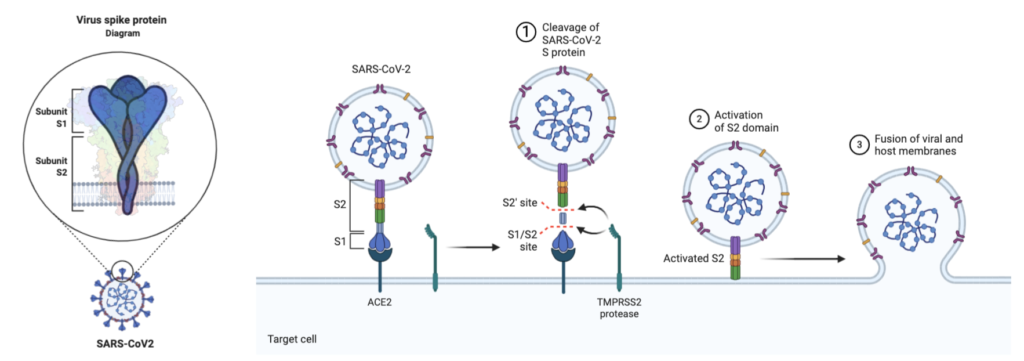
The vaccine, as mentioned before, works differently in our bodies. Traditional vaccines trigger resistance through exposure to the pathogen. In the case of the Pfizer COVID-19 vaccine, it introduces mRNA, which our body turns into the COVID-19 spike protein (the protein responsible for COVID-19 recognising and infecting our cells, Figure 1; Huang et al., 2020).
Figure 1 – BioRender schematic showing the COVID-19 spike protein (Diana Sofia Mollocana Yanez), and the use of the spike protein to enter our cells during infection (Hartenian et al., 2020).
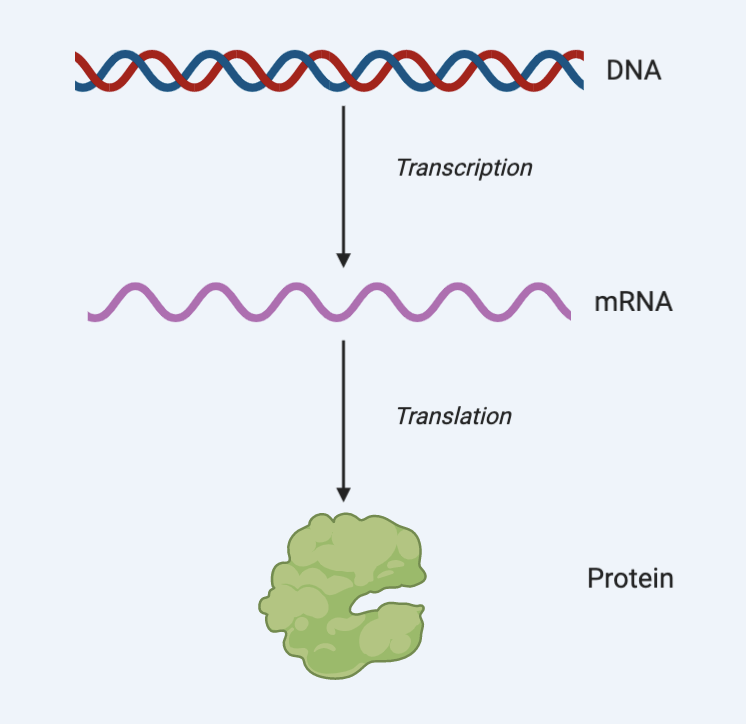
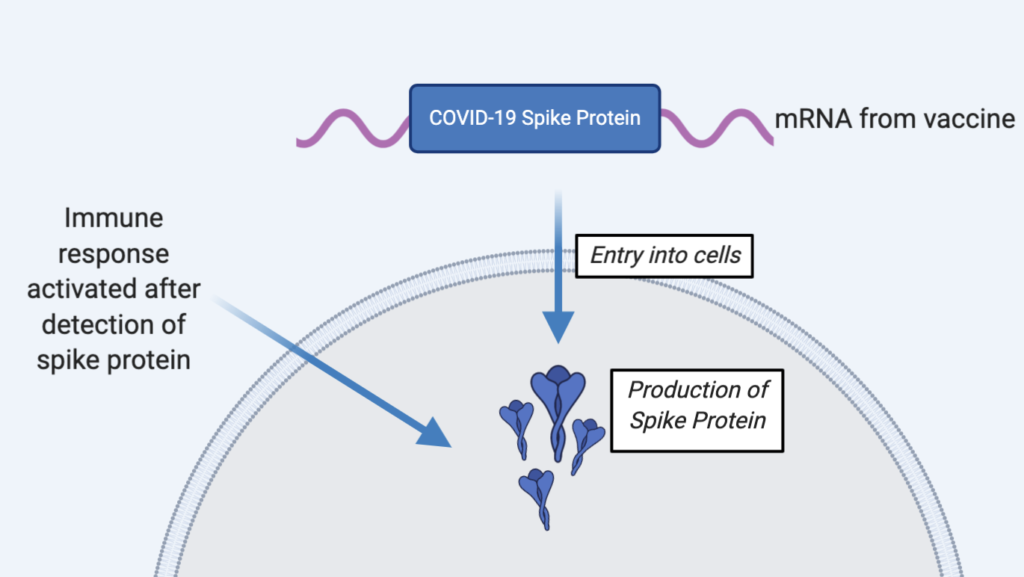
mRNA is naturally found in our cells and is made from our DNA as a message which is made into a protein that usually performs a function, or results in a trait (Figure 2A; Hargrove and Schmidt, 1989). Therefore, this vaccine is using a process our body performs all the time. However, when the COVID-19 spike protein is made from the mRNA in the vaccine (Figure 2B), the body recognises it as non-self, starts an immune response and we generate immunity as a result.
A B
Figure 2 – A) Normal process of protein production in our cells B) Process of spike protein production through vaccine’s introduction of mRNA which tells the cell to produce the spike protein, which triggers an immune response, and subsequent immunity. Schematics made on BioRender.
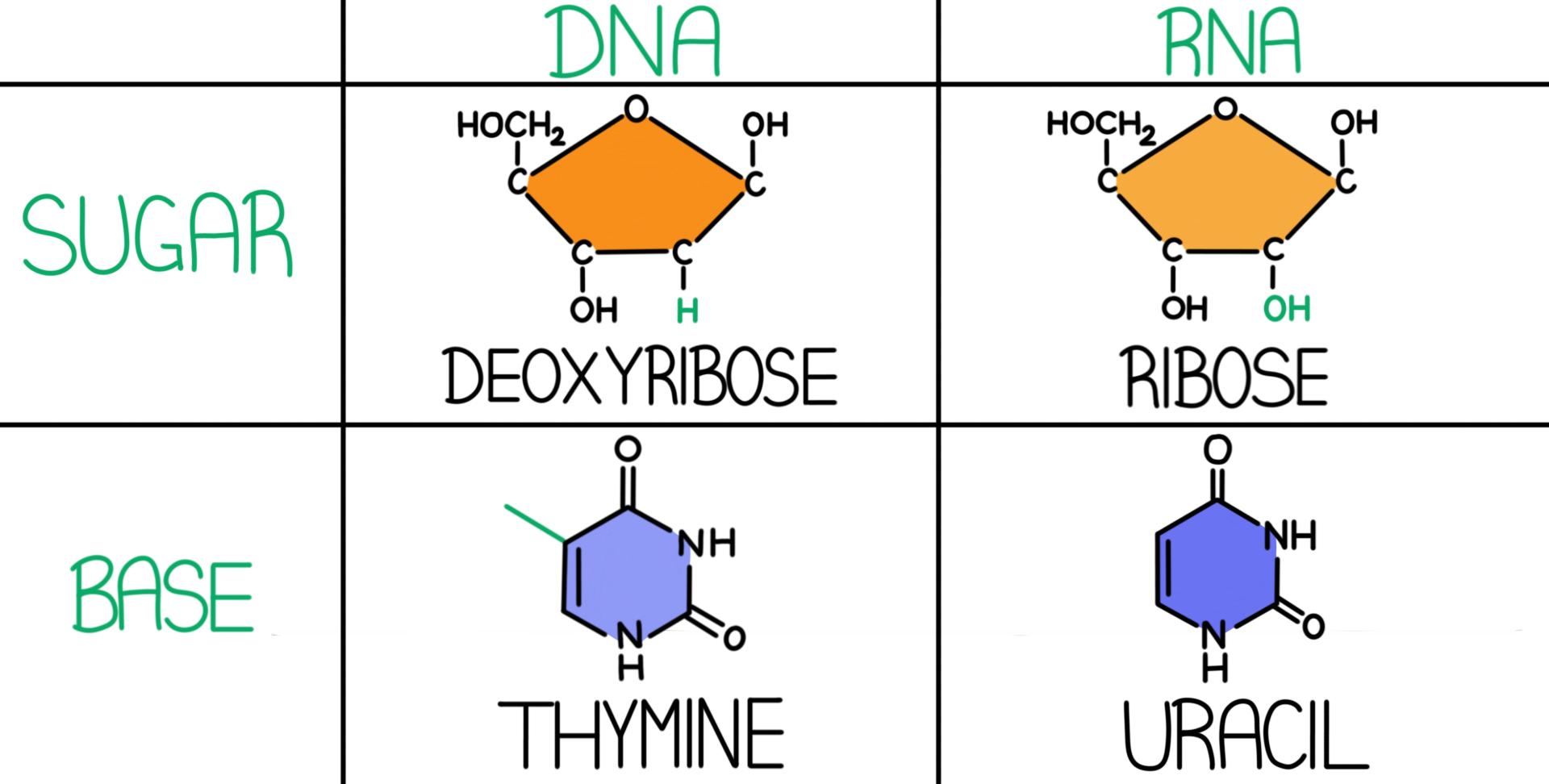
There are some common conspiracies, that this vaccine enters our genome, or it contains a chip for government tracking. To dispel these, mRNA cannot enter DNA (thus, our genome), as DNA and RNA are similar, but different molecules, which cannot stably co-exist as one. Furthermore, RNA cannot become DNA without an enzyme not found in our body. Also, in the impossible circumstance, it does become DNA, it cannot enter our genome without identical DNA sequences on either side of the gene. As for the chip, there is nothing more I can say than this is false. If you are concerned, however, your smartphone tracks your GPS, your internet searches, and monitors who you contact, the government already has the means to track you, so a chip in a vaccine would not be efficient. It is concerning that people are turning against vaccines which have helped to increase life expectancy, and are the right first step in ending the pandemic and returning to everyday life.
Figure 3 – Schematic demonstrating the molecular difference between DNA and RNA, in this case RNA has a riobose sugar with a hydroxide group (OH) on the 2nd Carbon. Whereas, DNA’s deoxyribose has a hydrogen (H) at the 2nd Carbon. Additionally, DNA and RNA contain the bases: Adenine, Guanine, and Cytosine. However, DNA contains Thymine, whilst RNA, contains Uracil – an altered thymine. Image taken from (Slizewska, G., n.d)
Bibliography:
Ball, P. (2020), ‘The lightning-fast quest for COVID vaccines-and what it means for other diseases’. Nature.
Cdc.gov. (2020). ‘Management Of Anaphylaxis At COVID-19 Vaccination Sites’ | CDC. [online] Available at: <https://www.cdc.gov/vaccines/covid-19/info-by-product/pfizer/anaphylaxis-management.html>
Fda.gov. (2020). ‘FACT SHEET FOR RECIPIENTS AND CAREGIVERS’. [online] Available at: <https://www.fda.gov/media/144414/download#:~:text=The%20Pfizer%2DBioNTech%20COVID%2D19%20Vaccine%20includes%20the%20following%20ingredients,)%2C%20potassium%20chloride%2C%20monobasic%20potassium>
Hargrove, J.L. and Schmidt, F.H., (1989). ‘The role of mRNA and protein stability in gene expression’. The FASEB Journal, 3(12), pp.2360-2370.
Hartenian, E., Nandakumar, D., Lari, A., Ly, M., Tucker, J.M. and Glaunsinger, B.A., (2020). ‘The molecular virology of Coronaviruses’. Journal of Biological Chemistry, 295(37), pp.12910-12934.
Huang, Y., Yang, C., Xu, X.F., Xu, W. and Liu, S.W., (2020). ‘Structural and functional properties of SARS-CoV-2 spike protein: potential antivirus drug development for COVID-19’. Acta Pharmacologica Sinica, 41(9), pp.1141-1149.
Slizewska, G., (n.d). ‘DNA Vs. RNA — Differences & Similarities – Expii’. [online] expii. Available at: <https://www.expii.com/t/dna-vs-rna-differences-similarities-10205>
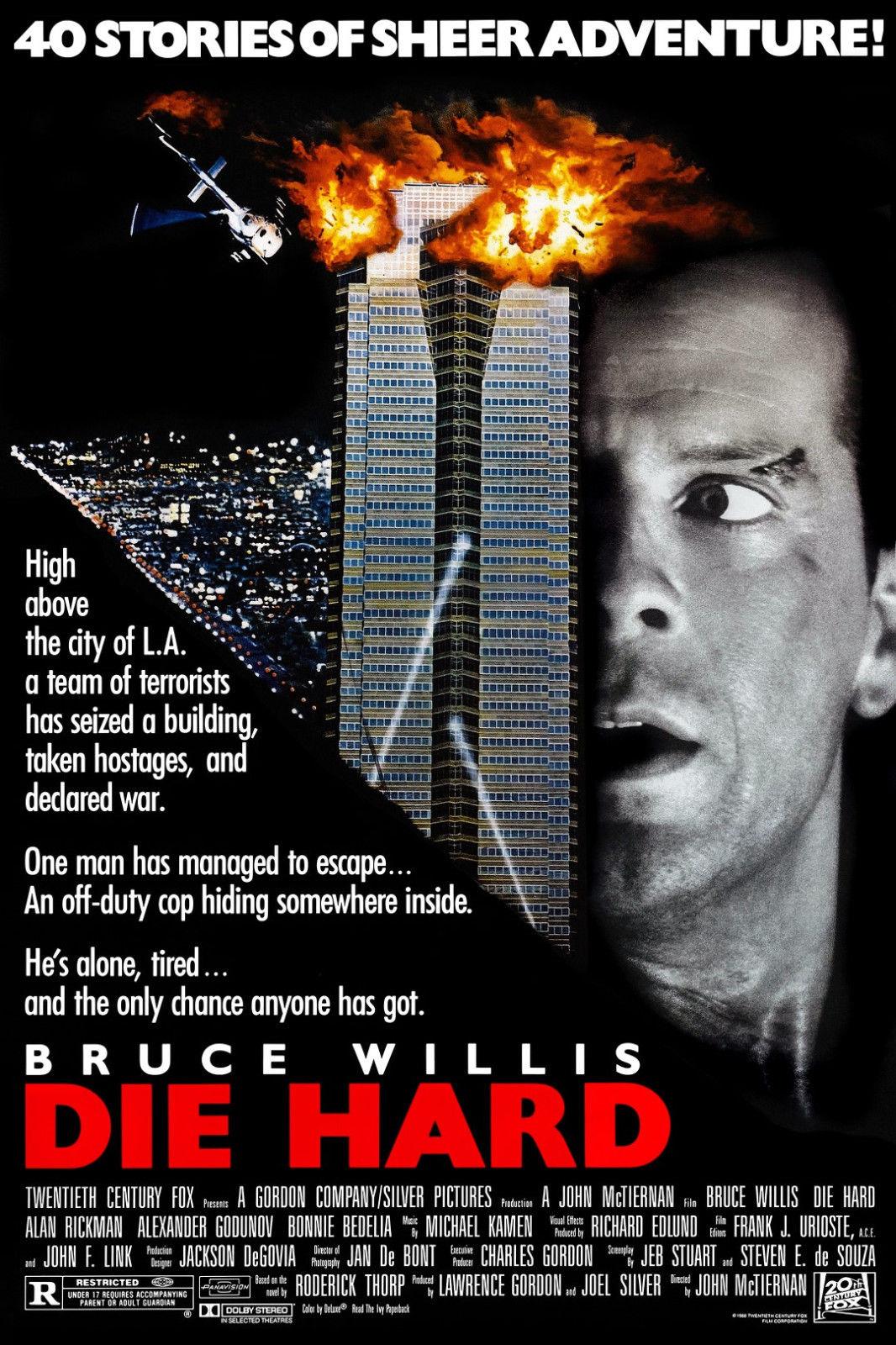
Die Hard for me was one of those films which I had heard of, probably seen at a younger age and paid no further mind to. Somewhere in the back corridors of my memory I remembered that this was supposedly a Christmas movie so I decided to watch it on Christmas Day. I will not exaggerate by saying this is probably the best action movie I have ever seen. If not, it is up there with Aliens, Predator, Terminator (1 and 2), The Matrix and RED, to a lesser but still large extent.
Bruce Willis … John McClane
Bonnie Bedelia … Holly Gennaro McClane
Reginald VelJohnson … Sgt. Al Powell
Alan Rickman … Hans Gruber
Paul Gleason … Dwayne T. Robinson
De’voreaux White … Argyle William
James Shigeta … Takagi
Alexander Godunov … Karl
Based on the 1979 Robert Thorp novel Nothing Lasts Forever, this 1988 masterpiece was directed by John McTiernan and written by Jeb Stuart and Steven E. de Souza. Die Hard follows New York City cop John McClane (Willis) as he attempts to deal with a terrorist takeover of Nakatomi Plaza while visiting his estranged wife (Bedelia). The terrorists are headed up by Hans Gruber (a stellar Rickman).
John McClane’s smartmouthed New York cop was a career-defining turn, mixing banter, action heroics and a dirty white vest to stunning effect. Acting up to him every step of the way is Alan Rickman, at his sneering best – but the script and cast are pretty much flawless. The very pinnacle of the ’80s action movie, and if it’s not the greatest action movie ever made, then it’s damn close. Empire
Without spoiling the plot which I imagine many of my readers will know well already, I was so impressed with the concept, execution and dialogue of this film. I remarked to M halfway through that this was a flawless film across many fronts and succeeds in cinematography, script, is visually stunning, has suitably menacing foreign (to the US) villains and more gripping, relentless action than I could have imagined possible. A particular highlight for me was Willis’ roof leap hanging onto a fire hose, shooting his way through one of the windows. I had to watch that again several times. Aside from being a brilliant piece of action movie making, it was just so damn cool.
In summation, Die Hard is a classic, all-American action feast which succeeds across every metric by which one measures a good film. I am no less than staggered by it in its entirety and cannot recommend it enough.
Rush were the true ‘find’ of this year for me. No other band or composer has succeeded in moving me so completely and so consistently as Rush. It just so happens that 2020 is the 40th anniversary of the release of this album, which adds some meaningless pomp to the occasion. Geddy Lee himself stated “I’ll be honest, I’m fed up that every time I turn around that it’s the fortieth anniversary of something we’ve done.”. Oh to have been alive in the heyday of Rush. As this album comprises of six tracks only, I shall discuss each in turn below.
(Speaking of Hemispheres, the preceding album) “We were falling into these patterns of writing — the repetition of these thematic things that occur over a 20-minute span,” bassist Geddy Lee told Rolling Stone in 2018. “They were starting to feel too comfortably organized in a way, like we weren’t thinking originally enough. That’s kind of a prog pattern. People associate prog-rock with a challenging style of music, and it certainly can be that. But if you’re starting to fall into past habits and develop a methodology that’s too comfortable, it’s not progressive. I think we started to feel that way by the time we finished that record.”
So for their seventh LP, Permanent Waves, the Canadian power-trio — Lee, guitarist Alex Lifeson, drummer Neil Peart — consciously trimmed their track lengths, embraced more personal subject matter and nodded to the sleeker sounds of the New Wave scene. (The album title is, fittingly, a playful “poke” at the genre, as Peart told the Chicago Tribune. “There are many New Wave groups we enjoy and respect, like Talking Heads and Elvis Costello and Joe Jackson,” he said. “Really, the joke was aimed more at the press, especially the English rock press that is inclined to write off any band that was around last week and go for whatever’s happening this week.”) Ultimate Classic Rock
The Spirit of Radio
My father and I were discussing this recently and he told me he was first introduced to Rush while listening to this track on the radio which I can only imagine must have been electrifying. This was his first purchase. I’ve had this album on vinyl since I inherited father’s collection when I was 14 but did not fully appreciate it’s beauty until now.
One likes to believe in the freedom of music
But glittering prizes and endless compromises
Shatter the illusion of integrity, yeah
Invisible airwaves crackle with life
Bright antenna bristle with the energy
Emotional feedback on timeless wavelength
Bearing a gift beyond price, almost free
The above lyrics, written by Neil Peart as a love letter to the magic of radio, have and continue to give me goosebumps whenever I listen to this record. The track itself crackles with life and energy. The late great Neil Peart’s drumming and lyricism skills are on fine form here. The track moves from jazzy drumming and cymbals to reggae and back to prog rock effortlessly. The snippet of the live show after the lyric “concert halls” is electrifying. The Geddy Lee guitar solo is absolutely show stopping. And this is just the first track.
Freewill
This track is humanist and anti organised religion. This track is one of the strongest on the album and the symbiosis between the “three virtuosos” as Nick calls them, is as evident as ever. Lee, Lifeson and Peart are as one in this track and the result is staggering. The guitar and bass solos give me goosebumps. The drumming is mathematical and precise and the whole track is a phenomenon.
You can choose a ready guide in some celestial voice
If you choose not to decide, you still have made a choice
You can choose from phantom fears and kindness that can kill
I will choose a path that’s clear;
I will choose free will
Jacob’s Ladder
The bass at the beginning of this track is foreboding. The symbiosis between Peart and Lifeson is exemplary. Geddy Lee’s entry and early solo – just superb. The low ebb towards the middle of the track followed by a staggering final phase made me feel as though I were climbing the ladder with Jacob. The transitions between phases of this song are excellent.
Entres Nous
Translated from the actual French as ‘between us’, this wonderful track is about individuality, loneliness and isolation which has spoken to me in this tumultuous year. The virtuoso trio (quote, St Nick) have wowed me again with the French Canadian connection, first showed in Circumstances on their previous album. The lyrics are just great:
We are planets to each other
Drifting in our orbits
To a brief eclipse
Each of us a world apart
Alone and yet together
Like two passing ships
Just between us
I think it’s time for us to recognize
The differences we sometimes feared to show
Just between us
I think it’s time for us to realize
The spaces in between
Leave room
For you and I to grow
The riffs throughout are exceptional and I was particularly impressed by the bass around the 2.44 mark.
Different Strings
This is my favourite Rush track. Out of their prolific catalogue this stands out as one of the most finely arranged, musically perfect and deeply felt tracks. I would say this is one of their crowning masterpieces. The symbiosis again is so clear here. The isolated guitar work at the beginning gives goosebumps, followed by the drums and piano, heard for the first time in the album. It speaks to unity and solitude in a deeply moving lyrical feast.
All there really is
The two of us
And we both know why we’ve come along
Nothing to explain
It’s a part of us
To be found within a song
What happened to our innocence
Did it go out of style?
Along with our naivety?
No longer a child
Different eyes see different things
Different hearts
Beat on different strings
Natural Science
After Different Strings, one is bound to be disappointed. The beginning of this track, I argue, panders to this theory. The beginning is intentionally weaker for you to recover somewhat from the previous track. But then, from the guitar solo 2 minutes in, it picks up beautifully. There are clear movements, for what of a better expression, in this track.
Wheel within wheels in a spiral array
A pattern so grand and complex
Time after time we lose sight of the way
Our causes can’t see their effects
…
The most endangered species, the honest man
Will still survive annihilation
Forming a world, a state of integrity
Sensitive, open, and strong
This track sums up the brilliance of this album very well, showing the three virtuosos on top form and displaying a musicianship bordering on the divine.
A seminal bit of Rushness – Pater
My overall impressions of Permanent Waves are as follows:
Three uniquely talented virtuosos
Symbiotic and united musicianship displayed at all times
I could listen to the isolated tracks for each instrument at any point in this album and be as impressed
This is a staggering album which has its correct place in my personal pantheon of perfect albums. I hope it will find its way to yours.