Having wandered around Morecambe a little, been told to f off by a local, and escaped to Lancaster, we returned to Morecambe for a spot of dinner. The Secret Bistrot is not really that secret. The name is emblazoned across the window above the Palatine pub, where the drinks from the bistrot are sourced.
St Nick and his ruby red shirt began the evening with fresh moules marinieres. These were freshly caught and beautifully cooked. They were tossed in garlic and butter and finished with a cream and parsley sauce. I do not care for seafood generally so did not sample. I can tell only from Nick’s satisfied grumbles that it was a top notch dish.
I opted for the safe chicken liver parfait. Set in chimichurri butter and served with beetroot chutney, thei was an interesting starter. I have yet to taste this dish with beetroot chutney, often this dish is served with caramelised onion chutney to have the sweetness of this contrast the savoury nature of the parfait. However, it did work on this occasion. The mild flavour of the chicken liver is not countermanded very strongly by the rich earthy flavour of the beetroot, however the combination was not offensive. Serving it in a cup was a lovely touch.
The Roasted Porchetta for my main was excellent. The portion was so generous that I had to give half of it to Nick. I particularly liked the carrot and beans wrapped in bacon. This was something one would expect to see in restaurants in cities. Certainly for the price point the Secret Bistrot did not need to put this extra touch in but I am happy they did. The porchetta itself was stuffed and rolled in sausage meat and cooked in an oven. I thought it was excellent, the consistency and the texture was almost that of pulled pork, such was the excellent cooking quality. The grainy sausage meat stuffing in the centre went very well with the aforementioned texture of the pork itself.
Nick went for the excellent steak with chips. He asked for it to be cooked rare which was an excellent choice. I had a bite and can tell you it was cooked to a high standard and absolutely rare. Putting it on what was a Bearnaise sauce, rich sauce thickened with egg yolks and flavoured with tarragon. The egg was cooked beautifully and the runny texture of the yolk mixed beautifully with the sauce and steak. Overall an excellent quality meal.
We also ate some delicious if not very salty truffle and parmesan fries. Overall this was an excellent meal at a phenomenal price. It cost us only £20 each for both courses. I was really impressed by the quality and the location, overlooking the bay in Morecambe. We will certainly be returning to the Secret Bistrot when doing the Way of the Roses in reverse.
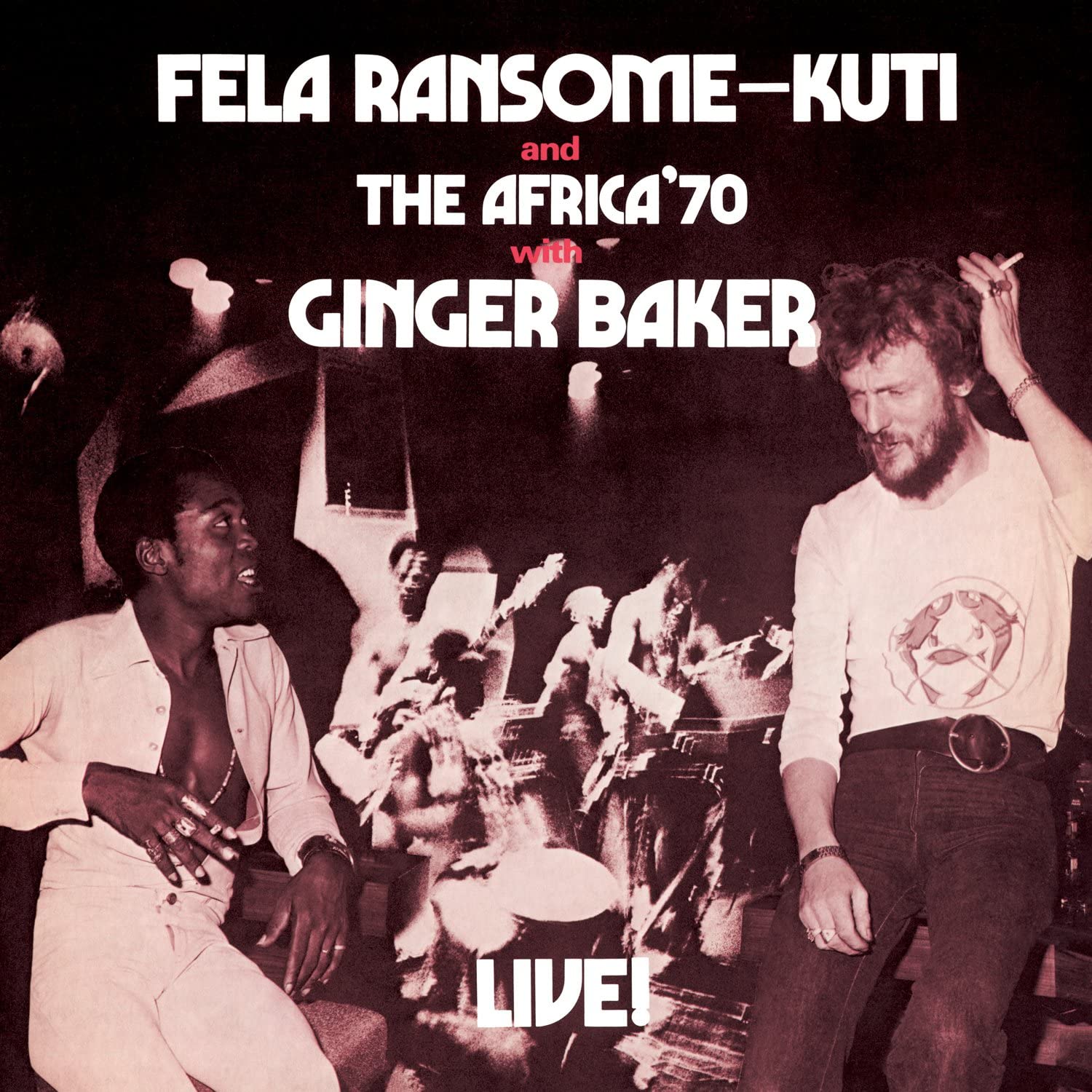
Where to even begin with this magnificent album? 1971, collaboration with Cream drummer Ginger Baker, which Fela pronounces most wonderfully. Fela Kuti has a rule that he would never play songs in his albums during live shows, which frustrated fans to no end but is a remarkable badge of consistency and integrity for the artist. Consequently we have an album of the month comprised of four original songs which were never to be performed again.
Let’s Start
The first tune is called O l’oun t’awa se n’yara Je k’abere which means ‘let’s start what we have come into the room to do’
From the first this is a piece of astonishing energy. It bursts out of the gate like a prize horse. The James Brown esque bass underpins the majority of the opening floury. The sensational synth work in the bridge is reminiscent of the work of Francis Bebey in African Electronic Music – perhaps Kuti inspired him.
Who knew cow bells could add so much to a tune? The driving consistent energy of this track is very exciting to me. This is Afrobeats at its best, driven, harmonious, spontaneous and intrinsically rhythmical. the way it picks up at the back end of the song, pauses and launches back into the opening refrain is astonishing. A sense of completion washes over the listener.
Black Man’s Cry
Fela sang most of his songs in Nigerian Pigdin English but some are in the Yorumba language. I believe Black MAn’s Cry is one such song.
Again, the opening moments are so effortlessly excellent. I can’t imagine this in Western pop. The combination of that magnificent bass guitar, the relentless drums of Ginger Baker and the trumpets is so exciting. I am finding it hard not to tear myself away from the keyboard and dance along.
The production of the album and the quality of the recording really shine through here. Despite being 1971 the recording is crystal clear. And it’s live!
I think the Black Man’s Cry refers to one of joy. I certainly feel boundless happiness listening to Fela. The saxophone at 3 minutes in!
The Manzerek-esque keyboard is superlative also and goes with the central recurring motif established in the opening moments of this track. The way he screams the cry at the end of the long and ad libs the rest of the track is just fabulous. He is lost in the abandon of making music. What a crescendo in the last minute!
Ye Ye Di Smell
Ginger doesn’t smell, really he takes his bath
Another 10 minute + track of unsurpassed brilliance. Ye Ye Di Smell talks about “it is a friendly thing, when your friend does not do the things they are supposed to do, then they smell”.
The understated guitar of the opening of track is swiftly brought to standard by the incredible drumming and keyboard going on. The Doors would be proud. I bet Jim Morrison was in the audience. The call and response between Fela and the band is incredible. His mumblings form the basis of his orchestrating the band to follow. It is surreal, natural, intrinsic. Fela is the music here. He and the music are in symbiosis.
The crescendo bridge in the fourth minute is the stuff of goosebumps. The false end at 4.35 followed by a redoubled keyboard section is awesome. One gets so carried away with the rhythm, it feels like it will never end, and thankfully there are 7 minutes left of the track.
Fela is known for staggering introductions followed by crushing lyrics. Listen to the below for an example. This is the first track he released after a trip to the West where he was able to access incredible resources and literature. He read up on colonialism, the Empire and the past of Nigeria and Africa and came back a changed man. The lyrics are incredible.
Following his 1969 tour of the United States, where he was influenced by the politics of Malcolm X, the Black Panthers, and other militants, Kuti’s music became increasingly politicized. He exhorted social change in such songs as “Zombie,” “Monkey Banana,” “Beasts of No Nation,” and “Upside Down.” Britannica
Man alive the drum solo at 8 minutes is bonkers. Rejoined by the keyboard handing the track throughout. The keyboard which has been almost stalking the other instruments and chasing them along. Superb.
And the final minute floury of action is hard to believe. It just keeps going up and up and up, drums more frantic. Big trumpet finish. Breathtaking.
Egbe Mi O (Carry Me)
It means carry me, I want to die
I believe this is the last track on the official track listing before a spontaneous drum sesh.
Listen to those drums and trumpets at the beginning! Notice how Fela envelops you with the main theme at the start of each track? Oh and the James Brown bass is great. The first half of the long goes by too quickly. It washes past you. The second half picks up with more lyrics.
“Egbe Me” in Yoruba language means: Carry me. In this song, Fela is singing about the different kinds of things that happen to you while you dance. How could you go into trance while dancing? How in a state of musical trance, the traditional beads women wear under their skirts break without the woman noticing. How a man’s hat would fall off his head while dancing without him noticing. All kinds of things happen to you doing the dance — but you are not alone! ‘…be ke iwo nikan ko’. Fela ends this track with a general chorus calling everybody together with the band: Egbe Mi O! AfrobeatMusic
Three minutes at the end are a superb demonstration of call and response with the audience and parallels that Fela did with the instruments in a previous track. The violence of the drums is very well placed. What an exciting ending!
Drum instrumental with Ginger Baker and Tony Allen
This is a bonus track from the live show in 1978 and includes Tony Allen and Ginger Baker having a sort of drum off against each other. It is 16 minutes so optional to listen to. Nothing like the magnificence before.
Overall I think my key reflection is that I would have loved to have been there. How excellent must it have been to be in the audience for this magnificent triumph of a live show. This is an album which will stay with me for the rest of my life. I cannot encourage you enough to listen to it.
Would the reader believe that by the time I got round to writing this review, I was back in Hull. I returned to Hull after a beautiful 400km ride from Morecambe to Bridlington to Hull, with a brief interlude in Knaresborough. Anyway I digress. Nibble was an absolute delight of a breakfast. We alighted here before going on to Hull Minster for an interesting Sunday service. I watched the Catholic Mass later on for completion.
We were lucky to get in as shortly after our arrival the restaurant was swamped.
The view from our table
I had the mezze breakfast which included spinach, hummus, halloumi, a huge mushroom, falafel rosti, poached egg and chorizo as well as some beautiful kale and cashew pesto. In a word: devastating. An amalgam of magnificent flavours. The poached egg was done beautifully as you can see. The pesto was outrageously flavoursome. The cashews have a sort of cheesy flavour and texture and mimics the parmesan quite well. The halloumi was fried lightly but was still quite flavoursome. The totality of the dish was stunning and made for an excellent breakfast.
Nick had the rather less impressive looking full English breakfast. However the dish was also good. the sausage was quite grainy which I like as it indicates some high content of meat rather than the smooth processed meat taste. The has browns were sufficiently dense and the tomato was highly flavourful and juicy. Overall very pleasant.
See below a photograph of the manifold delicacies available for purchase at Nibble. I shall be returning next time I am in Hull in August. Nibble is an excellent, budget friendly, superb eatery for any occasion.
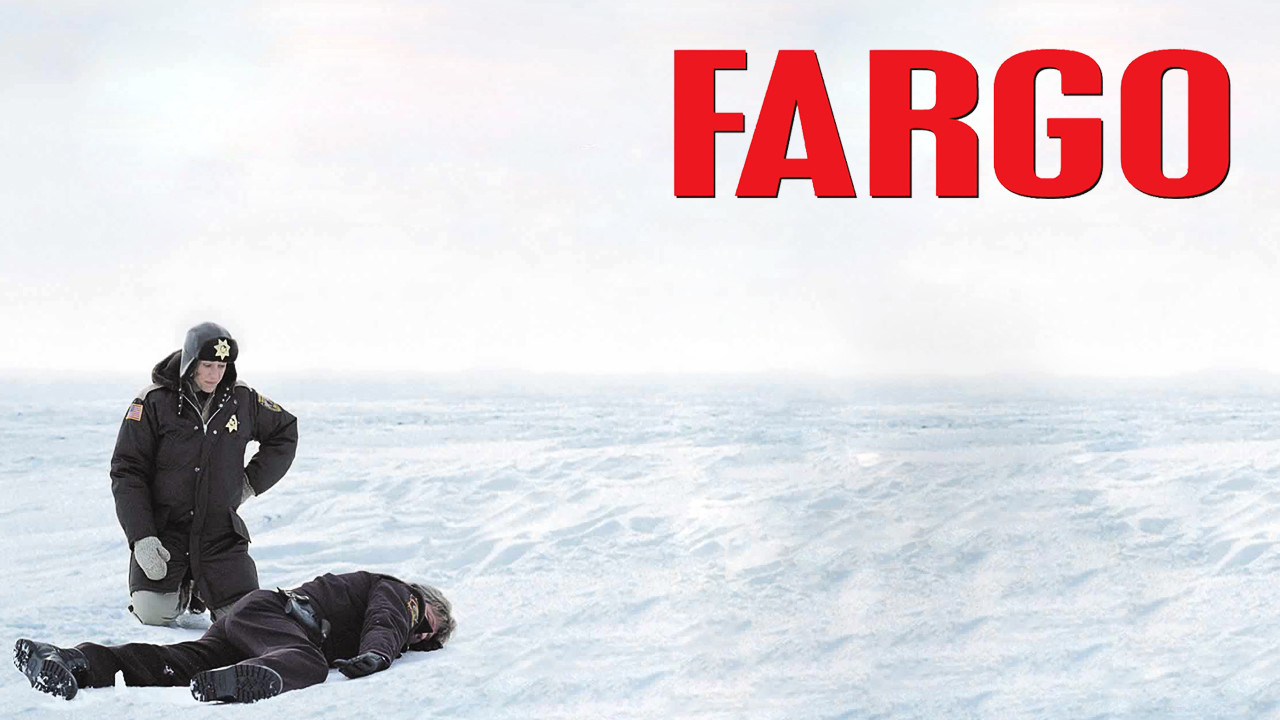
The brothers Coen have succeeded in putting together a thrilling kidnap mystery. Set in snowy rural Minnesota, Fargo tells the story of a botched kidnapping plot hatched by an incompetent used car salesman, Jerry Lundegaard (Macy), which is painstakingly and politely unravelled by ace trooper Marge Gunderson (Mc Dormand). Lundegaard hires two incompetent criminals (Buscemi, Stomrmare) to kidnap his wife and exact a ransom from her rich father. Minnesota is renown for being a particularly politely peopled place, and this film heaps niceties on you like spades, which is perhaps my favourite part of it.
William H. Macy … Jerry Lundegaard
Frances McDormand … Marge Gunderson
John Carroll Lynch … Norm Gunderson
Steve Buscemi … Carl Showalter
Peter Stormare … Gaear Grimsrud
Kristin Rudrüd … Jean Lundegaard
Harve Presnell … Wade Gustafson
Tony Denman … Scotty Lundegaard
The Coens are still a million miles from Hollywood staple, but with Fargo’s comic felicity, gun-packing coolness and ability to come up with the totally unexpected, they maintain their place among America’s most important filmmakers. Excellent. Empire
Gunderson’s investigation into the murder of a state trouper, killed during the botched kidnapping, is at times monotone but methodical and relentless. She breaks her politeness once saying to Lundergaard “you have no call to get snippy with me”, which in itself is sensational. See the snippy snippet below. I won’t share the whole scene as it does contain some spoilers. Why do I like this? Likely because it is one of the consistent comedic moments which are scattered throughout the film. We also have Showalter’s (Buscemi) constant and increasingly gory fumbles as he is trying to obtain payment for his illicit activities, which add a layer of levity to an otherwise quite serious topic.
The dark and cold weigh down everything, and in the middle, in their warm cocoon, are Chief Marge and her hubby, Norm, the painter of ducks. Without them, “Fargo” might have been “In Cold Blood” laced with unseemly humor. The Coens sometimes seem to scorn their characters, but their love for Marge redeems “Fargo.” Marge is the catalyst, and her speech at the end is Shakespearean in the way it heals wounds and restores order…Roger Ebert
Fargo is a dense film of tremendous merit. The dogged pursuit of the truth and exposing of the pathetic criminals trying to dupe Gunderson was destined to end poorly. There are so many memorable scenes and tropes: the coldness of the third rate kidnappers as contrasted with the coldness of Lundergaard’s father in law (Presnell), the disappointment of Mr Gunderson’s performance in a duck painting competition and the constant unending nightmarish pressure on Lundegaard himself make this a special film. I recommend it very highly indeed.
Have you noticed that I go through phases of music? My most recent phase has been Afro beats and Afro funk but I am rather passionately in support of Kate Bush and feel that I must include this as June’s album in the month. Never For Ever was Kate’s 1980 superb offering to the altar of pop and includes some of her best work.
The album opens with one of her great hits, Babooshka. This track is well known but much like the Police’s Every Breath You Take, the subject matter is oft ignored. This track tells the tale of a wife who is saddened by her husband’s lessening attentions toward her. Taking matter into her own hands, she disguises herself as another woman, seduces her husband and makes him fall in love with her again. It propagates the idea that outer beauty is finite but inner beauty, the original foundation of her husband’s love for his wife, is eternal. Equally, the track itself is a real whopping great pop track. Try and get it out of your heads!
She signed her letters All Yours! Babooshka Babooshka Babooshka yeah yeah
Delius is an interesting one, I have read that it is a tribute to the god Apollo, and I have read that it is an ode to the English composer Frederik Delius. The latter is likely to be more accurate on account of the lyrics describing a grumpy old man and the shifting from the I and IV chords mimic those for which Delius was famed. Paddy Bush and Ian Bairnson are singing back up here which is just superb. This is an excellent track and a testament to her excellent pipes.
Built on a verse that primarily shifts between the I and IV chords of B (B major 7th and E), “Delius” is melodically simple, working in rigid parameters to homage its subject. Providing an understated biographical statement of the composer without describing any of his life’s events, it conveys the cadences of Delius’ legacy with parsimony and depth. Kate Bush Songs
Blown Away was the first song chronologically, written for this album. The song was inspired by the death of Bill Duffield, a sound engineer for Kate’s band killed tragically on the first night of Kate Bush’s then only tour. It is beautifully produced and simply orchestrated. It speaks of death and consciousness. I find it deeply evocative.
All We Ever Look For is a meditation on the limits to and primacy of the role of the family. Kate Bush sings about searching for meaning in a world rife with possibilities. The piano refrain after the bridge in the latter section of the song is just beautiful.
Still from the Egypt video
Egypt is a lovely track. In terms of context, at the time of writing this track, the PM of Egypt Menachem Begin signed the Israel Egypt Peace Treaty which ended the Israeli occupation of Sinai. Israel agreed to withdraw from the entirety of the Sinai Peninsula. Israel subsequently withdrew in several stages, ending on 26 April 1982. Egypt was also selling vast amounts of oil to Israel. This track is quite extraordinary in the way that Kate acknowledges a violent conflict in a land far away. She embodies this in several chilling screams throughout the track.
The Wedding List has the be the catchiest murder-suicide track ever written. It tells the story of an aggrieved bride whose husband was murdered on their wedding day. In this sense we could call her a widow but I believe matrimony is a precondition to this term hence she may just be called a rather peeved party. This has to be one of my favourite Kate Bush tracks. It embodies everything which is awesome about her, she represents a vexed lady, a quartile not necessarily well presented in 1980, getting her revenge on the men who have wronged her. The production is as aggressive as the substance matter of the track, which is another terrific facet of this track. For me this is the best track on the album.
Violin takes a theme consistent in Bush’s works – the idea that there is inherent magic in the universe and that we can use this as a source of catharsis. Kate was forced to take violin lessons at St Joseph Convent Grammar as a kid, this is the source of this track. The track makes use of the multi faceted possibilities of the instrument and indeed almost abuses the violin while screaming in deranged anger, mimicking how she must have felt at school. The frustration in this track is palpable but ends up being quite magical.
The Infant Kiss is perhaps an echo of This Woman’s Work. I find it a tad sentimental but the message is powerful – talking about the fear of losing a child, putting motherhood, rightly, on a pedestal. The orchestration matches the mood of the piece and this is put across impeccably, again.
Night Scented Stock is an a capella track showing off Kate’s extraordinary pipes. The harmonisation is beautiful.
Army Dreamers was at a point my least favourite track on this album but I have come to enjoy it very much. It was banned in the UK along with a number of other tracks during the Gulf War for its sentiments questioning the necessity of war and highlighting the bereavement of families who lose loved ones to conflicts. The music itself goes back to Kate’s Irish jig proclivity which we see fully developed in Jig of Life on Hounds of Love. SeetheUK7″cover below, which I think is wonderful.
The album ends on Breathing, following in the theme of motherhood. This track, amazingly, is about a foetus in the womb of a woman living through a nuclear holocaust, aware of the happenings of the world outside. The tone was inspired by Pink Floyd’s The Wall, and Kate was of course discovered by David Gilmore of Floyd. The spoken word, the simulation of breathing through lyricism, the production and sheer subject matter all make this for a fascinating end to a stunning album.
Breathing her nicotine, breathing the fallout in out in
In January, I covered the biological basis of the newly emerging COVID-19 vaccines. However, since the vaccine rollout became more widespread, an increasing hesitancy to take the vaccine has arisen. This may be for various reasons, such as COVID infection post-vaccination or simply not trusting the science behind vaccination. If it is the latter, it may be worth disposing of any item in your house made by those in a scientific research background, as they too will have little value to you (paracetamol should be dumped as quickly as possible, for your safety). Scientific research, be it biological, chemical, or physical usually underpins modern medicine. Whether that is research into the way in which the human body works, designing new drugs to treat infection, or invention/refinement of diagnostic machinery. The value of research cannot be understated.
It is important to be clear that vaccinations have never and will never be linked to an overarching plan in which the vaccine is inadvertently used to bring people harm. You have every right to refuse a vaccine but spreading misinformation to those yet to receive it will cause more harm than the vaccine itself. This post will follow on from a previous post “What is the COVID-19 vaccine?”, and address some points raised by people hesitant to receive the vaccine.
Double-vaccinated and still contracted COVID
In early June, I tested positive for COVID-19 and experienced symptoms even after being double vaccinated. As a follow-up to the previous article addressing common misconceptions of the vaccine, it is doubly important to address the narrative that the vaccine is not effective. So, the main question is: How can I be vaccinated, but still get COVID?
There are three administered vaccines within the UK (Oxford-AstraZeneca, Moderna and Pfizer-BioNTech), all follow the same mRNA-vaccine technology as discussed previously, but they each have varying rates of protection. However, the consensus is that after a single dose of the vaccine the likelihood of symptomatic infection decreases by 70% (Bernal et al., 2021), with this likelihood decreasing further after the second dosage. This means you are 70% less likely to be symptomatic. Like all vaccines, they do not offer 100% protection (McNeil, 2020). However, there is an important concept known as cost-effectiveness. This principle balances the cost of the disease against the cost of vaccination (McNeil, 2020). Therefore, if the cost of the vaccine outweighs the cost of the disease the vaccine is unlikely to be administered or researched. In the case of COVID-19, the cost of the disease outweighs the cost of the vaccine. With the COVID-19 vaccine, the rate of hospitalisation decreased by 76% after the first phase of the vaccine rollout in the UK (Lintern, 2021). If that isn’t enough proof that getting the vaccine is a positive thing, let’s delve deeper.
It is completely possible and the case for most vaccines that you can contract the disease after being inoculated, this can be for a range of reasons which you can read up on here: http://vk.ovg.ox.ac.uk/vk/disease-vaccinated-populations
The most relevant factor on this list for COVID is the evolution and changing of the virus itself, the most concerning of the variants is the Delta variant (B.1.617.2). This variant was first found in India and has an increased transmission rate as well as decreasing the vaccine’s efficiency. While the Pfizer-BioNTech vaccine retains 79% effectiveness against the delta variant, Oxford-AstraZeneca’s effectiveness ranges between 60-73% effective (The Covid Delta variant: how effective are the vaccines?, 2021). Therefore, worst-case scenario there is a 40% chance you may still contract COVID-19.
So, should you still get the vaccine? In short, yes. The vaccine prepares your immune system for infection by a COVID virus of a similar kind regardless of strain. Whilst the Delta strain is able to infect due to relative unfamiliarity at first, the vaccine provides your body with the means to deal with it upon recognition. Viruses and all pathogens aim to avoid the immune system. The variants of COVID-19 are able to do exactly that for a short period of time when they arise as a new variant, thus infection. However, once recognised, the body can adapt to the variant quickly and trigger an effective immune response clearing the infection much faster than without. In my case, symptoms included: mild headache, loss of taste and smell, and fatigue.
So, what’s the point if you’re still able to get COVID? The answer is protection against serious symptoms and the condition called long-covid. I recovered from COVID in 5 days, and during that time I was able to function relatively normally. Furthermore, my taste was lost for a maximum of 6 days. Whereas others who suffered from COVID whilst unvaccinated have claimed their sense of smell and taste was lost for a month or even longer (Marshall, 2021). In addition, the vaccine prevents COVID from being able to replicate as much as it would normally within the cells that support your sensory neurones in the nose (responsible for taste and smell), therefore lessening the symptomatic presentation and time it takes for the body to recover.
I trust the above clarifies but Cedric can forward me any further concerns which I shall look into, schedule depending.
Bibliography:
Bernal, J. L., Andrews, N., Gower, C., Robertson, C., Stowe, J., Tessier, E., … & Ramsay, M. (2021). Effectiveness of the Pfizer-BioNTech and Oxford-AstraZeneca vaccines on covid-19 related symptoms, hospital admissions, and mortality in older adults in England: test negative case-control study. bmj, 373.
Guardian, the. 2021. The Covid Delta variant: how effective are the vaccines?. [online] Available at: [Accessed 15 June 2021].
Lintern, S., (2021). Vaccines cut Covid hospitalisations in England by 76%, new research shows. [online] The Independent. Available at: [Accessed 15 June 2021].
Marshall, M. (2021). COVID’s toll on smell and taste: what scientists do and don’t know. Nature, 589(7842), 342-343.
McNeil, S. (2020). Overview of vaccine efficacy and vaccine effectiveness. Canadian Center for Vaccinology. https://www. who. int/infl uenza_ vaccines_plan/resources/Session4_VEffi cacy_VEff ectiveness. PDF.
Vk.ovg.ox.ac.uk. 2020. Disease in vaccinated populations | Vaccine Knowledge. [online] Available at: [Accessed 15 June 2021].