In January, I covered the biological basis of the newly emerging COVID-19 vaccines. However, since the vaccine rollout became more widespread, an increasing hesitancy to take the vaccine has arisen. This may be for various reasons, such as COVID infection post-vaccination or simply not trusting the science behind vaccination. If it is the latter, it may be worth disposing of any item in your house made by those in a scientific research background, as they too will have little value to you (paracetamol should be dumped as quickly as possible, for your safety). Scientific research, be it biological, chemical, or physical usually underpins modern medicine. Whether that is research into the way in which the human body works, designing new drugs to treat infection, or invention/refinement of diagnostic machinery. The value of research cannot be understated.
It is important to be clear that vaccinations have never and will never be linked to an overarching plan in which the vaccine is inadvertently used to bring people harm. You have every right to refuse a vaccine but spreading misinformation to those yet to receive it will cause more harm than the vaccine itself. This post will follow on from a previous post “What is the COVID-19 vaccine?”, and address some points raised by people hesitant to receive the vaccine.
Double-vaccinated and still contracted COVID
In early June, I tested positive for COVID-19 and experienced symptoms even after being double vaccinated. As a follow-up to the previous article addressing common misconceptions of the vaccine, it is doubly important to address the narrative that the vaccine is not effective. So, the main question is: How can I be vaccinated, but still get COVID?
There are three administered vaccines within the UK (Oxford-AstraZeneca, Moderna and Pfizer-BioNTech), all follow the same mRNA-vaccine technology as discussed previously, but they each have varying rates of protection. However, the consensus is that after a single dose of the vaccine the likelihood of symptomatic infection decreases by 70% (Bernal et al., 2021), with this likelihood decreasing further after the second dosage. This means you are 70% less likely to be symptomatic. Like all vaccines, they do not offer 100% protection (McNeil, 2020). However, there is an important concept known as cost-effectiveness. This principle balances the cost of the disease against the cost of vaccination (McNeil, 2020). Therefore, if the cost of the vaccine outweighs the cost of the disease the vaccine is unlikely to be administered or researched. In the case of COVID-19, the cost of the disease outweighs the cost of the vaccine. With the COVID-19 vaccine, the rate of hospitalisation decreased by 76% after the first phase of the vaccine rollout in the UK (Lintern, 2021). If that isn’t enough proof that getting the vaccine is a positive thing, let’s delve deeper.
It is completely possible and the case for most vaccines that you can contract the disease after being inoculated, this can be for a range of reasons which you can read up on here: http://vk.ovg.ox.ac.uk/vk/disease-vaccinated-populations
The most relevant factor on this list for COVID is the evolution and changing of the virus itself, the most concerning of the variants is the Delta variant (B.1.617.2). This variant was first found in India and has an increased transmission rate as well as decreasing the vaccine’s efficiency. While the Pfizer-BioNTech vaccine retains 79% effectiveness against the delta variant, Oxford-AstraZeneca’s effectiveness ranges between 60-73% effective (The Covid Delta variant: how effective are the vaccines?, 2021). Therefore, worst-case scenario there is a 40% chance you may still contract COVID-19.
So, should you still get the vaccine? In short, yes. The vaccine prepares your immune system for infection by a COVID virus of a similar kind regardless of strain. Whilst the Delta strain is able to infect due to relative unfamiliarity at first, the vaccine provides your body with the means to deal with it upon recognition. Viruses and all pathogens aim to avoid the immune system. The variants of COVID-19 are able to do exactly that for a short period of time when they arise as a new variant, thus infection. However, once recognised, the body can adapt to the variant quickly and trigger an effective immune response clearing the infection much faster than without. In my case, symptoms included: mild headache, loss of taste and smell, and fatigue.
So, what’s the point if you’re still able to get COVID? The answer is protection against serious symptoms and the condition called long-covid. I recovered from COVID in 5 days, and during that time I was able to function relatively normally. Furthermore, my taste was lost for a maximum of 6 days. Whereas others who suffered from COVID whilst unvaccinated have claimed their sense of smell and taste was lost for a month or even longer (Marshall, 2021). In addition, the vaccine prevents COVID from being able to replicate as much as it would normally within the cells that support your sensory neurones in the nose (responsible for taste and smell), therefore lessening the symptomatic presentation and time it takes for the body to recover.
I trust the above clarifies but Cedric can forward me any further concerns which I shall look into, schedule depending.
Bibliography:
Bernal, J. L., Andrews, N., Gower, C., Robertson, C., Stowe, J., Tessier, E., … & Ramsay, M. (2021). Effectiveness of the Pfizer-BioNTech and Oxford-AstraZeneca vaccines on covid-19 related symptoms, hospital admissions, and mortality in older adults in England: test negative case-control study. bmj, 373.
Guardian, the. 2021. The Covid Delta variant: how effective are the vaccines?. [online] Available at: [Accessed 15 June 2021].
Lintern, S., (2021). Vaccines cut Covid hospitalisations in England by 76%, new research shows. [online] The Independent. Available at: [Accessed 15 June 2021].
Marshall, M. (2021). COVID’s toll on smell and taste: what scientists do and don’t know. Nature, 589(7842), 342-343.
McNeil, S. (2020). Overview of vaccine efficacy and vaccine effectiveness. Canadian Center for Vaccinology. https://www. who. int/infl uenza_ vaccines_plan/resources/Session4_VEffi cacy_VEff ectiveness. PDF.
Vk.ovg.ox.ac.uk. 2020. Disease in vaccinated populations | Vaccine Knowledge. [online] Available at: [Accessed 15 June 2021].
My favourite post of the month is back. Thanks again to Nick for suggesting this, though he did not realise at the time that this would be a recurring post. Please see below the five favourite album covers for June. These may be covers which I have loved for some time or new albums which I have come to love over the last month.
Weasels Ripped My Flesh – The Mothers of Invention
Now, I know what you are thinking – ‘Zappa, here?!’. Yes I too had doubts. On the whole I find Mr Zappa innovative, charismatic and polarising. His music straddles the thin line between genius and horror music. Which side of the line you fall on is entirely dependent on your personal taste. I shall reserve comment on where I fall on the matter. This cover is fantastic, however. It reminds me of the comic book chic of Thomas Dolby’s Aliens Ate my Buick. I love the colour choice, the classic well to do gentlemen and the absolutely bizarre weasel inflicting gore on him.
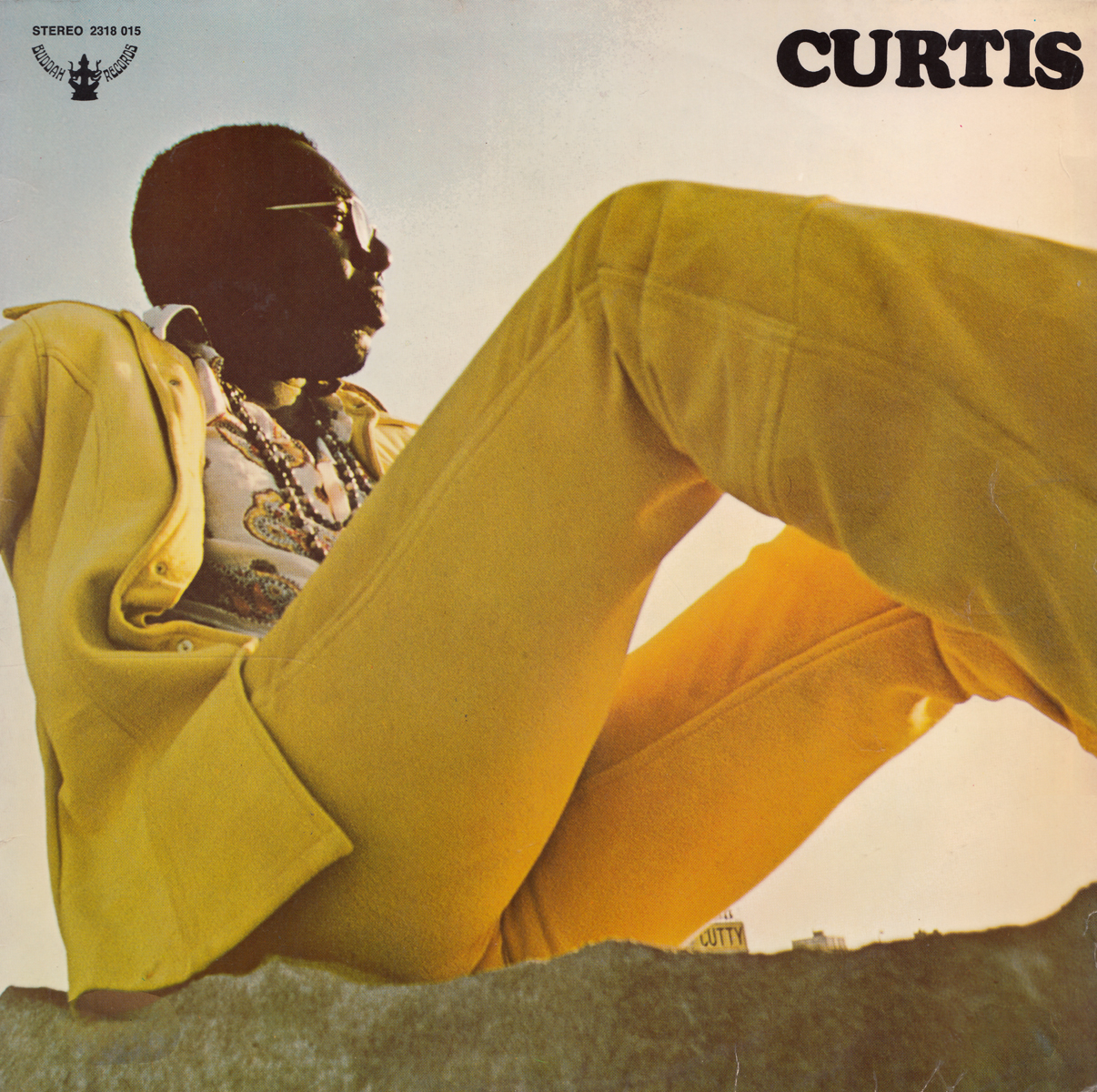
Curtis by Curtis Mayfield
What a year 1970 was. We do not deserve 1970. 1970 gave us, among other things, Brian Davison, Neil Young, Black Sabbath’s Paranoid, Bitches Brew by Miles Davis, Bridge Over Troubled Water, Funhouse by the Stooges, Morrison Hotel, Abraxas, Loaded by the Velvet Underground… I could go on. But this sensational year for music also gave us Curtis Mayfield’s debut album. The smooth soul chic in the music is matched only by the extraordinary cover. A low angle shot of Curtis wearing a matching yellow suit and flamboyant shirt with beaded necklace, looking forlornly into the sunset (or sunrise). This is just so very cool and stylish. An effortless cover.
Psychedelic Sanza 1982 – 1984 – Francis Bebey
If you have yet to hear the excellent Cameroonian stylings of Francis Bebey, please listen to this album. It follows the extraordinary African Electronic Music 1975-1982, which some consider his best.
That clash and exchange of ideas is exemplified in the chiming, twilit dialogue of opening cut, ‘Sanza Nocturne’, and the strange fusion of Baroque pipes and kicking groove to ‘Africa Sanza’, or to strangest degrees in the freakishly noisy, yet utterly compelling ‘Tumu Pakara’, while we find the more mellifluous Bebey crooning away in the Pygmy Polyphonics of ‘Bissau’ or the deeply spiritual ‘Forest Nativity’. To be fair, it’s unnecessary to draw any lines betweent he material – it’s all the work of a singular genius – but for those more familiar with the last compilation, this set really steps it up and out a notch or three to spellbinding new zones. Boomkat
The cover is also spectacular, three presumably Pygmy people carrying a globe through the jungle with Africa front and centre in the frame. The sky is covered in what looks like zebra print. Aside from anything else it is a beautiful piece of art.
Bebey became the first African musician to place synthesisers, electric keyboards and programmable drum machines at the centre of his music. Vinyl Factory
Runt. The Ballad of Todd Rundgren
If any of the readers have spent more than five minutes in my presence they will be aware that Todd is a firm favourite of mine, in fact he is likely the only man in my pantheon of favourite artists (Grace, Joni, Todd being the top 3 I think). Feta Kuli is making his way up there. Anyway this album is quite different from Todd’s Runt (another 1970 diamond album). This album was released in 1971 and contains songs of a quite different nature to its nomenclature predecessor. Now, the cover. The ides of someone playing piano with a noose is wild to me. Is this his final wish? Todd’s last meal as it were? To play the piano as a final act before being hung is quite a powerful image. And of course it is reminiscent to me of Mel Brooks’ excellent Robin Hood Men in Tights, particularly the scene where the noose breaks as Robin is about to be hung.. “well you know what they say…”
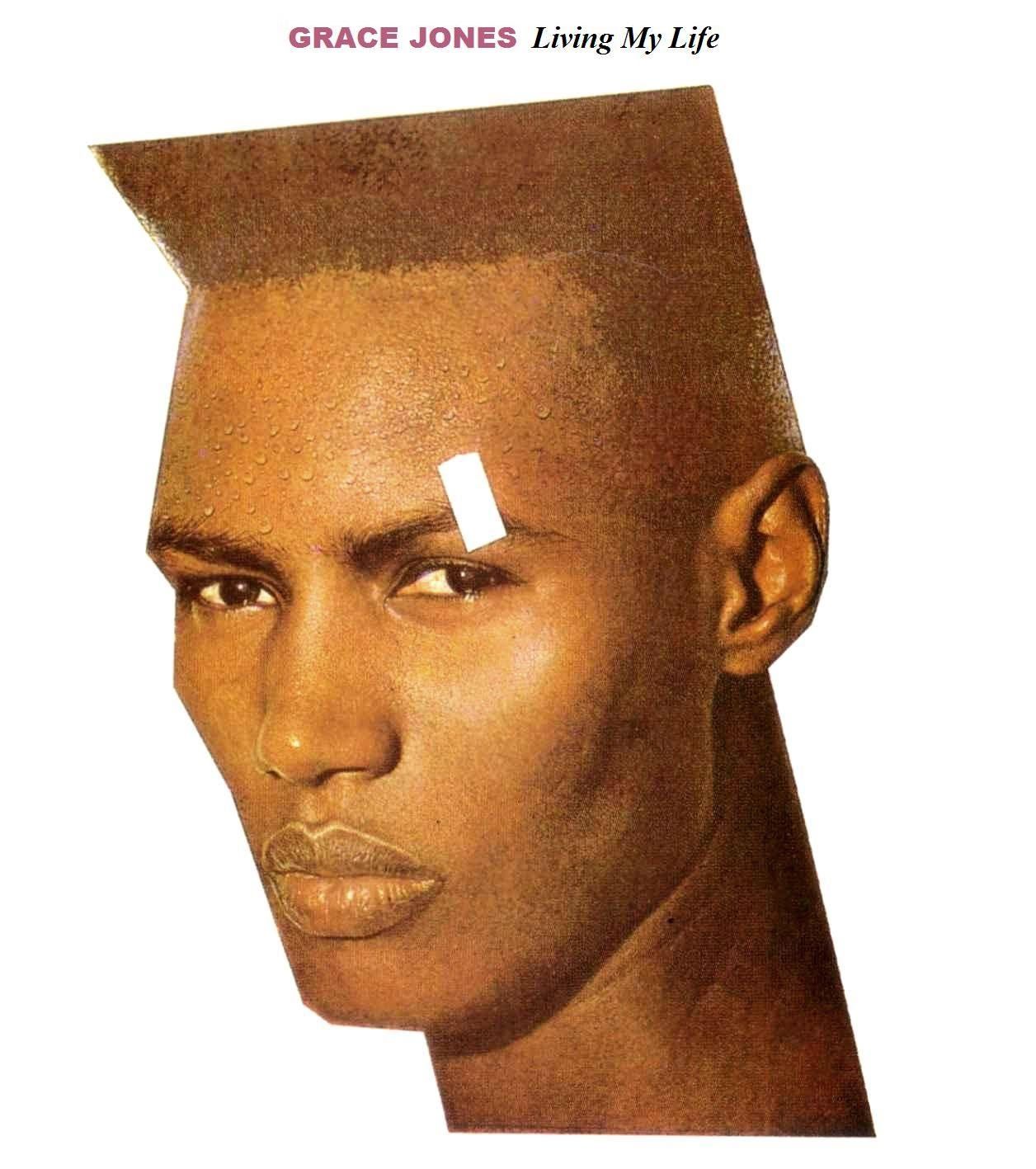
Living My Life – Grace Jones
Finally I should like to close on one of Grace Jones’ Jean Paul Goude covers again. We will eventually get through all 14 of her albums. This is one of my favourites. Following Goude’s image of Grace, he created this precise aggressive cover. This simple, angular cover seeks to maximise Grace’s androgynous beauty. He wrote in Jungle Fever “the ambiguity of her act was that she herself looked like a man. A man singing I Need A Man, to a bunch of men”. This was shocking in 1977, when the single I Need A Man was released and followed by Grace’s debut disco (!) album Portfolio. The beads of sweat only add to what is a striking remarkable cover.
Join me next month for the following instalment of 5 Favourites.
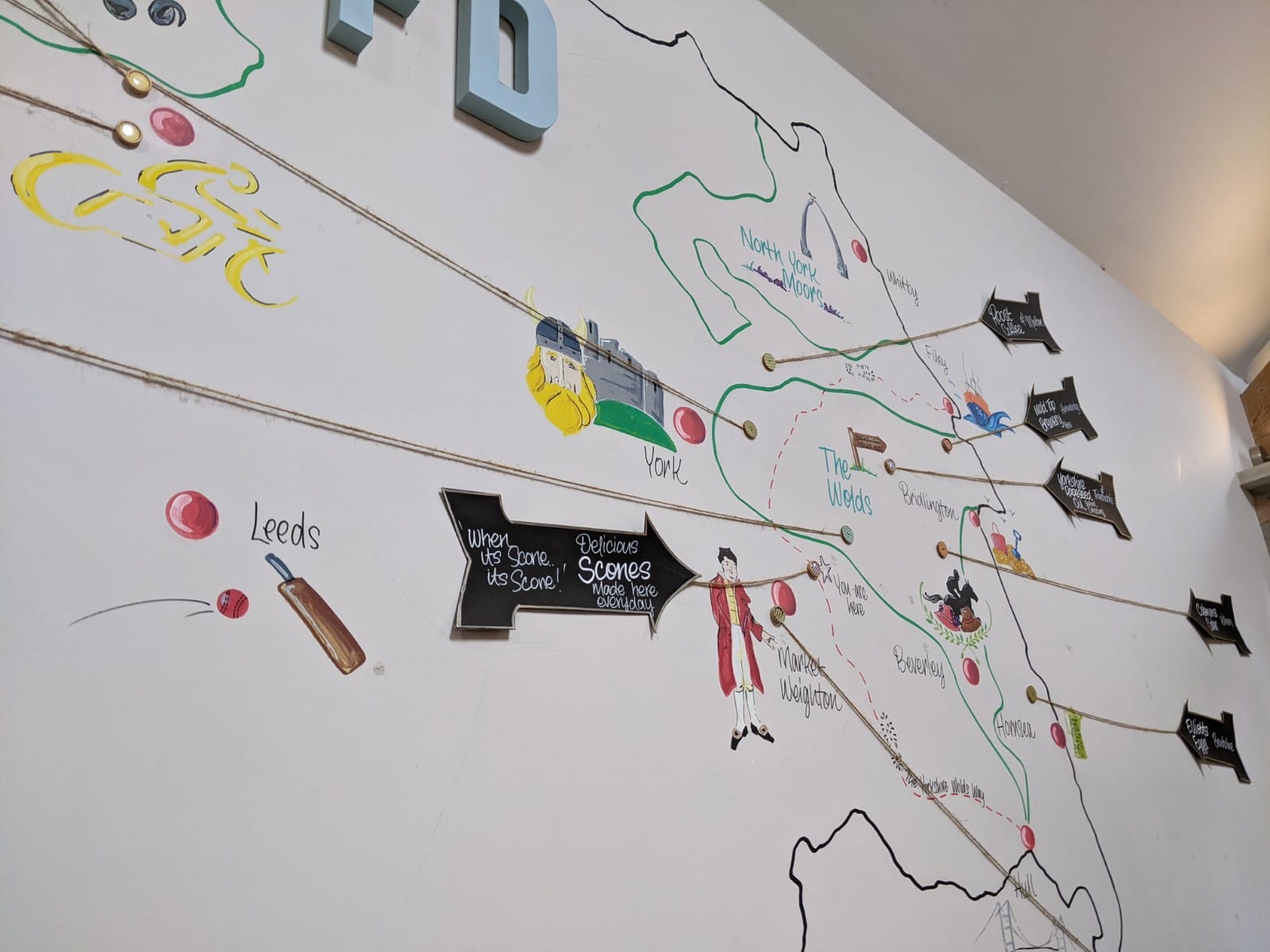
Picture the scene, I have just arrived in Hull, my first time out of my city in some time, and Nick’s (erstwhile Saint) first suggestion is for us to leave Hull. More precisely, Nick was an advocate of a 76km bike ride through East Riding and Yorkshire, briefly. We were supposed to go to the Goodmanham (one word, not three) Arms but the charming gentlemen in the window, whom I had not realised I had photographed, confessed to us that he had caught COVID and the restaurant was on lockdown. I hope you will join me in wishing him well. We had to settle for the less alcoholic but still very good Fiddle Drill, just up the road.
Now, I am not partial to mass market beef anymore. I shan’t bore you with the particulars and the environmental costs but suffice to say it is not very good. However, when I suspect that the beef has been locally sourced, ergo far less of an impact on the environment, I will capitulate and order a beef dish. This was the case at the Fiddle Drill, where I ordered a beef and blue cheese sarnie. This came in an excellent presumably local ciabatta with lovely think cut chunks of beef and a delicious, strong blue cheese sauce. The beef was perhaps a smidge overcooked but this is largely down to personal preference. The coleslaw was delicious, just the right amount of savoury for me. I am not entirely sure what the purpose of the dry cumin cous cous was but this can be forgiven.
Nick ordered the very English ham and cheese toasty which also came with salad, coleslaw and the cumin cous cous soul drying extravaganza in a ramekin which I was not so fond of. Nick and his oiled forearm enjoyed his meal tremendously. I sampled a bit and am minded to think that the chefs at Fiddle drill used Edam but I am happy to be proven wrong. An excellent fare overall.
Fearing an enormous hill toward the end of our ride, I consumed an extra course, that of the delightful teacake seen below. The origin of the dessert was due to the raisins being soaked in tea, which was not something I was aware of beforehand. In any case this tea cake was very delicious, light, fluffy and the perfect cinnamon ratio. I was elated.
Though it was not our first choice, the Fiddle Drill was an excellent compromise and proved delicious and cost effective, not to mention its location in the gem that is the Goodmanham village. Highly recommended.
Avid readers of this blog will know that I am a devotee of the horror fiction genre in cinema. I am not entirely sure why, perhaps for the thrill of being moved (even if towards nightmares), perhaps because the acting muscles needed to succeed in horror are so vastly different from more common genres, or perhaps it is something to do with the power of God triumphing over evil. Indeed at one point in this excellent film, the target of the insidious force is “Purity, faith and love, God’s greatest triumphs”. The plot of the film explores the origin of the possession of Johnson and the Warren’s attempts at halting it before a sinister force wreaks unspeakable evil.
Patrick Wilson – Ed Warren
Vera Farmiga – Lorraine Warren
Ruairi O’Connor – Arne Cheyenne Johnson
Sarah Catherine Hook – Debbie Glatzel
Julian Hilliard – David Glatzel
John Noble – Kastner
Eugenie Bondurant – The Occultist
With my legal mind whirring constantly, I could but notice that this film is indeed all about a trial. This was the trial of Arne Cheyenne Johnson, who murdered his landlord Alan Bolo in 1981. The Defence attorney in this case sought to prove her client’s innocence by way of demonic possession, birthing in the Conjuring III the (hopefully) immortal line: “your honour, my client pleads not guilty by reason of demonic possession”.
Arne Cheyenne Johnson being led to Court in 1981
The film itself was directed by Michael Chavez with a story by James Wan. It has Wan’s finger prints all over it, which was great for me as I am a big fan of his work. The film features stellar performances by Vera Farminga and a rather ailing Patrick Wilson (having suffered a demon-induced heart attack in the opening scene). There were innumerable chilling scenes, seeming to follow a 1-2-1 pattern of chilling, quiet, chilling again, presumably so as to not overwhelm the viewer. There were also an abundance of jump scares but not too many as is Insidious 3, where they really overdid it. And I found myself reflecting that hands played a recurring theme: hands slowly disappearing over shower curtain rails, hands disappearing around a sinister tree trunk and even a less than alive hand, which I will leave you to discover in your own time.
For me, the real surprise was seeing John Noble (Denethor II in Lord of the Rings) putting on a stellar performance as a retired priest with an obsession with the Occult. His unassuming but wildly threatening aura made the film that little bit more special for me. Perhaps my favourite scene was when a recently possessed David Glatzel (about 8 years old) is speaking to newly possessed Johnson in prison, in the presence of Johnson’s girlfriend Debbie Glatzel (now wife, as it happens). This minuscule child talks to his soon to be brother in law in quite quiet tones about the vicissitudes of being possessed, how it feels and what he should expect. I thought this was extraordinary, and not a little chilling.
Overall, as with everything James Wan touches it seems, this is a horror film of tremendous merit. At times all over the place and unintentionally comical (think obese, possessed, wet, nude, bloated corpse running around a house chasing Ed Warren), but superbly filmed and with an unlimited budget. There are some real wow moments to look out for, especially at the film’s peak some 90 minutes in. It is out in cinemas now, do go and see it if feasible.
History is apt to throw up curious ironies. It should come as no surprise, therefore, that the definitive album in the “Americana” style should have been produced by a band, 4 out of 5 of whose members haled from Canada and not the U.S.A. I speak of course of the Band’s second studio effort, released in September 1969, a true gem of its kind, and my choice for album of the month this May.
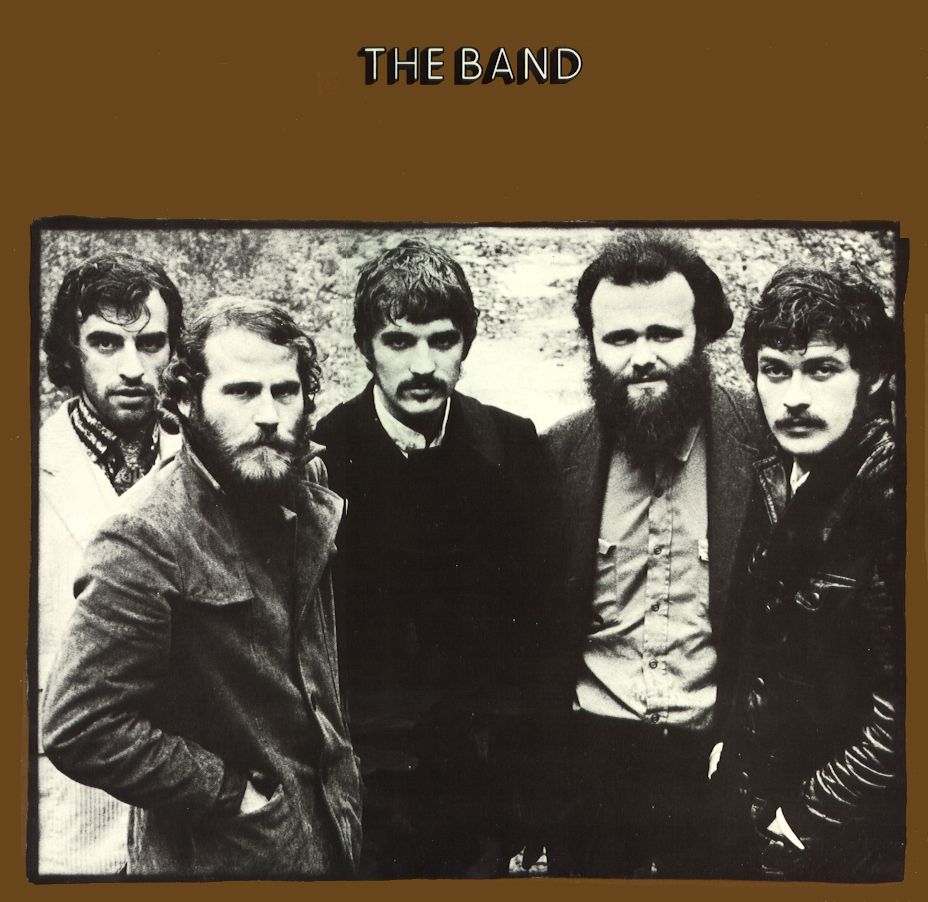
I was first drawn to this album by the cover and then by one of its standout tracks “Up on Cripple Creek”. It is fair to say the cover is totally lacking in all pretension. In the centre is a black and white photograph of the Band’s five members stood side by side, staring ahead like sullen mules. Looking at them, one could be forgiven for supposing the very first “Lockdown” occurred in 1969, so in need are these five musicians of a decent haircut and shave. Framing the photograph is a plain brown (perhaps the least commercial of all the colours) background. At the top is emblazoned the name of the album and the name of the group: “the Band”.
The subject matter on “Up on Cripple Creek” is equally lacking in pretension. The song relates the thoughts and happenings of a truck driver and his down to earth lover, “little Bessie”. But if the album cover was startling in its artlessness, the music-making in this track is anything but. What stands out immediately is Garth Hudson’s funky clavinet playing during the verses (a whole three years before Stevie Wonder’s Superstition) which he interchanges masterfully with organ during the choruses. Levon Helm’s funky backbeat drumming and folksy vocals are similarly delicious. As always, the Band’s members meld together on this song to create a truly unique and delectable sound.
Garth Hudson (left) and Levon Helm (right)
Once I heard that track, I was hooked and my appreciation for the album has only grown in the proceeding months. It is full of compelling story telling, thanks in large part to Robbie Robertson, the Band’s main songwriter. One prime example of this is the song “the night they drove old dixie down”. Here we have a poor white Southerner’s account of the end of the American civil war and the Confederacy’s downfall. This is a difficult song to praise at a time when the impetus seems to be to “cancel” certain aspects of American and European history which are troubling to our modern sensibilities. This song, however, is of course not written in support of the Confederacy’s cause but is rather an attempt at capturing an ordinary man’s perspective at a pivotal moment in American history.
They say history is written by the winners, in this song, we have the story from the perspective of the vanquished. We hear first-hand about the harsh winter of 1865 when food supplies were scarce, about the humiliation of defeat and about the bells that rang all evening announcing that final calamity. I think Levon Helm’s delivery helps takes the song to another level, his vocals are extremely affecting and authentic. The rest of Band contribute brilliantly, and the overall effect is deeply moving.
All five members of the Band
Another impressive song is “King Harvest (Has Surely Come)”. The song structure is interesting here: alternating an eery and muted chorus section, with a lively, jolting verse section. The song relates (again from a first-person perspective), the fate of a down on his luck sharecropper as he struggles on despite his situation. Richard Manuel’s vocals convey brilliantly the desperation of the narrator, while Robbie Robertson’s wiry guitar-work fits the disquieting feel of the song well.
Overall, I consider this to be a truly great album, melding American styles from country to blues, folk to gospel. The arrangements are original, the lyrics always interesting, and the musicianship compelling. There is no tendency for any one individual member to showboat or wallow in their own virtuosity. Moreover, the album has a consistency of themes that make it a truly satisfying whole. I am very happy to nominate it for AOTM and as I am to once again contribute to this most august segment.