COVID 19 has given us all a unique gift: time. This splendid isolation is forcing us all to ask ourselves ‘what would I do if I had more time?’. Now we have time we reflect further and refine the things we would have done into the things we want to do and are doing those things, or so one would hope. I for one had taken up running and long distance cycling as part of Lent. This crisis has only increased my vigour in pursuing both and increased by love for reading and the pursuit of deepening my knowledge of classical music. What has this crisis made you pursue?
On the theme of reflection, I receive each day an artwork from the App Daily Art. Last Sunday, the final Sunday of the app’s Women in Art History Month heralded this offering from French painter Marie-Gabrielle Capet. In this time of isolation, this reflective piece from the artist has a lot to offer all of us.
Marie-Gabrielle came from a modest background and her previous background and artistic training is unknown, but in 1781 she became the pupil of the French painter Adelaide Labille-Guiard in Paris. She excelled as a portrait painter, and her works include oil paintings, watercolours and miniatures. Wikipedia
Observe the delicacy with which she has illustrated her cascading locks of hair on the left shoulder. Note the extraordinary fineness of the fabric sleeve and the way the light and shadow has been captured on the same. Look at the delicacy with which her face is rendered and the perfection of the eye brows, the fixation of her gaze. The softness of the skin is also very well depicted. Personally, I love the way she is holding the brush, as though to remind us that she is an artist. Louise would certainly identify this aspect as self-referential, though not utter garbage, as in her original use of the term when witnessing a rather dreadful play we endured at the Crescent Theatre. Finally, I adore the ribbon in her hair and how expertly she depicts the light finding its way into the ribbon’s folds.
Marie-Gabrielle had evidently attracted the attention of one of the great ladies of French painting, Adélaïde Labille-Guiard, who accepted her as a student in her studio. Marie-Gabrielle soon took precedence over Adélaïde’s numerous other female protégés. There were nine of these in total, collectively referred to as “Les Demoiselles”, and they included the talented Marie-Victoire d’Avril and Marie-Marguerite Carreaux de Rosemond. Art In Society
Perhaps it is symptomatic of being French, but I cannot help but notice Capet has depicted herself in a resplendent light. Compare this to the below, “Study of a Seated Woman Seen from Behind (Marie-Gabrielle Capet)”, 1789 by Adélaïde Labille-Guiard, Capet’s teacher.
This was created using the trois crayons technique, using red, black and white chalk to create a portrait, which Labille-Guiard excelled in. Notice how, though she is now advanced in age compared to the first but the difference is still quite stark. Still, in spite of corporeal differences, the essential grace and composure remains intact. I am impressed by the rendering of fabric once again in the hair and below the shoulder blades.
In this time of isolation, it pays to reflect, as Capet has reflected herself for us the viewers. We can take a page from her book and show ourselves in a brighter light. The old adage says ‘never waste a good crisis’. This has never been more necessary and urgent than today. We have been given the golden gift of time to improve ourselves and use our resources and resourcefulness to assist those in need. Let us, like Capet, reflect ourselves in a better light and come out of this global crisis greater, stronger and healthier in all senses.
“What does matter is that Led Zeppelin represents the rock ‘n’ roll you’re meant to believe in as a teenager. We’re naive to ignore the musical perfection and hungry enough to enjoy the feels. Consequence of Sound” Reading through reviews of LZII, I found this above quotation struck me most. You see, as a teen, I inherited my first record player. This was a monstrous four tiered Sony beast of a machine with a tape player, CD player, radio and turntable all in one. In truth this was the beginning of my life in music. When my Great Grandfather moved homes, I got the record collection. In this collection was LZII. I cannot count the amount of times I have heard this album since my teenage years but it is certainly up there as one of my favourites. LZ aficionados will readily tell you this isn’t LZ’s best work, and they might be correct academically, but this is my favourite of theirs, and my blog. Above all, rediscovering its brilliance has struck me harder than any other album this month.
Led Zeppelin II, which came out in October ’69, just nine months after its almighty, self-titled predecessor, must have benefited from the fast turnaround. The recording process was completed at different studios during the band’s near-constant touring in 1969, and maybe the reason it was so successful was the London group, while on the road, didn’t even have time to think about the hype they were building. With LZII, Led Zeppelin became Led Zeppelin, proving their essence at the same time. To speak cosmically about the matter: What happened was what was supposed to happen. Consequence of Sound
LZ consists of vocalist Robert Plant, guitarist Jimmy Page, bassist/keyboardist John Paul Jones, and drummer John Bonham. Each get their own moments to shine throughout the nine tracks on this album with solos seemingly coming from nowhere to entice and enthral the listener throughout. Produced by Jimmy Page, this is the first true flexing of LZ’s muscles and shows us what the band is truly capable of.
Like I listened to the break (Jimmy wrenching some simply indescribable sounds out of his axe while your stereo goes ape-shit) on some heavy Vietnamese weed and very nearly had my mind blown. Rolling Stone
While I did not have the luxury of “heavy Vietnamese weed”, or indeed any of the other narcotics John Mendelsohn then goes on to describe he was on while listening to this track, I was similarly amazed. Page’s solo, introduced by Bonham’s teasing drums and Page’s shrieking in line with swelling guitars, is difficult to comprehend and ties together a seamless rock anthem which is now instantly recognise-able as one of LZ’s crowning jewels.
The Lemon Song, while featuring some questionable lyrics (“Squeeze my lemon, till the juice runs down my leg”), this may be my favourite on the album. One can recognise the lemon’s phallic symbolism here as being rooted in the blues which preceded LZ. Indeed Willie Dixon did sue LZ for Bring It on Home, LZII’s closing track. This was a blatant cover of a Sonny Boy Williamson blues song of the same name, written by Willie Dixon. But back to the Lemon Song, watch out for the glorious Page/ Bonham solo in the middle which once again, comes out of nowhere and builds to a magnificent crescendo. Listen also for Jones’ impossibly great bass sustaining this track gloriously. For cross reference, listen to the following tracks:
Killing Floor – Howling Wolf
Traveling Riverside Blues – Robert Johnson
Living Loving Maid is another. “Alimony, alimony, paying your bills”. This track is perhaps a bit repetitive but certainly sets the mood for what is to come and is danceable to a T. It is also described as ‘eternally hummable’.
For every young person who discovers “Whole Lotta Love” and “Heartbreaker” and “Living Loving Maid (She’s Just a Woman)”, there’s an older person who gets sick of them from overplay and doesn’t need to ever hear them again. Pitchfork
Ramble on is another highlight. The riff that keeps riffing. Watch out for the Lord of the Rings reference bid song. My final highlight is the instrumental Moby Dick, which showcases Bonham’s genius drumming in the same way as the closing track on Cream’s Fresh Cream, Toad, showcased Ginger Baker’s drumming prestige.
Overall, this is a remarkable album which holds very fond memories for me and I hope it will be able to deliver these to you also, in these trying times.
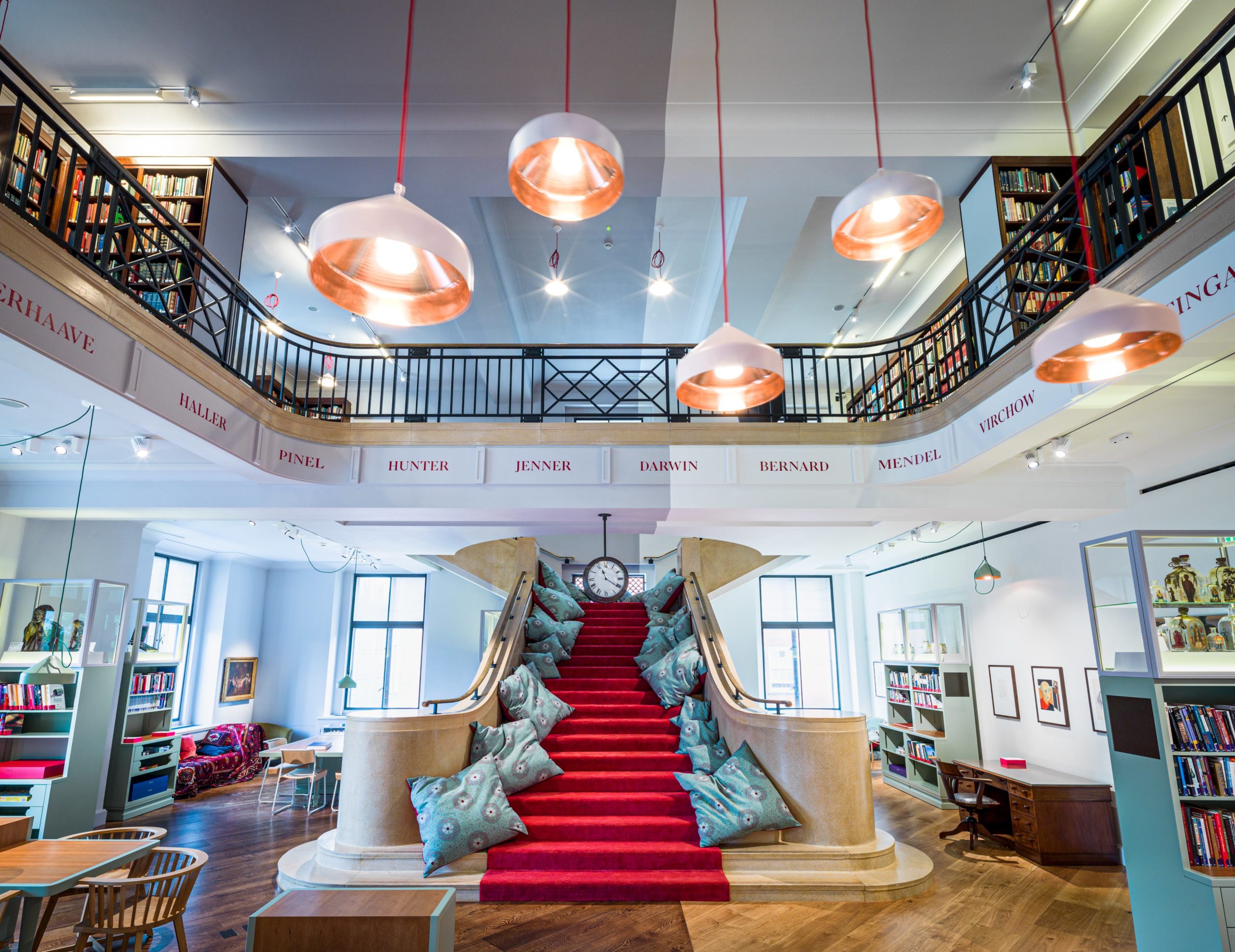
Whilst visiting London, Cedric wanted to find an art gallery near London Euston. He suggested the Wellcome Collection. Unbeknownst to him, the Wellcome Trust funds the Sanger Institute, one of the world’s leading centres for genomic science. I just so happened to forget to mention and (probably for the last time), was able to drag Cedric around a wonderful museum and library centered around Human Health.
Founded by Sir Henry Wellcome, the Wellcome Trust has aimed to improve health by investing in researchers who are focussing on the most prescient threats to global health. Whilst, simultaneously, educating the public on the importance of medical scientific research. The museum certainly reflected this. Although, the Play-Well Exhibition which is running until March 2020, was somewhat confusing and underwhelming. Seemingly showcasing the way in which children play and the media in which they do so has changed over time, with imagination seemingly fading and digital entertainment captivating the younger generations.
Most interesting, for me, was the permanent exhibition “Being Human.” Within, it showcased the ins and outs of human health. Including a transparent 3D anatomical model of a woman in which the organs would illuminate when you press the corresponding button, a valuable and engaging educational tool that all ages were interacting with, even if they don’t know what the cecum is…
An eye-opening piece within this exhibition demonstrated bacteria generating antibiotic resistance to exceedingly high doses within 11 days. An incredibly pressing matter as bacteria are becoming increasingly resistant to treatment due to the misuse of antibiotics, so it was refreshing to see an exhibition drawing attention to that.
However, the Wellcome Collection had other exhibitions such as “Medicine Man,” demonstrating medicine’s evolution throughout history. It was certainly worth a mooch, but not for the squeamish as there is a mummified body.
Cedric was most delighted with the library and reading room which sits at the top of this museum, it boasts hundreds of books all pertaining to human health and even has some exhibition pieces including a sliver of anatomist Dr. Gunther Von Hagen’s human dissection work, which demonstrated the complexity and beauty of the human body.
Overall, this was a brilliant museum which opens your eyes to the evolution of medicine, and how that had led to the research being conducted today. I would wholeheartedly recommend the Wellcome Collection if you’re ever around London Euston.
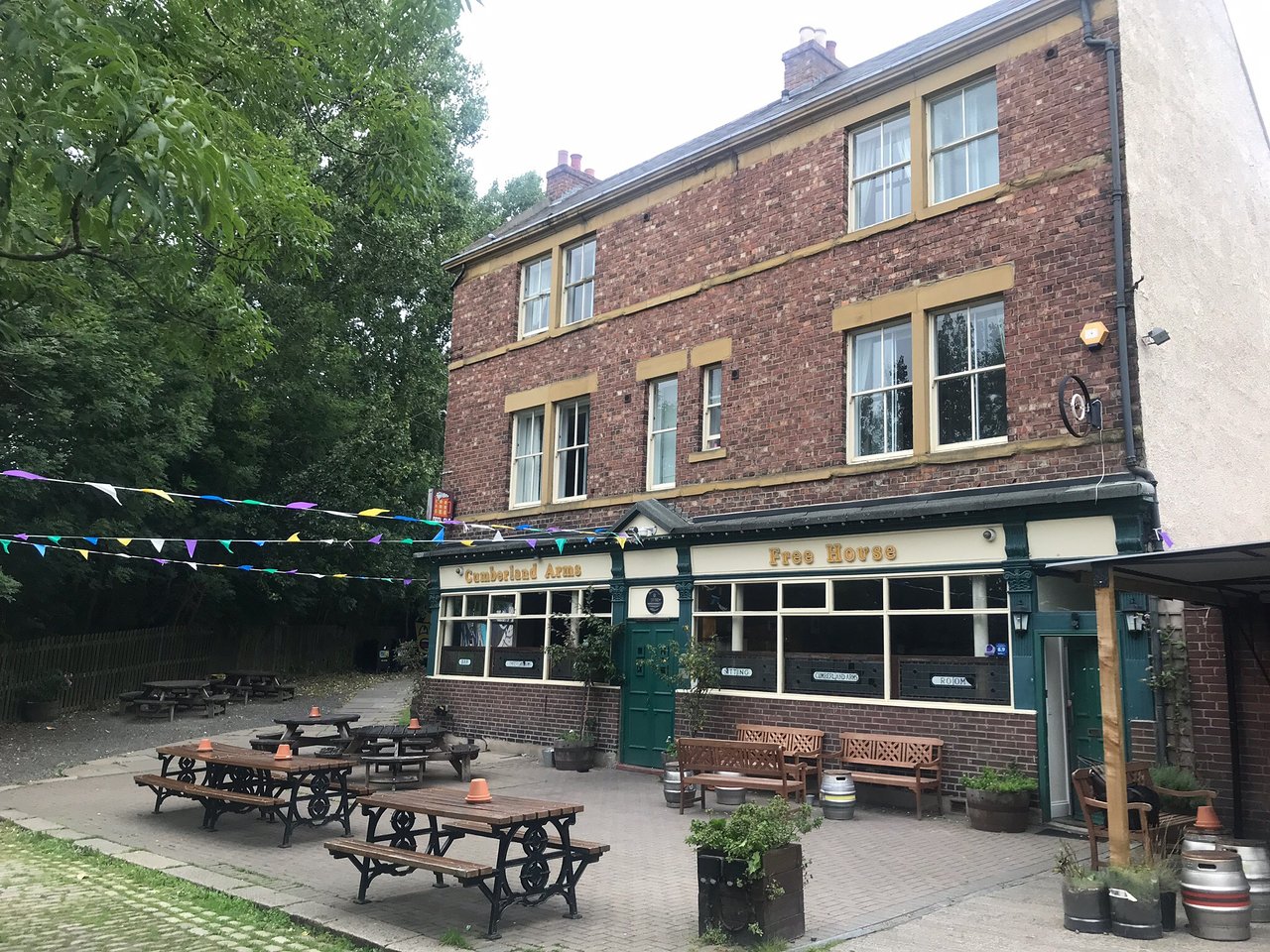
Those of you who have been to Byker will be surprised to read that there is any establishment of repute within it, or indeed within two miles of it. I can confirm this was a prejudice I, myself (as opposed to I, anyone else), once shared. The Cumberland Arms was the scene of many outrageous and strange personal encounters when I lived in Newcastle for a few months some years ago. Thus I was glad that well known alcoholic and personal friend of mine, St Nick, alighted in Newcastle in search for the Next Best Pub. I was glad to practice a form of erasure, by taking him there, rewriting my old memory of the place with a new one. I recommend this practice to those who have suffered in specific places as I have found it quite healing. Of course if your good doctor tells you this is a bad idea, it might be best to follow their advice.
Now onto the pub itself.
The Cumberland Arms sits at the end of what was a terrace, built around 1860 so The Cumberland was operating as a beerhouse pretty much from the start. As a result of an act of Parliament in 1830, anyone could brew and sell beer on payment of a licence costing two guineas.
It was converted from a private house into a pub in 1898 and opened in 1899; however it didn’t get a full on-licence until 1956. The modifications in 1898 made the local newspapers as the result of a tragic accident when part of the building collapsed killing a workman called Matthew Fitzgerald. This has lead to the corner of the pub to the left of the fireplace in the main bar being known as “Dead man’s corner”. Cumberland Arms
Now this last sentence I can understand. There is nothing else on the street except this pub. The layout of the pub is also extraordinary. There are two rooms left and right of the entrance, rather than adjoined. Many of the old fixtures from the early 20th Century remain including the off-sales hatch and its sliding window.
Now, much to St Nick and The British Establishment’s consternation, I have given up the drink. This evening represented the penultimate time I will have drank booze. I had a lovely but typical cider when I was there. St Nick had a Porter which he enjoyed very much. Being a man of few words, I am unsure how to translate his grunts and mumbles. But suffice to say he was please.
This pub is home to twelve real ale hand pulls and four keg lines rotating beers. I won’t ever experience them but I do recommend them to you. And do keep an eye on the What’s On page of their website. The Cumerland Arms is famed for its music and my father and I enjoyed an Irish Folk band one evening which was most enjoyable indeed.
Having returned to London recently I had the joy of visiting the Wallace Collection again. Please find below a few pieces which struck me and are absolutely worth talking about.
The Annunciation, Philippe de Champaigne French – ca. 1644
Now, I have already spoken about this in my Ferens Gallery post in Hull, but it is worth mentioning that this is possibly the painting which captivated me most out of all of the gallery. This is situated in the Great Gallery and had me in awe, as it did in Hull, for largely the same reasons.
The Acrobat, Barthélemy Prieur, ca. 1600
I remember from my first visit to the Wallace Collection how struck I was by this unusual sculpture. I had never before seen a sculpture where the depicted person or persons are not upright! Indeed, until Barthélemy Prieur, nobody else had either. Observe the musculature and the stretched skin around the arms. Observe the legs swinging to keep balance, there is wonderful depiction of motion here.
French sculptor Barthélemy Prieur was born in Berzieux (now in the Marne), into a family of farmers. He studied art in Italy and between 1564 and 1568 worked for the Duke of Savoie in Turin. On his return to France, he introduced Italian-style small bronzes into French art. His main output, though, consisted of large, bronze funerary monuments. His monument to Christophe de Thou is now in the Louvre, as is his monument to Anne de Montmorency. National Galleries
Polichinelle, Jean Louis Ernest Meissonier (1815–1891)
One of several whole-length figures of Punch by Meissonier, this was painted on a door panel in the Paris apartment of Apollonie Sabatier. The panel was cut from the door and retouched by the artist for the sale of Mme. Sabatier’s collection in 1861. The louche character of Punch was a not inappropriate decoration for the apartment of a celebrated courtesan.
I was amazed when I first saw this portrait. Look at the cheek in the facial expression, the delicate details in the hands and nails as well as the almost grotesque exaggerated stomach. I especially love the masterful depiction of felt in the trousers and the rich choice of colour. The shine on the clogs is also wonderful. this is such a delightful piece I would be at pains not to share it with you.
Miss Jane Bowles, Sir Joshua Reynolds (1723–1792)
Jane Bowles (1772–1812) was the eldest child of Oldfield Bowles of North Aston, an amateur painter of some distinction. When deciding which painter to employ to paint his daughter, Bowles invited Reynolds to dinner to see how he got on with his potential subject. According to Reynolds’s nineteenth-century biographer, Leslie: ‘the little girl was placed next to Sir Joshua at the dessert, where he amused her so much with stories and tricks that she thought him the most charming man in the world. Art UK
My final offering is this sweet rendition of a young Jane Bowles with her lovely dog, which looks from the colouring to be either a Border Collie or Spaniel puppy. From the hair, most likely closer to a Spaniel but I may be, and most likely am, wrong. Ms Bowles is sitting in a forest clearing, hugging her dog and looking pleased with herself. Every aspect of this portrait is so twee and delightful, charming even, that it drew my attention. Of course, you’ll know I’m a sucker for beautifully rendered fabrics, which are present here. But I especially love the detail of the dog’s right leg pressed against her as though Ms Bowles is squeezing too tightly. This is just exquisite to me.
So overall, not a bad collection at all. The Wallace Collection is filled with treasures and lest we forget, the building itself is magnificent and absolutely worth visiting. Whats more, it’s free. No excuses.
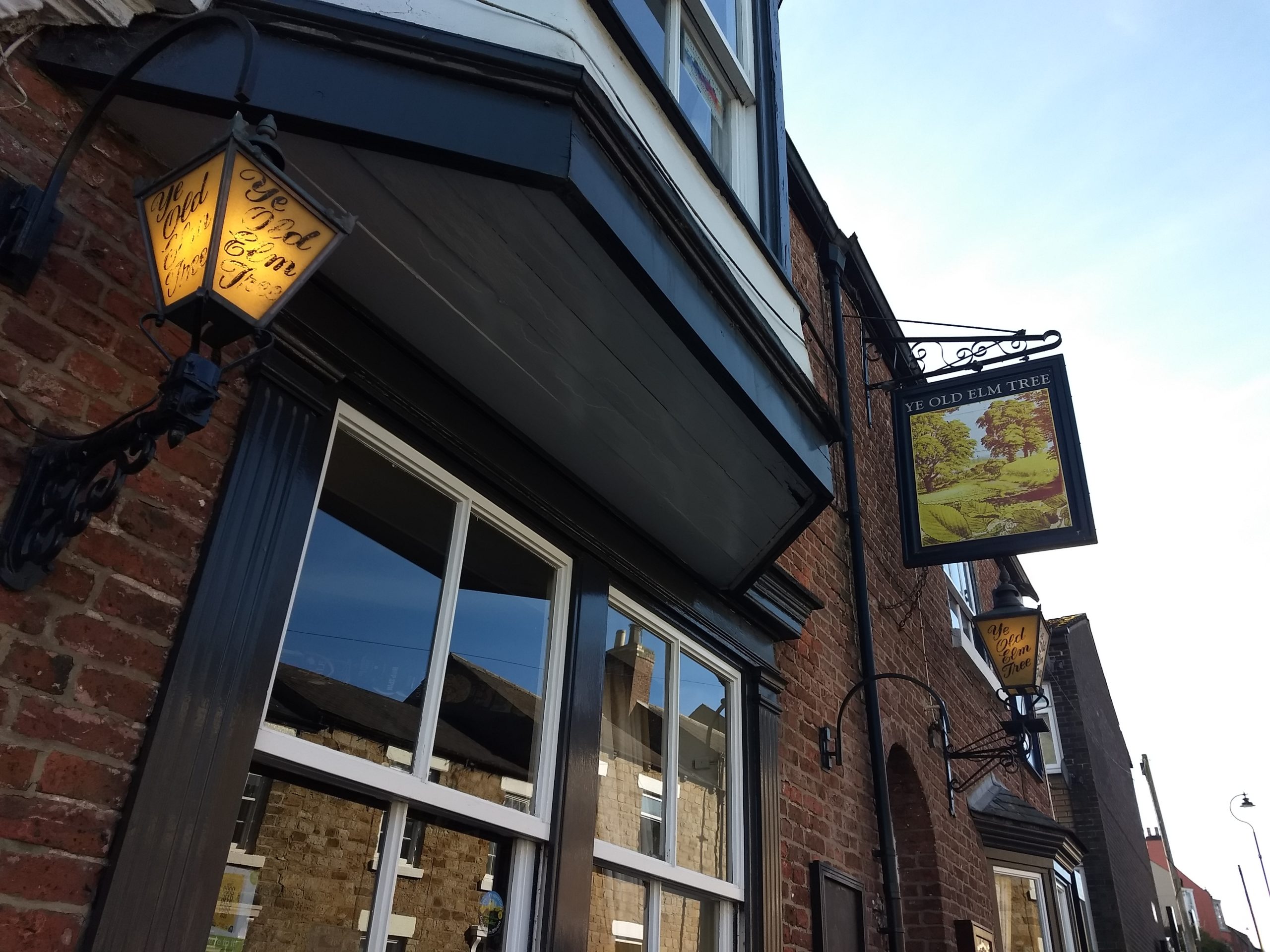
Ye Old Elm Tree is perched atop the idyllic market town of Durham. After an enthralling and deeply moving service at the Cathedral, we headed there for Sunday lunch. St Nick wanted a model, genuine pub and that is exactly what he got.
This is one of Durham’s oldest inns, dating back to at least 1600, and is reputed to have two ghosts. The interior comprises an L-shaped bar and a top room linked by stairs. A friendly pub, it attracts a good mix including locals, students and visitors to the city. Enjoy a good range of ales and home-cooked Sunday carvery, the Wednesday quiz (arrive early), and a folk group on Mondays and Tuesdays. Local CAMRA branch Town Pub of the Year 2015 and 2016. Whatpub
In addition to the wonderful array of hand pulled beer and cider (including my personal favourite, Orchard Thieves), this marvellous pub has a Sunday Carvery. This is what we came for, and after an arduous cycle in and around Durham, this is what we deserved.
We had a choice of beef, pork and turkey. I chose the pork and turkey, while St Nick went for the beef. I won’t purchase beef anymore on account of its unspeakably awful effect on the environment. Arguably I should also give up pork for this very reason but I can’t quite bring myself to do so yet.
The carvery came with unlimited vegetable refills but only one serving of meat. I can tell you that the stuffing was magnificent, the Yorkshire puddings were smashing and the roasties were divine. I loaded my plate up with as much as I could gather. I must say the cauliflower cheese was also a highlight.
This is it, the apex of Sunday lunches. Nothing too fancy, no silliness and no frills. This is honest pub grub, great quality and cheap at the price. For those of you who do not understand this latter British idiom, know that you are not alone. The crackling was delightfully though to begin with and gradually receded under the might of my canines. The pork was cut thick by the chef and tasted beautiful. The turkey, as is the trouble with almost every single portion of turkey I have ever consumed, was dry. Thankfully, I was able to load up a gravy boat with a half gallon of the good stuff to lash over my lunch. Overall I left feeling deeply satisfied and ready to take on the next impossible hill.
If you have time on a Sunday to attend the service at Durham Cathedral, please do so (provided you attend a Catholic church earlier in the day, of course). This place is hallowed ground and almost too beautiful to be true. I was left unable to believe my eyes on several occasions. And while you’re there, do stop by the Old Elm Tree.