For those who didn’t know, Rush is comprised of official Canadians, Geddy Lee, Alex Lifeson, and Neil Peart. Neil Pert recently, and very publicly, passed away. This lodged a little seedling into my mind that I absolutely had to dedicate one of the AOTMs to Rush. Doing my preliminary reading around the issue has revealed that my knowledge of Rush is dwarfed by almost everyone I have read. To save myself the tedium of bringing myself up to speed and you, dear readers, the impression that I don’t know what I am talking about, I shall remain where I am comfortable for the duration of this review. I encourage you to read the reviews hidden behind hyperlinks spread around this review.
The music is complex and flowing with a lush production. Like the previous four studio album, Hemispheres was produced by Terry Brown. Influenced by progressive rock bands like Yes and King Crimson, the group set out to make more complex music, stretching the maximum potential of three rock musicians to be replicated in live situations. Lead vocalist and bassist Geddy Lee added Minimoog synthesizer and bass pedals to his arsenal while guitarist Alex Lifeson experimented with classical and twelve-string guitars, often using a holder stand to easily switch between guitars live. Peart continued to add diverse percussion to his ever-growing drum set, including timpani, blocks, orchestral bells, chimes, and melodic cowbells. Classic Rock Review
Hemispheres opens with a follow up from the last track on Farewell to Kings; Cygnus X1 Book II: Hemispheres. This 18 minute long track which takes us on a whirlwind tour of the Greek mythology of Apollo, the god of reason, and Dionysus, the god of love. This pseudo-classical offering is exemplary of Rush’s progressive rock leanings at the time of Hemispheres. This was to change for their next album, Permanent Waves, which I have on vinyl somewhere. In all, Hemispheres is a singular track which blew me away with its technical brilliance.
As Bowman writes: “Rush deployed what had now become the standard conventions of their composition strategy; multiple key signatures, ambiguous tonal centers, tritone relationships, shifting meters (at various points in the piece they play in 12/8, 9/8. 7/8, 5/4 and 4/4), multiple themes that reoccur at significant distances often in different guises, substantial changes in dynamics, atypical melodic patterns, and the juxtaposition of Lee’s rich baritone and strained counter tenor voices, all executed with virtuosic, extraordinarily precise musicianship.” Consequence of Sound
Circumstances might be my favourite track on the album. This is largely due to the fact they sing ‘Plus ça change, plus c’est la même chose’, one of my favourite French idioms. Neil Pert supposedly wrote this song about the monotony of not succeeding as a rock drummer. Indeed many of us will feel ‘trapped by circumstances’ at the moment and this song is wonderfully liberating. This is Rush at their best. Pert’s drumming is extraordinary, Lee’s Rickenbacker Bass is stunning and Lifeson’s vocals are just high pitch enough for you to enjoy trying to sing along.
The philosophy continues with “The Trees”, a parable on socialism and collectivism. Here, Lifeson takes center stage from his classical acoustic intro through the incredible movement through differing guitar textures. Like “Circumstances”, there is another mid-section which starts with some synth and percussion motifs before breaking into a full band jam, which brings the tune to a fevered conclusion with an ironic lyrical ending. Classic Rock Review
I love Trees. I love the inventiveness of writing a song about Maples wanting more light from Oaks. This can be seen as a grand metaphor for justice and liberty or fighting for the rights of the oppressed but in truth it has no meaning at all. Pert noted the following in the April/May 1980 edition of Modern Drummer: “No. It was just a flash. I was working on an entirely different thing when I saw a cartoon picture of these trees carrying on like fools. I thought, ‘What if trees acted like people?’ So I saw it as a cartoon really, and wrote it that way. I think that’s the image that it conjures up to a listener or a reader. A very simple statement.” Watch out for the percussion intermission in the middle of this track.
La Villa Strangiato is titled after a melding of the Italian and Spanish words for strange (Strana and extraño – strangely, the adjective has a masculine ending though it follows a feminine noun). The song is split into 12 movements as follows:
I– Buenos Nochas, Mein Froinds!,
II– To Sleep, Perchance To Dream,
III– Strangiato Theme,
IV– A Lerxst in Wonderland,
V– Monsters!,
VI– The Ghost of the Aragon,
VII– Danforth and Pape,
VIII– The Waltz of the Shreves,
IX– Never Turn Your Back on a Monster!,
X– Monsters! (Reprise),
XI- Strangiato Theme (Reprise),
XII– A Farewell To Things.
This instrumental masterpiece is the perfect way of closing Hemispheres. Pert once joked that he spent more time on this one track than on the entirety of Fly By Night, one of the band’s earlier albums. It is easy to see why. Following on from the pseudo-classical theme of the first track on this album, we finish in splendid fashion with this divine composition.
Overall, Hemispheres is a much treasured album which will be listened to time after time, never losing its lustre. I highly encourage you all to hear it.
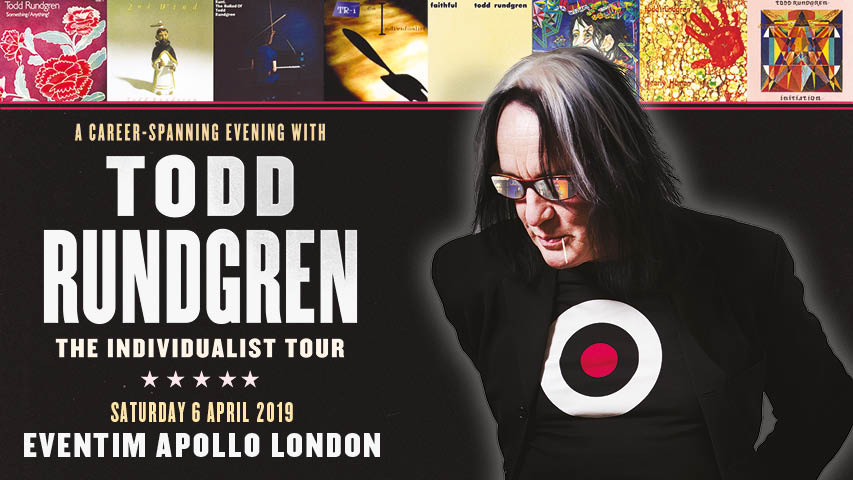
With isolation comes reflection. It is perhaps a credit to my elevated state of happiness in recent months that I have not composed poetry as prolifically as before. But here is a poem for you which I composed while at a Todd Rundgren concert last year, when I was not quite as enthused by the situation in which I found myself.
I can hear your chortles from here. Indeed this was a partially traumatic evening, but this father’s geriatric nipples did not distract from what was an extra ordinary concert. Todd Rundgren is one of my musical heroes. He’s done it all and done it well. He has worked with some of my favourite artists (Sparks, XTC, Meatloaf (to a lesser extent a favourite)) and produced some truly stunning albums himself. Todd Rundgren’s Utopia is in my top three albums ever at present. I remember being so astonished by it in first listening that I slumped off my bed (I was living in Coventry at the time) and stared into my speakers agog. This album is a regular feature on long car journeys.
There is an aspect of this which I have not mentioned; my lovely friend Emily with whom I saw this concert. She has been a dear friend to me for many years and I miss periodically visiting her in London and being graced by her singular charm and her unique take on life. While waiting for her at Euston, I wrote a poem about the comings and goings of London Ladies. Do enjoy it below:
I hope these two short poems have brought some joy into your day. They certainly have done so for me. And this is my blog, after all.
Gifted us by first-time writer-directors Mike Ahern and Enda Loughman, this inventive, wacky black comedy was shocking from start to finish. I must admit I won’t readily call Extra Ordinary a horror film as it lacks the classical and crucial element of fear. This is a comedy at its heart and an extremely special one at that.
Rural Ireland. Sweet-hearted Rose (Maeve Higgins) is a paranormal investigator-turned-driving instructor who blames herself for the death of her dad. When local widower Martin (Barry Ward) asks for help dealing with the abusive ghost of his deceased wife, she soon finds herself in the middle of a Satanic plot involving a washed-up American pop star (Will Forte). Empire
Higgins and Ward make an unlikely pairing but one which really comes off well, so to speak. The concept of this film is extraordinary in itself. The idea that a failed exorcist turned driving instructor, is called to put an end to a Satanic ritual is so outlandish. But on top of that you have sterling acting, wonderful cinematography and splicing in of Rose’s father’s paranormal VHS tapes as plot instruments. See, rose’s father was a paranormal expert and had a successful TV show and sold exorcisms. This wonderful editing ensures, for me, the cult status which Empire Reviews claim this film is destined for.
I’m not entirely sure Will Forte’s Satanist ritual was necessary in the end. This added a layer to the film which took away time from Rose and Martin’s wonderful awkward sexual tension fuelled repartees, especially towards the end when a new character is introduced. However I will say he is clearly the film’s most seasoned actor and plays the part of the washed out one-hit-wonder-30-years-on very well.
Overall, I think Extra Ordinary is flawlessly executed and a must see both in the comedy and ‘horror’ cannons. This will go down as a film which marked a turning point in comedy horror as a genre. I do hope you enjoy it at this trying time.
This masterly play in one Act has been amusing me greatly during isolation. I wanted to bring it to your attention as an option for short reading material during this interminable lockdown. Anton Chekhov (1860-1904) was a Russian playwright. He is considered the master of the modern short story. He probes beneath the surface of life with laconic precision. I recall seeing The Seagull at the Crescent Theatre (in the before time) with Louise and being moved to tears by how relevant it was.
Smoking is Bad For You (otherwise translated as The Dangers of Tobacco), tells the tale of a hen-pecked husband, Marcellus Nyukhin, whose wife keeps a music school and a girls’ boarding school. The version I am discussing is the 1903 version, not the earlier 1889 version which is slightly longer.
Please see a delightful performance by what appears to be a high school drama teacher below:
I love how insular this play is, how in such little time, Chekhov manages to paint a complete picture of this weary exhausted husband who is, in the end, frightened of his wife. Frightened so much that he submits to her will and puts himself in compromising positions (IE: on a stage talking on a subject which he has no knowledge of). This play, for me, is about more than subjugation, mind, it is, to paraphrase Graham Green, about ‘how one lives, constantly putting things off’. Nyukhin is all of us, his wife represents all of our problems. I have found, living in this country fifteen years now, that people allow themselves to be hounded by issues and instead of addressing them directly will follow in Nyukhin’s footsteps, audibly complaining about the consequence without trying or even wanting to remedy the source. This has never been truer than today. Nyukhin is, in a comedic way, Chekhov’s warning to us all.
I encourage you all to purchase a copy of Chekhov’s Short Plays. I have found mine immensely rewarding. I also understand Steve Coogan performed this play in BBC’s Chekhov Comedy Shorts series. This surely is a must watch if you can find it.
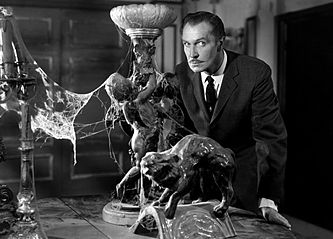
Starring Vincent Price, Carol Ohmart, Elisha Cook, Carolyn Craig, Alan Marshal, Julie Mitchum and Richard Long, this 1959 horror is every bit as outrageous and camp as the title suggests. The premise, in essence, is that Loren, a millionaire, offers five strangers $10,000 each to stay in a haunted house overnight.
Frederick Loren (Vincent Price), an eccentric millionaire, invites five people to a party he is throwing for his fourth wife Annabelle (Carol Ohmart) in an allegedly haunted house he has rented, promising to give each $10,000 with the stipulation that they stay the entire night in the house after the doors are locked at midnight. The guests are test pilot Lance Schroeder (Richard Long), newspaper columnist Ruth Bridges (Julie Mitchum), psychiatrist Dr. David Trent (Alan Marshal) who specializes in hysteria, Nora Manning (Carolyn Craig) who works for one of Loren’s companies, and the house’s owner Watson Pritchard (Elisha Cook). All are strangers to both the Lorens and each other, with their only commonality a desperate need for money. Wikipedia
My first highlight comes in the opening scenes, when the Lorens are having a tense conversation. Frederick is convinced Annabelle has poisoned him:
“Remember the fun we had when you poisoned me?
Something you ate, the doctor said.
Yes, Arsenic on the rocks”
and:
“Don’t Let the ghosts and ghouls disturb you.
Darling, the only ghoul in this house (dramatic pause) is you”
This movie is replete with such inspired volleys of speech, though the acting itself is either wooden or over the top. House on Haunted Hill has a terrific atmosphere with some great character development. Of course Price carries the film through with his stoic calm presence which never dips into sensationalism.
Something else that director William Castle is great at is imagery. Whether it be a genuinely creepy moment or just an effective dramatic shot, Castle proves with this film that he has an eye for effective photography. This movie is pretty cheesy in its horror imagery, but that’s mainly the third act. In fact, I think the first two-thirds have some pretty creepy moments. Moments like a woman dressed in black jumping out at someone is creepy, and even simple moments like a dead body hung from the ceiling, but instead of seeing the full body we only see the dangling legs. Stuff like that is really effective and memorable. Not just scares, but even basic moments like Vincent Price putting a gun in a coffin or the classic 50’s “dramatic glance”, or even someone just standing in a hallway for just the right amount of time to make it unsettling. Horror Syndicate
William Castle has directed a slightly creepy but clearly classic horror film in The House on Haunted Hill. I recommend it to you in isolation, looking for something thrilling and well made, but not too complex to follow.
As you may or may not know, before the COVID-19 Lockdown, I was able to take a train to Newcastle and cycle in a group of three. These were the lofty long gone days, now superseded by endless isolation and just a little too much time to do the things we always wanted to do but will still neglect to do. In this period of national freedom mourning, it is important to have things to look forward to. One such place might be the Tynemouth Market, which I have most enjoyed on the occasions I’ve visited.
Tynemouth Market is a wonderfully diverse market with produce from CBD tea (which wasn’t as exciting as you’d think) to taxidermy foxes. Personally, I enjoy the vast collection of art on offer. I got one of my most treasured paintings there. A pallet brush colourful rendition of a ship at sea.
Gloriously restored to the former glory of its grand Victorian days, Tynemouth Station now offers a vast covered space for the famous markets each weekend. Visitors come from far and wide to join the crowds enjoying the huge variety of over 150 stalls and soaking up the huge atmosphere on both sides of the platforms. Tynemouth Markets
It should be noted that dogs are permitted within the market and are fairly amenable to being photographed with high quality cameras.
The market itself is split over two platforms as it is situated within a train station. The food stalls are usually at the right end of each platform if one is looking from the direction the above photograph was taken. I often go to the hog roast stall and have an absurdly cheap bap, pictured below, which works a treat. But there are also Greek places and fish and chip venues.
Overall Tynemouth market is a place of sheer joy and absolutely something to look forward to once this isolation is over. It is closed at the time of writing but should re-open when it is safe to do so.