I can think of no better way to end a decade than to laud the woman, the myth, the legend that is Grace Jones. It is not hyperbolic to state Grace Jones has had the second greatest influence on my life, after mother/father dearest(s) of course. Slave to the Rhythm was the first record I ever bought. I bought it for £4 from the British Heart Foundation in Harrogate because the cover was torn (The G and R in the corner are missing). This is still the pride of my record collection.
Few human beings have so fully embodied the notion of a “singular artist” more so than Grace Jones. In the annals of pop music and fashion, there has simply never been anyone else on earth quite like her—strong, severe, and otherworldly in every way, Jones has blazed a trail through popular culture over the past four decades that remains unrivaled in terms of boldfaced originality. Pitchfork
I find it quite difficult to write about Grace Jones. She means so much to me and to so many others. Meeting her in Piccadilly in 2014 was one of the highlights of that year, topped only by seeing her play live at Parklife Festival in Manchester. The potency of her presence is not to be understated.
Working closely with the Jamaican duo Sly and Robbie as her rhythm section, her brilliantly eclectic sound at the time fused elements of rock, funk, post-punk, pop, reggae and more. In more recent years this hybrid has been credited for influencing alternative acts like Massive Attack, Gorillaz, Todd Terje, Hot Chip and LCD Soundsystem. Tidal
How does one even begin to speak about Slave to the Rhythm? This was a concept album produced by the legendary Trevor Horn (founder of ZZT records). It is an autobiographical work which tells some of Grace Jones’ story in song but interrupted with fellow ZZT founder & journalist Paul Morely interviewing Grace. This album is etherial and enormous in scope.
An audio biography of Grace Jones, produced by Trevor Horn, it’s a sonic treat along the lines of Yes’s 90125 or Frankie Goes to Hollywood’s first album (both produced by Horn). The music ranges from slick R&B runaway grooves to striking audio montages, interrupted occasionally by conversation about Jones’s life. Serious ear candy. All Music
Ian McShane opens the album in a haunting rendition of John Paul Goude’s Jungle Fever. This sets the scene for a melodic journey through Grace’s wonderful vision. Grace worked with some of the best musicians there are (Sly & Robbie of course were Black Uhuru) to produce an album of such beauty that words to describe it are failing me. This had to be album of the year. It’s scope is enormous and I seldom utter a word when listening.
Stylistically, Slave to the Rhythm incorporates funk, R&B and go-go beats that encompass the classic ’80s sound that Trevor Horn is known for, while losing the reggae and new wave elements found on Jones’ previous trilogy of albums. Originally intended for British group Frankie Goes to Hollywood following their debut hit “Relax,” the album’s titular centerpiece ”Slave to the Rhythm” was written by Bruce Woolley, Simon Darlow, Stephen Lipson and Trevor Horn. In something of a unique approach, the album’s tracks are, in essence, radically different interpretations of the same original song. Tidal
Grace Jones changed my life. I remember the moment it happened too. We had just moved to our second house in England and my father made me a compilation CD called ‘Movin’ On Up’. Inevitably, the famous track by M People was on there. But the track which really caught me off guard was ‘I’m Not Perfect, But I’m Perfect For You’. Nothing was ever the same. Please enjoy Slave to the Rhythm, which is album of the year, but also the album of my lifetime.
Friends, loyal readers, people who dislike me reading this trying to find a chink in my armour (and failing), this is my favourite post of the year. In this post, I have the honour of paying homage to albums which I’ve truly enjoyed throughout the year, but for whatever reason have not made it to Album of the Month. This is also the longest post of the year, consisting of twelve mini-reviews. I hope you’ll do me the kindness to bear with as we embark on a retrospective musical journey through 2019…
A Storm In Heaven – The Verve (1995)
There is so much to say about this album. It is hair raising from the opening note. Filled with magnificent psychedelic delights, this album is almost overpowering in parts. The Verve’s prowess in taking on on a cosmic voyage through sound is unrivalled. This 1995 album is a gift to new generation rockers. Overall, this is an ethereal psychedelic journey of an album.
Standout Tracks
Already There (“I thought I watched my best years leave / then I watched them come back”) – reminiscent of Us and Them by Pink Floyd.
Sun and the Sea
A Storm in Heaven is the dark, mysterious stranger of The Verve’s discography. As drugs and creative differences eroded the band’s professional and personal relationships, they upsettingly exiled themselves from their debut’s inimitable personality. Drowned In Sound
2. A Deeper Understanding – The War on Drugs (2017)
I liked this album so much I had to buy it on vinyl. Another example of prime psychedelia rock, A Deeper Understanding does what it says on the tin. At points this album becomes deeply introspective and in a way allows us to reflect on our own vices. But in addition to being accessible, this does provide a high quality and large sound. The scope of this album and the beauty of its sequencing are not to be underestimated.
Standout Tracks
Pain (“I resist what I cannot change”)
Holding On
Clean Living
Granduciel’s work finds its meaning in the totality of its sound, in how writing and arranging and perfecting every detail in the studio is part of building music that carries you with it. His way of understanding the world is to use that sound machine to excavate and explore his interior life and hopefully shape it into something listeners might understand, even when he’s not entirely sure where he’s going. Pitchfork
3. Are You Experienced? The Jimmy Hendrix Experience (1967)
There are few albums which everyone can agree on as being superlative. This is one of them. As a debut album, the breadth Hendrix achieved here is astonishing. Are You Experienced covers rock, blues, soul and folk, culminating in a seminal rock n roll album. Rolling Stones considers it the 15th Best Album of All Time. “Rock’s most innovative and expressive guitar record” about sums it up. I wrote in my notes that this was a gift to Rock.
The sound forged on the album synthesized elements of 1967 psychedelic rock with traditional rock, blues, and soul. This was all topped off by the proficient and original guitar work by Hendrix, who used cutting edge techniques and technology to create sounds never before heard. Hendrix also composed solid songs, rooted in heavy blues and roots rock. This, along with the frantic but solid rhythm by Redding and Mitchell, gave Hendrix the perfect canvas on which to paint his guitar masterpieces. Classic Rock Review
4. One of These Nights – Eagles (1975)
One of These Nights didn’t make AOTM at the last minute because Country Joe & The Fish took me by surprise. I think it is remarkably accomplished and quite unique by comparison to the rest of their arsenal. This album seems to be journey through the lyricists’ pain. Lyin’ Eyes speaks of an adulterous woman, Visions talks of ambition and After The Thrill… well you can guess the subject matter. Overall I found the album beautifully sequenced, evocative and touching.
Their music reflects the Hollywood ethos of glamorous, narcissistic ennui, exhibiting the contradiction between the city’s atmosphere of “laid-back” machismo and its desperate rootlessness of spirit. Even the Eagles’ more plaintive songs have a surface sweetness that belies the jaded pessimism of so many of their lyrics. This sweetness, combined with superb arrangements, brilliant playing and the seamless vocal harmonies of Glenn Frey, Don Henley and Randy Meisner, accounts for the band’s popularity, for it evokes everything gratifying that people would like to fantasize about L.A. Rolling Stones
5. Adolescent Sex – Japan (1978)
In my top albums of all time, this ranks very highly indeed. Adolescent Sex is an album of supreme technical brilliancy with the relentless hooks and almost overwhelming rhythms. Every track is absolutely perfect and remarkably different from the last. The solos are outstanding. David Sylvian’s voice is magnificent, the whole thing is great, except one thing. the reason this is not Album of the Month is because it is too good. It should be Album of the Year. The reason it cannot be Album of the Year is because of the track Don’t Rain on my Parade which I believe is a complete butchery of the wonderful original by Barbara Streisand in the movie Funny Girl. Alas it must be relegated to Almost Album of the Month. AOTY must be perfect, you understand.
Standout Tracks
Transmission
Wish You Were Black
Lovers on Main Street
Television
Sparse, austere and melancholy are the last words you’d use to describe their debut and its successor, which took a randy sledgehammer to subtlety. They are abrasive, strutting, gobby, in-your-grill slashes of glam-punk-sleaze-funk, and pretty much everything the personnel, then aged around twenty, grew to aesthetically oppose. The Quietus
6. Air – Air (1971)
This is one of the treasures of my collection. I wish I had this on vinyl. While I will admit Googie Coppola (lead singer) does go a bit far at points in this album, her vocal range and the capacity of her voice are astonishing. She is able to captivate the listener and cut through the marvellous, complex rhythms underpinning each track. This is the height of funk and is a fantastic, excellently produced and splendidly varied album.
Standout Tracks
Mr Man
Realise
Man’s Got Style
Not to be confused with French duo Air, this group featured the amazing talent of Googie Coppola on vocals and an impressive cast of musicians who collaborated with Flora Purim and Ray Barretto. Whether it’s the funky groove of Mr. Man or the lighter touches of Jail Cell, the expressive voice of Googie blends itself in a unique way with great songwriting and a strong musical knowledge at work here. The beauty of a song like Sister Bessie is simply unbelievable and brings to mind some of Roberta Flack’s most memorable moments. Music is my Sanctuary
7. Blue – Joni Mitchell (1971)
Now this. I’ve been a fan of Hejira for a long while. Joni Mitchell’s ability to go on journeys and write about significant people or experiences she has, then translate them into a striking piece of music is remarkable. I found this acoustic album beautifully arranged. Joni Mitchell’s vocal range is so joyous to experience. This is a strong album on all fronts, superb arrangement, lyrically brilliant and melodies to die for. A truly special album which has become quite close to my heart.
Standout Tracks
California (not so subtle criticism of France, which I always applaud)
River (Listen to the Jingle Bells riff and see where she takes it)
A Case of You (heartbreaking love song)
The accompaniment — James Taylor and Joni strumming a nervous, Latin-flavored guitar part over a bass heartbeat that throbs throughout the song — perfectly expresses Joni’s excitement and anticipation. So does the melody, a dipping, soaring affair which she sings in her sweetest soprano. Rolling Stone
8. The Kick Inside – Kate Bush (1978)
Let’s open with the fact that Kate Bush was 19 when she released this. Some of the songs contained therein were started when she was 15. When I was 15 I was doing all sorts of ghastly things, like reading Garth Nix and thinking it was first rate literature. Moving on from my startling confession, This album continues a theme which has been unwittingly running through this post: namely that I seem to gravitate towards strong purposeful women in music. Kate Bush’s debut is an unquestionable masterpiece. The vocal range, the harmonies, lyrical mastery, the sheer strength of this wonderful woman make for a stunning album. This album is so much greater than I can express here. The Pitchfork review, quoted below, is most excellent. This could have been album of the year. Perhaps this should have been.
Standout Tracks
Every single one
Yes, the song “The Kick Inside” is about childbearing, but the young woman is pregnant by her brother and on the cusp of suicide to spare their family from shame. Subverting the folk song “Lucy Wan” (the brother kills his sister in the original), it shows the depths of Bush’s studies and her everlasting curiosity for how far desire can drive a person. She was signed at 16 but her debut took four years to make, during which she engaged multiple teachers in a process of spiritual and physical transformation. She pays tribute to their lessons alongside rhapsodies on unexplained phenomena, delirious expressions of lust, and declarations of earthbound defiance. Rather than feminine function or freak accident, these are the cornerstones of creativity, she suggested: mentorship and openness, but also the self-assurance to withstand those forces. Her purpose was as strong as any of them. Pitchfork
What made Bush’s writing truly radical was the angles she could take on female desire without ever resorting to submissiveness. “Wuthering Heights” is menacing melodrama and ectoplasmic empowerment; “The Saxophone Song”—one of two recordings made when she was 15—finds her fantasizing about sitting in a Berlin bar, enjoying a saxophonist’s playing and the effect it has on her. But she is hardly there to praise him: “Of all the stars I’ve seen that shine so brightly/I’ve never known or felt in myself so rightly,” she sings of her reverie, with deep seriousness. We hear his playing, and it isn’t conventionally romantic but stuttering, coarse, telling us something about the unconventional spirits that stir her. Pitchfork
9. Wild is the Wind – Nina Simone (1966)
Haunting is the first word I wrote down for this album. Nina Simone embodies pain, more than this, she makes you feel it. Every note of her music is dripping with soul and genuine feeling. It is a marvellous achievement that this is translated directly for the listener. This album, made of ‘leftover songs’, is perhaps disjointed in terms of sequencing but no less hard hitting. Four Women hit me right between the eyes. The way Nina shows her disapprobation for the treatment of women of colour in 16 lines is breathtaking. Nina’s take of James Shelton’s 1950 classic, Lilac Wine, never fails to make me sob uncontrollably. This is also true of Wild is the Wind (Dimitri Tiomkin and Ned Washington 1957), which features prominently in my Top Ten Tracks.
I believe Nina Simone is a stalwart of music and a gift to us all. We could all learn something by listening to this album.
Standout Tracks
Four Women
Lilac Wine
Wild is the Wind (This is in my top ten tracks ever)
“Although she largely interpreted other people’s songs, some of the strongest lyrical content in her catalogue comes from her own compositions, particularly “Four Women,” a spare, trenchant character study that manages to capture all the impossible contradictions of black American womanhood in just 16 lines.” Pitchfork
How best to describe her singing? Haunting is the first word to come to mind, although on 1966’s Wild Is the Wind—which was composed of songs left over from previous recording sessions for the Phillips label—she demonstrates conclusively that she’s anything but a one-trick pony. Just listen to the raucous opening track “I Love Your Lovin’ Ways,” a mighty R&B track on which Simone cuts loose on the vocals while also playing some bona fide gutbucket piano. And then listen to the remarkable “Four Women,” a stripped down jazz tune that celebrates the many varieties of proud black womanhood. Bassist Lisle Atkinson and drummer Bobby Hamilton provide minimal accompaniment on the track, while Simone pours a world of unmitigated anger into such lines as “My skin is brown/My manner is tough/I’ll kill the first mother I see/My life has been rough” and “I’m awfully bitter these days/Because my parents were slaves.” And she goes from defiant—she practically shrieks the final lines of “Four Women”—to flat-out brassy on the horn-driven “Break Down and Let It Out,” with its over the top arrangement by Horace Ott. Vinyl District
10. Lovesexy – Prince (1988)
Where to begin? This is one of the few Prince albums I possess on vinyl. A work of pure and undeniable genius. “An album so crammed with ideas it might have seen him through the 1990s had he been more parsimonious and spread them out.The Quietus” Lovesexy is a powerhouse of pop. A relentless album which does not stop to take breath, nor should it. It is massive and infectious and astonishing. Reading reviews of this album from people who know far more about this artist than me is humbling and awe inspiring. Again, this was far too superior to be Album of the Month.
Standout Tracks
Alphabet Street
Anna Stesia
Positivity
I Wish U Heaven
But nothing else had quite the instant effect upon me of Prince’s Lovesexy, which in 1988 made me feel as if a giant box of fireworks had been deposited in my brainpan and a lit match flung thereupon. The Quietus
Context, then. It had only been a year since Sign O’ The Times, which was already regarded as a masterpiece among masterpieces. Look at the run Prince was on – 1999, Purple Rain, Around The World In A Day, Parade. You had to go back to Stevie Wonder or Bob Dylan to find a solo artist in that form, and if you care to pursue the parallel, Sign O’ The Times was Prince’s Blonde On Blonde, his Songs In The Key Of Life. The moment of what could have been epic overreach but wasn’t, when the listening world was amazed to find it was all within his grasp – that his talent and vision really did match his ambition. Ibidum
Because Prince had made stronger albums than Lovesexy. He’d made tighter ones, and more ingenious ones. But what he had never done and would never do was make one that erupted upon the listener in such synapse-popping ecstacy. It’s an exploding kaleidoscope of a record. Ibidum
11. Skylarking – XTC (1986)
As with the last few, this could have been Album of the Year. Skylarking is an album of superlative scope, great depth and musical brilliancy. It should come as no surprise to you that it was produced by my hero Todd Rundgren, who featured so heavily last year. This resulted is a masterclass of sequencing. Listen and you’ll find no more than four instruments playing at once. There is, mercifully, much room to breathe throughout this work.
Dear God was not supposed to be on the original album. Thankfully it was remastered to include this track in the middle of side two, though it is the final track on the CD version, bizarrely. I only mention this because the track is in my Top Ten Tracks ever. Overall, however, this is just a stunning album.
Standout Tracks
Summer’s Cauldron
Grass
Dear God
Sacrificial Bonfire (pseudo orchestral)
With career-defining consequences. Skylarking – XTC’s ninth, reissued here with corrected polarity plus instrumental mixes and extensive demos – became their much-loved 80s fulcrum, enchanting fans with its misty-eyed portrayals of British pastoral, from the picnicky opening pairing of Summer’s Cauldron and Grass to the Trumpton-ish The Meeting Place and the gorgeously drizzly psych-pop of Ballet For A Rainy Day and 1000 Umbrellas. Here are the roots of Tears For Fears’ Seeds Of Love era, the Lilac Time’s career and Kirsty MacColl’s wonderful Kite. Louder Sound
12. Bryter Layter – Nick Drake (1970)
A poignant moment for me this year was undertaking a 30 mile cycle journey throughout Warwickshire (on a bike I’ve since been told has terminal cancer), ending in the picturesque town of Tanworth in Arden. This is where Nick Drake died tragically in 1974. Whenever in the vicinity of this musically and religiously hallowed ground, I make a point of visiting Nick Drake’s grave. The trains are so infrequent in that part of England that we had some time. I used this to listen to Bryter Layter in full while seated on a bench overlooking the rolling Warwickshire hills near St Mary Magdalene church. I count this as among one of the most moving experiences of my life.
The sad truth about Nick Drake’s music is that it was not appreciated while he was alive. This was due in part to his refusal to go on tour or to engage much publicity for his albums. In a time of blockbuster musical talent (ABBA, The Three Degrees, John Denver, David Essex, Barry White etc), it is difficult to be heard above the noise, pardon the pun. But Drake’s music would get the recognition it warranted in later years and he now has a considerable cult following. In fact, every year, The Nick Drake Gathering features in Tanworth.
The album itself is a considerable achievement. Music people will understand from the opening track that this is the kind of album one puts their phone away for. Northern Sky, a song about the positive effect loved ones can have on one’s life, is a favourite of mine. Poor Boy is evidently influenced by Bossa Nova (likely Stan Getz for the time period) and provides the closest track to pop on the album. Drake’s haunting impassioned whispering voice is at its apex in One of These Things First. Hazey Jane I encapsulates perhaps Drake’s greatest introspective criticism “Do you feel like a remnant of the past // do you feel like things are moving a little too fast?”. Yes, Nick, yes I do.
Overall this is a masterwork of majestic beauty. Its scope and the clarity with which it showcases the writer’s sorrow are second to none. It is no surprise Nick Drake is considered a seminal British musician who influenced legion artists after him. I am indebted to St Nick for bringing Nick Drake into my life. I also have him to thank for my enduring cholera, but that is a story for another post.
Standout Tracks
Hazey Jane I
Poor Boy
Northern Sky
One of These Things First
With even more of the Fairport Convention crew helping him out — including bassist Dave Pegg and drummer Dave Mattacks along with, again, a bit of help from Richard Thompson — as well as John Cale and a variety of others, Drake tackled another excellent selection of songs on his second album. Demonstrating the abilities shown on Five Leaves Left didn’t consist of a fluke, Bryter Layter featured another set of exquisitely arranged and performed tunes, with producer Joe Boyd and orchestrator Robert Kirby reprising their roles from the earlier release. AllMusic
Drake’s melodies are seldom less than enchanting. Built around acoustic folk-jazz guitar figures and muffled percussion, they become emotionally charged when shaded by arranger Robert Kirby’s poignant, eddying strings. Rolling Stone
Well we made it through another AAOTM. I hope you’ve enjoyed the preceding 3000+ words. This year has been quite the musical journey. I so look forward to what awaits me in the coming decade.
Pardon this inexcusable pun, this was not a place of intoxication but one of high altitude. Whilst I would love to inform you of the places to get most genuinely intoxicated, I fear this would not stand me in great stead with current and/or future employers. But Blue Amsterdam is worth bringing to your attention. This was our last meal in the wonderful city and we were most impressed.
One should mention that to access this marvellous places, you must go through a shopping centre and take a cylindrical lift up to the restaurant.
Louise and her good best silk scarf opted for the traditional Dutch croquettes. These are served with homemade mustard. I believe Louise chose the vegan ones. Beef is so terribly terribly unethical these days that I am glad she did not opt for that. I had a nibble of her croquette and I was impressed with the undeniable quality of the batter. Though I cannot say what was in them (time has passed and I was hardly in a fit state while on this particular trip).
I went for the halloumi, smoked red pepper and hummus sandwich. I remember thinking how unique the halloumi tasted in this. And the bread was superlative, coming from local bakery MAMA. The hummus was spread a bit thinly but otherwise this was a delightful flavoursome and morally positive choice.
This is the hummus wrap, making our environmentally friendly lunch a hat trick. He claims this wrap was “subtly smoky which complemented the rest of the wrap. There was no overpowering of flavours and it was balanced incredibly well”. Wise words indeed.
We must talk about the fries. These were the show stopper of the whole meal. They were hand cut, fried exactly right and perfectly salted. They were the correct size and the portion was generous, so generous we had to order two. That last point was sarcastic. The mayonnaise is made on site, I believe, which, again, blew us away. . These were some of the best fries I have had. Definitely in the top 13.
I would suggest dining upstairs, there are far more seats which yield a view similar to this one. One can see a 360 degree panorama of the city from up there. And while I cannot comment to the excellence of the service, I can guarantee you an awesome view of this beautiful city.
Overall, this is a great place to have lunch and economical to boot. I was most impressed by the location and variety of local produce found in the dishes. A highly regarded luncheon spot in Amsterdam methinks. I must dine here again.
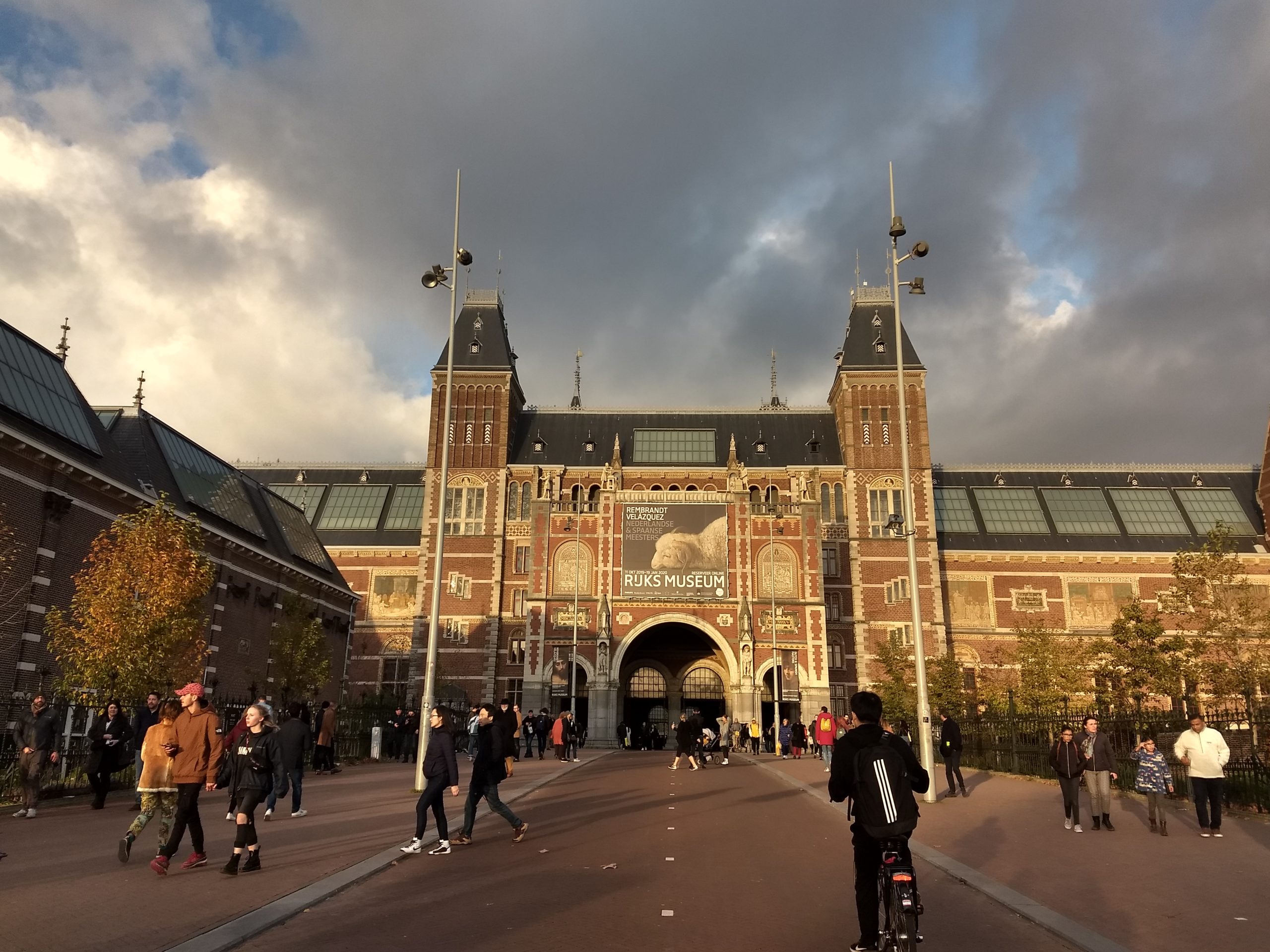
The Rijksmuseum is a jewel in Amsterdam’s glorious crown. While the tickets are 20 euros each, every one of those euros are worth it. This collection of masterpieces is among the greatest in the world and I count myself very fortunate in being able to have seen it. This post shall contain my three highlights from the museum and one or two from the temporary exhibition, depending on how I feel by the end of this post.
My first highlight is the magnificent Fishing for Souls, by Adriaen Pietersz. This 1614 piece is not only technically brilliant but it also tells a tale of the political geography of the time. One can see Protestants on the left and Catholics on the right, both trying to strengthen their number by gathering lost souls. Observe the vivacity of the colours here, the contrast is quite striking. Also impressive is the amount of space between the two rivalling factions and what fills this space. Finally, the seemingly metallic rainbow which unites and frames the painting is quite wonderful. A bright future ahead indeed.
At the left are Protestant ministers and leaders of the Republic (including Maurice), and at the right the archdukes who govern the South, with countless Catholic clergymen. The North, according to the painter, has a promising future: the sun shines there, the trees are full of leaves. Whosoever wants to be saved is better off swimming to a Protestant boat. Rijksmuseum
Secondly, I should like to talk about A Windmill on a Polder Waterway, Known as ‘In the Month of July’ A Windmill on a Polder Waterway, by Paul Joseph Constantin Gabriël. This piece, thought to have been painted around 1889, is in my view a masterpiece. This is the piece I stood for the longest time admiring, not least because of its enormous size. I bought a print of this piece from the gift shop and it hangs proudly above my bedside table.
Everything about this piece is masterly, but I think what chiefly caught my critical eye was the excellent rendering of the reflection. The way one discovers even more about the scene through it is quite fantastic. The brush strokes are deliberately visible, which I like provided the subject matter at the end is well presented. Further, the variety and brightness of the colours used were unusual for Dutch painters of this era. Overall a superb work.
‘Our country is saturated with colour. … I repeat, our country is not grey, not even in grey weather, nor are the dunes grey’, wrote Constant Gabriël in a letter. Unlike many Hague School painters, he actually enjoyed depicting a beautiful summer day. There are even two of them in this painting: the image of the grass, sky and mill, and their reflection in the water. Rijksmuseum
The final highlight for me was a sculpture, Samson Slaying Two Philistines, by Paul Heermann created circa 1700. This level of intricacy reminds me of my favourite sculpture in Naples, Disillusion Francesco Queirolo, 1753-54. A wonderful article on the sculptures in the Capella Sansevero here.
But back to the sculpture at hand, the first point to note is the scale. This piece was 15cm in height. So intricate! The detail in the musculature is extraordinary. The ribs protruding from exertion; the precision in the depiction of the knee bone; the shoulder blade. Every element of this piece was meticulously thought out and is deeply impressive.
This is a copy of a famous lost statue that Michelangelo made around 1527, just before Heemskerck arrived in Rome. The Italian genius was an endless source of inspiration and perhaps also of competition for the ambitious Heemskerck. He incorporated elements of Michelangelo’s sculpture into two of his Strong Men, namely Hercules Slaying the Centaur Nessus in this gallery and Samson Slaying the Philistines (Allen Memorial Art Museum, Oberlin, USA). Rijksmuseum
My final highlight comes from the temporary exhibition at the Rijksmuseum. The Threatened Swan, Jan Asselijn, created circa 1650 struck me. This is due in part to my knowing the painting beforehand, having read about it on the app Daily Art, which sends me daily pieces of art and detailed explanations of each piece.
What most shocked me about this painting I wonder? Perhaps the dew falling from the webbing of the right foot, indicating movement. I think the depiction of the defensive pose is superlative. I also like the dog in the corner making its advance. The swan’s beak also is particularly spectacular.
A swan fiercely defends its nest against a dog. In later centuries this scuffle was interpreted as a political allegory: the white swan was thought to symbolize the Dutch statesman Johan de Witt (assassinated in 1672) protecting the country from its enemies. This was the meaning attached to the painting when it became the very first acquisition to enter the Nationale Kunstgalerij (the forerunner of the Rijksmuseum) in 1880. Rijksmuseum
Overall, The Rijksmuseum provided me with renewed adoration of art as a form and Dutch artists in general. The building itself is magnificent as well, which is an added bonus. I recommend it most heartily.
PS: In case you didn’t know today is my birthday and to stifle the inevitable arrow of time and stop me ageing, I shall need as many compliments as possible. “Oh how very young you still look for your age” etc. Thank you!
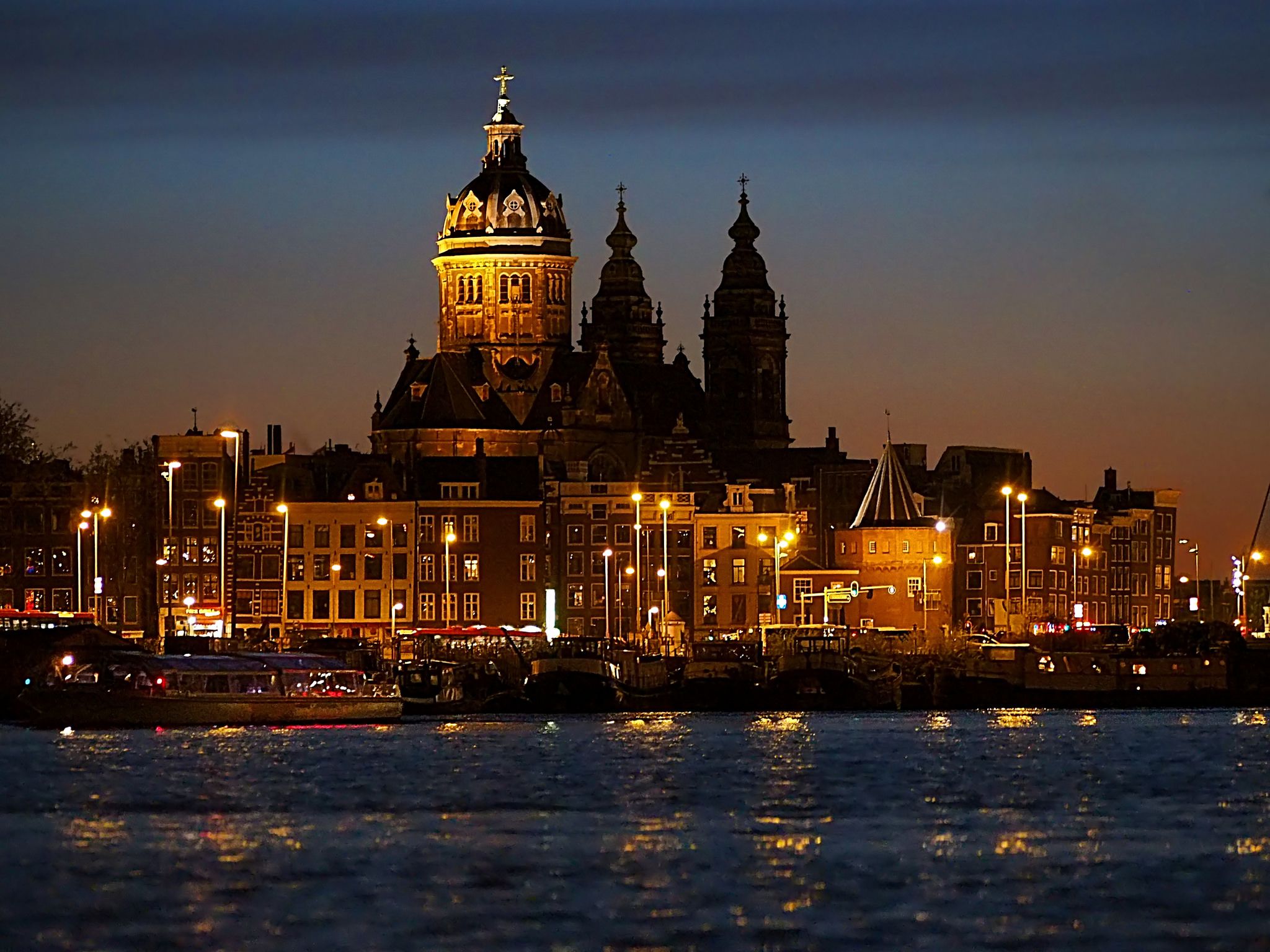
Recently I had the grand and heady pleasure of being in Amsterdam. In so going I had planned to avoid sobriety for all of one hour. This was of course the hour of Mass, which I spent solemnly (pun intended) at the Basilica of St Nicholas. Though only 125 years old, this church was uniquely fascinating and undoubtedly splendid.
The church is built on a previously urban site, necessitating a northwest-southeast axis to be adopted, rather than the standard east-west axis. It lies between the street, Prins Hendrikkade, and the canal, Oudezijds Kolk. When built, the church was called St. Nicholas inside the Walls, i.e. inside the Amsterdam City wall, the oldest part of the Amsterdam defence works. The architect, Adrianus Bleijs (1842-1912) designed the church based on a combination of several revival styles: the most prominent being the Neo-Baroque and neo-Renaissance. Wikipedia
I was criticised last time I posted anything to do with Mass so I shall jeep well away from the subject, suffice to say that the service was rather Dutch and completely unintelligible. I did not comprehend a word of De Heilige Liturgie van de Dertigste Zondag door het jaar. But perhaps this is just as well.
The main facade is flanked by two towers, with a rose window in between. The centre of this window contains a bas-relief sculpture, depicting Christ and the four Evangelists, made in the Van den Bossche and Crevels workshop in 1886. A sculpture of the patron saint of both the church and the city of Amsterdam is also placed in a niche in the upper section of the gable top. The well-known sculptor Bart van Hove (1850-1914) made the sculpture in 1886. Wikipedia
Overall I was impressed, though did not fully appreciate, the magnificent grandeur of this place of worship. And an added benefit of this post is that it falls on my Father’s birthday. Being not in the least bit Catholic, this is sure ti iritate him slightly, which is ever son’s duty in the end.
Bleijs used a variety of revival styles during his construction of the church. Baroque and Renaissance are the two most prevalent styles that are seen. The beautiful façade has a rose window situated perfectly between the two towers and is the main focal point of the exterior. There is a stunning bas relief depicting Chris that was created in 1886. The relief was made by Van den Bossche in his workshop and includes the four Evangelists with Christ. Netherlands Tourism
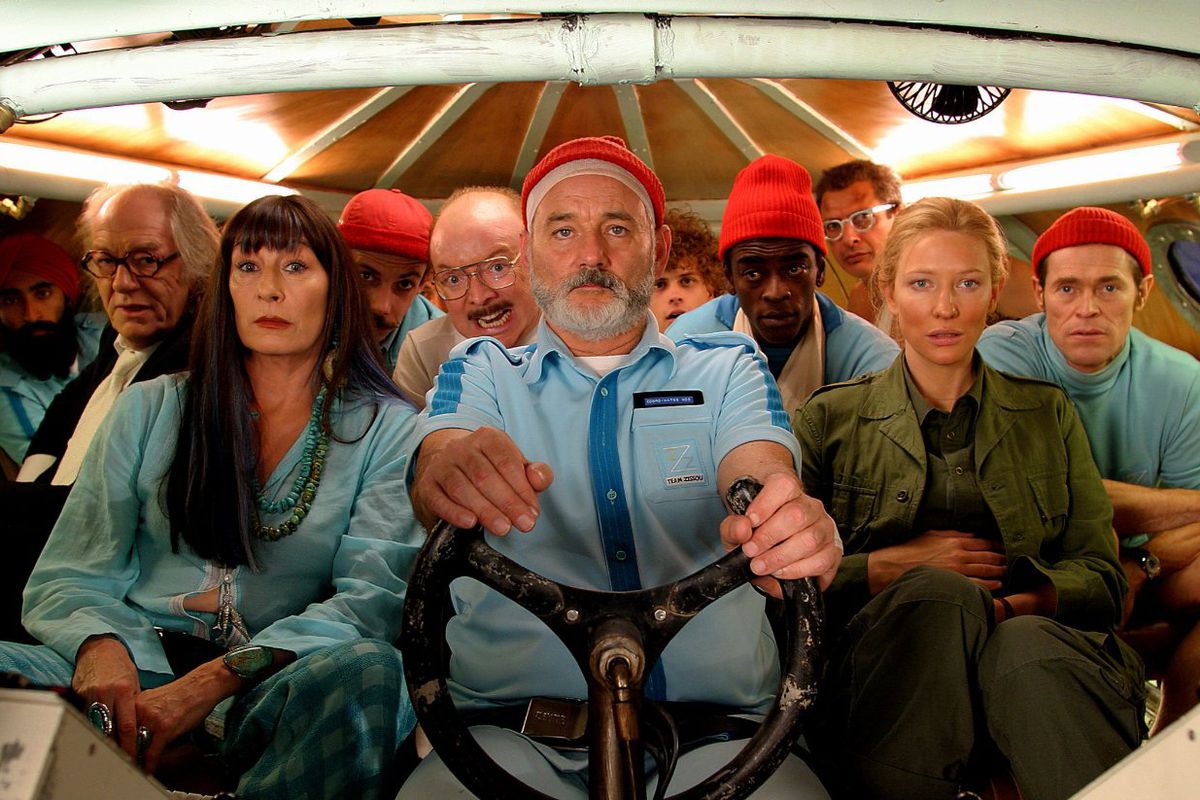
This eye catching headline does not do justice to the depth (pun intended) of wonder and awe which this film inspires in me. I think this is a tremendously accomplished film in terms of visual impact and power of plot. At the end, one feels compelled to love each of the characters and see their unique place in this extraordinary story.
Having recently lost his closest friend to the jaws of a strange sea predator, oceanic adventurer-cum-filmmaker Steve Zissou (Murray) sets out to find and kill the beast he’s dubbed the “jaguar shark”. Along the way, though, he has to deal with a prim Brit journalist (Blanchett), a man claiming to be his son (Wilson), and impending financial ruin. Empire
I’ve often decried my status as a film critic. This perceived status is most obviously a sham, I am a food critic at best and pompous, pious snob at worst. But this film is close to my heart. A dear friend of mine, Emily, who is “in film”, invited me to a Wes Anderson All Nighter at the Prince Charles Theatre in London. This was during our second year at university. Being an impressionable child then I assented. What unfolded over the evening changed my perception of film and indeed my life. No film more so than The Life Aquatic.
The family’s kit, craft and uniform are quaintly marooned in the 1960s of Cousteau, while Zissou’s hated enemy and rival explorer Alistair Hennessey (Jeff Goldblum) luxuriates in state-of-the-art gadgetry. Willem Dafoe plays Zissou’s trusty crewmember Klaus; Anjelica Huston is his semi-estranged wife Eleanor, “the brains behind Team Zissou”; and Owen Wilson is aboard as Ned, a huge fan of Zissou and also his illegitimate son. The Guardian
This film is the most idiosyncratic of all the Wes Anderson films. It is without a doubt visually stunning. the character development is perhaps not the strongest I have seen in Wes Anderson filmography and the romance between Wilson and Blanchett was misplaces but then again so were they. This, like many Wes films, tells the story of a collection of outcasts fighting against a system which does not favour them. I suppose this is indicative of why it resonates with me so very much .
His slavish attention to music results in an interesting mix of laidback acoustic cover versions and deliberately dated, analogue-electro flurries. Empire
A true highlight for me is the soundtrack. Seu Jorge’s acoustic versions of dated Bowie hits were just perfection. Even when Indonesian pirates were boarding the Belafonte, he was strumming away with abandon. Jorge’s version of Life on Mars made me cry. Such a beauteous collection of timeless quality pieces is rare, though not so rare I suppose in Wes world (you’ll recall Nico’s These Days in The Royal Tenenbaums). And you’ll be glad to hear that the soundtrack is available on all good streaming services. Being a person of impossibly high taste, I found mine on Deezer.
Of course, the film’s most resonant moment is the climactic meeting between Zissou and the vividly animated jaguar shark, with the disparate crew united in awe for this near-mythical beast. “I wonder if it remembers me,” says the leader, fighting back tears, as the strings of Sigur Ros’s “Starálfur” swell in the background. The character, so hardened and disillusioned by life’s endless shitstorm, finally drops his guard. Esquire
Overall, an undeniable masterpiece. My favourite Wes Anderson film by far. This film moved me deeply and I have no doubt that overall, you’ll not fail to see it’s merit.