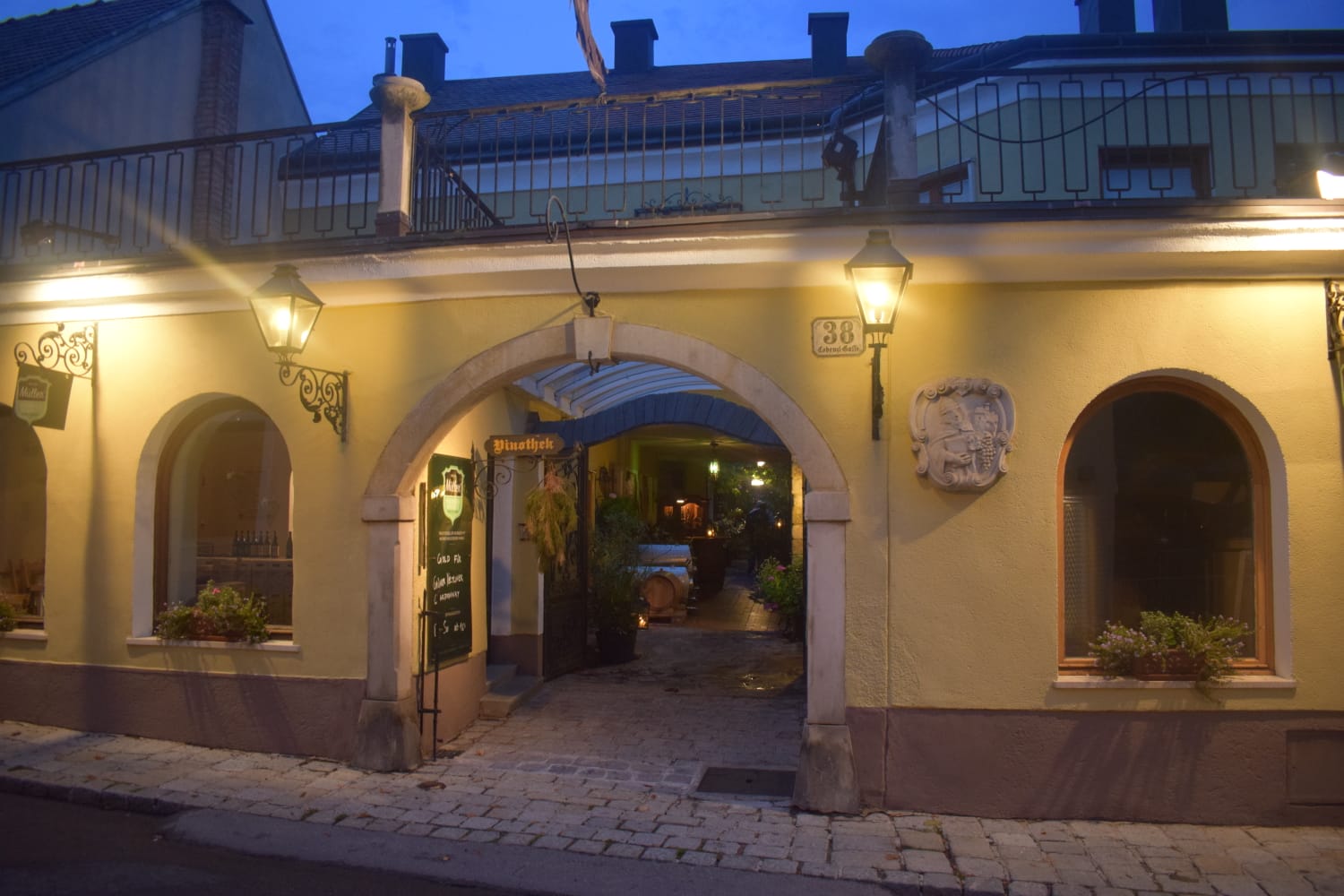
The Heuriger is an institution in Vienna. The idea is simple: serve new wines, locally sourced, together with a largely cold buffet, add some traditional Viennese songs in the background for some extra Gemütlichkeit, and watch the paying public come rolling on in. It’s easy to see why these wine taverns are so successful, especially the one dad and I visited in Grinzing, a suburb north of the city centre.
Heuriger translates to “this year’s wine” in Austrian and Bavarian dialects of German. The tradition of serving new wines like this dates back to the reign of enlightened Habsburg emperor Joseph II who decreed that his subjects could sell wine from their own properties without a special permit. Enlightened indeed! Grinzing itself has its own fair share of history. In Beethoven’s day it was a village outside the city walls, and the great composer visited here often to recover from his many illnesses, as well as famously nearby Heiligenstadt. Franz Schubert, too, came here often and I believe Einstein may have lived here briefly. Gustav Mahler is buried in the local cemetery.
Anyhow, I think that’s enough mention of dead people and cemeteries for one food review, let’s give some thought to the cuisine. Starting with the drinks. Pater and I enjoyed the local wines greatly, but the particular highlights were the Veltliner and Riesling (from Nussberg). No doubt a distinguished wine critic like Cedric would be able to tell you the various different flavours of fruit and vegetables these hinted at, but I also distinctly tasted wine alongside these.
The food is a kind of walk up to the stout waiter and ask for a plateful kind of affair, which suits me wonderfully because of my enormous gluttony. To start with we opted for a couple of small dishes, a variety of local cheeses, a salad of sliced carrots and sauerkraut, a tasty quiche and a dish of Speck accompanied by a rather long sausage.
For what I suppose might be described as the mains, dad and I went our separate culinary ways, himself opting for the mushroom goulash, yours truly judiciously choosing the Braten (roast pork). Both came with a big dumpling which soaked up the alcohol nicely.
The atmosphere is key to the success of this place. It’s convivial, and very Austrian. It’s the sort place you could see Brahms (the North German interloper to Vienna) turning up to, cigar in hand, to admire some of the Grinzing Fräulein or Schubert, rocking up with his circle of friends, drinking their wistful melancholy away.
I am pleased to say a storm interrupted proceedings halfway through, as if in homage to Beethoven’s sixth symphony. This was a quite a joy for dad and I as we appreciated mother nature’s knowing reference. The heavens soon cleared as well, and the two of us left this charming spot, with “Freude” in our hearts and wine in our guts.
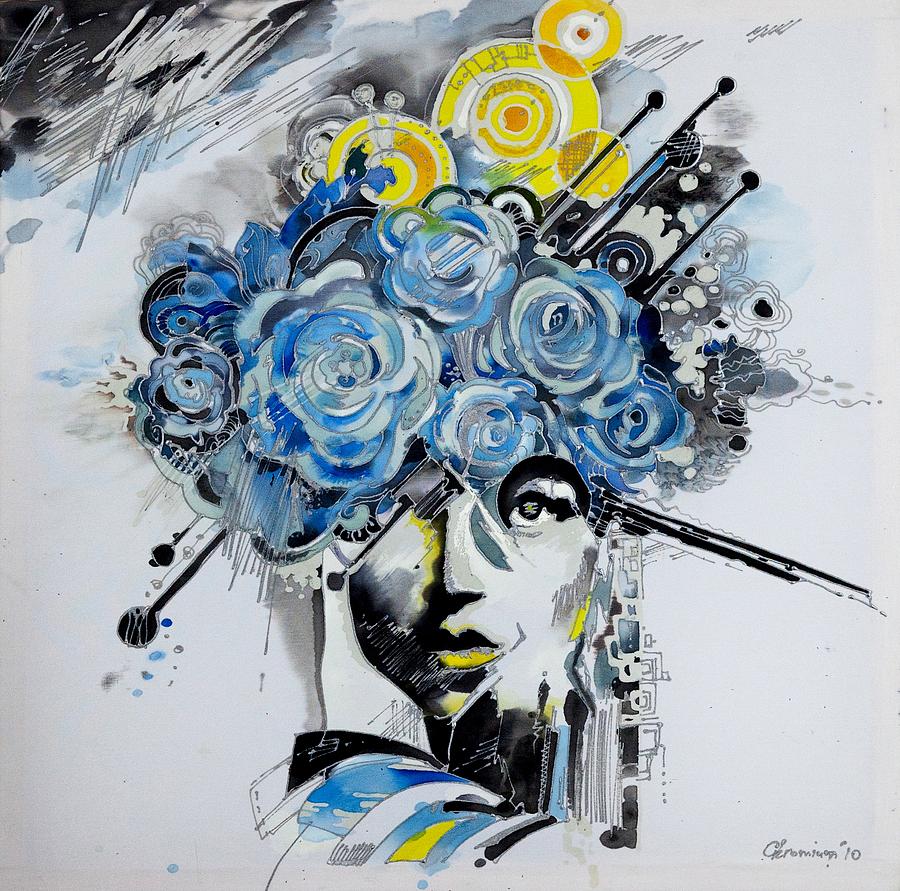
St Nick and I disagree on a host of conversational pieces, chiefly whether Britain should return to the gold standard. But one thing we can agree on is that I have written a few poems. Below is embedded one which came to me in a dream. Subsequently, I wrote it out with Louise while we were having lunch at Cafe Reem after Mass.
From the opening bars, one can tell that this offering from Metronomy is really quite singular. I have admired this British band for some time but hitherto only knew about their singles. Delving into their albums was nothing short of sheer joy. Indeed they released their latest, Metronomy Forever, this month. In a way it is a relief to hear comparatively less impressive music as it puts our most loved albums into perspective.
Anyway, on with the review. The eponymous track and We Broke Free, which follows it, can only be described as introductory. With few lyrics, the idiosyncratic rhythm which underpins all MEtronomy songs is still present. But these opening tracks set the tone for the rest of the album. The luscious We Broke Free follows giving me an isight into what Pitchfork describes as “low slung 70s studio rock”.
The group began in 2006 as glitchy electronic smirkers, proffering a garishly irreverent take on chinstroking IDM. Yet for their third full-length effort, The English Riviera, they’ve fully transitioned into a sleek, urbane pop-rock outfit, taking polished cues from the well-heeled likes of Steely Dan and Phoenix. Pitchfork
The Look is perhaps one of the band’s most known songs and with good reason. The track is beautifully polished. She Wants is reminiscent to me of Gary Numan circa The Fury/Telekon. The delicious underpinning synth gliding melody lends itself very nicely to the ear, and the Bass guitar is not to be underestimated. Though I must say Trouble is one of my favourites on the album. This is one of the tracks on the album which really involve the listener. It makes you sit up and listen, invites you to come with Metronomy along the soundscape they have created. Arguably, this makes it a quasi-masterpiece.
…vigorously scrubbed, songs like “Everything Goes My Way”, “The Look”, and “The Bay” reflect dance and indie sensibilities, aligning those efforts more closely with the likes of Phoenix, Hot Chip, Junior Boys, and Stars. Pitchfork
I only hesitate to call Trouble a masterpiece because The Bay follows it directly. This is the most known track by the band I should think, again, not without good reason. The Bay captures and entrhalls you from the opening bars. The bass made me get goosebumps and then… wait and see for yourselves if you haven’t already. This is one of the outstanding tracks from the album.
Loving Arms didn’t rub off on me as effectively as Metronomy would have liked. Pitchfork call it polished but I find it monotonous compared to the other tracks. Corrine is the last energetic offering on the album before the denouement begins. Some Written is more laid back than the rest before the ethereal finisher, Love Underlined. There is a tiny sample of Grace Jones (From Nightclubbing) in this track. See if you can spot it.
The English Riviera is an album about returning and starting again. The Look, lead single and first breakout hit for the band, begins with the lines “You’re up and you’ll get down/ You’re never running from this town”, a warning apparently straight from the school of small-town heartbreak. But it ends on a different note: “This town is the oldest friend of mine.” Maybe escaping home isn’t the point. It’s about returning home, returning to a lover perhaps, and seeing things afresh. The Guardian
Overall, I would say this album is a win for me. Metronomy found its voice in this 2011 work and I am privileged to be able to hear music of this quality. I really hope you enjoy it as much as I have.
Of course by the time I am writing this, it is too late to see these fabulous exhibitions. But I will waffle on regardless. The Lisson Art Gallery is what I would consider a hidden gem in Marylebone. The exhibition itself is split between two buildings on the same street. The first is at 67 Lisson St.
The highlight of the Afterimage exhibition was this piece by Wang Youshen. This stems from the 1993 exhibition he did titled ‘Newspaper/advertising’ where he plastered the Great Wall of China with newspaper articles.
The exhibition ‘Afterimage: Dangdai Yishu’ is divided into several interrelated chapters, in order to examine a moment in Chinese contemporary art that signifies both a break with the traditions or aesthetic value – based on technical skills advocated by Chinese art academics from the twentieth century onwards and a gradual shift into new subjectivities that resist traditional concepts relating to medium, authorship and meaning. Lisson Brochure
Across the road at the second gallery, or first depending on which way you’re running, This fabulous piece by Lin Tianmiao is known as ‘Protruding Patterns’. The media it is constructed from are carpets. Lin Tianmiao was one of the first contemporary Chinese artists to gain international recognition.
‘protruding patterns’ features words and expressions about women in various languages which were collected by Lin Tianmiao over the years. using novels, newspapers, and colloquial dialogue as sources, the artist gathers phrases that demonstrate the power of language in reinforcing sexist attitudes. this lexicon is woven into thickly raised wool forms, becoming tangible to visitors who can touch and walk on the carpets. Design Boom
What I found most amazing about this piece was not the intricacy of the woven fabric but rather how interactive it was. One could and indeed should walk freely among this work and enjoy every aspect of it. The white walls surrounding it force your focus onto the colourful patterns beneath you, which I found quite striking.
All information on the current exhibitions can be found here.
Please do visit this fantastic free gallery if you have the time and inclination. You won’t be disappointed.
Many people have inquired from me how to go about life without being blown-over with awed appreciation. To this I invariably reply that one should start by not asking for restaurant recommendations from Cedric Conboy. You see this mutual friend of ours has an extraordinary knack of finding eateries that make one’s jaw hang open. I don’t suppose that Cedric has ever visited Melk, yet when Dad and I turned to him for a place to have dinner in the charming little town during our recent cycle ride along the Danube, he came up with the goods as if he were a lederhosen-wearing local named Friedl.
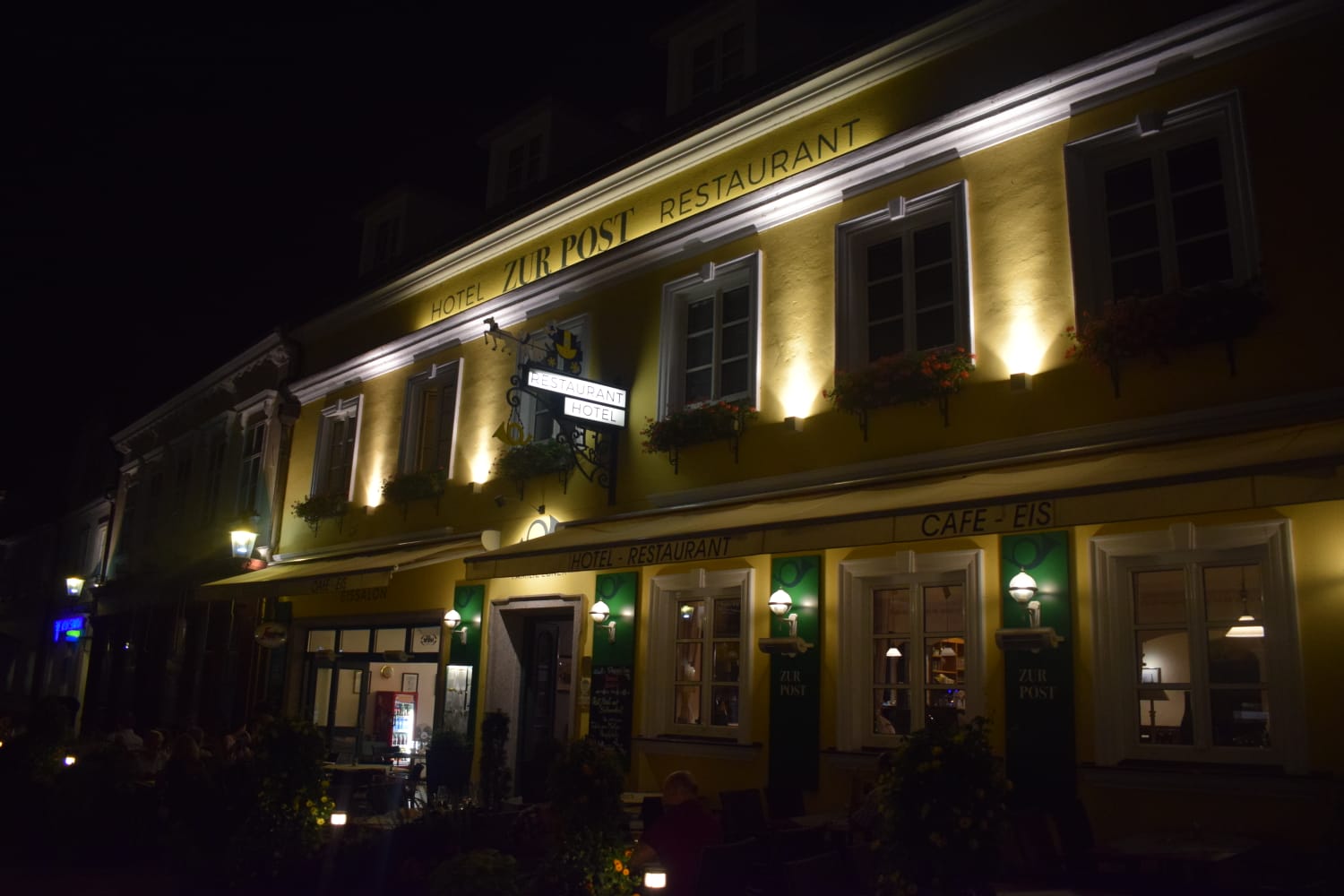
Hotel zur Post is a delightful little haunt with a stunning view of the Benedictine monastery. It’s traditional, family run, with excellent quality to match. Father and I kicked off the proceedings with a glass of the local beer which went down very nicely after a long day’s cycling, believe me. After this we ordered a bottle of Veltliner and eagerly awaited our mains.
The Paterfamilias had ordered a sumptuous dish of chicken breast with a tomato, basil and mushroom sauce complete with small dumplings. By the look of things he enjoyed this greatly. Which is the least that can be said of what I thought about my exquisite main: taglioni in a truffle sauce with Danube crayfish.
If I had any great knowledge of food, cooking or indeed even the most basic insight into either, I could tell you why I found it so delicious. But as I don’t, I can only say it was tasty. In fact, it was bloody tasty.
On to the deserts, Pop Jenkins opted for a gooseberry tart for reasons unbeknownst to me. I, on the other hand, judiciously selected the Topfenstrudel, cream cheese strudel, which was very nice. Presumably this had something to do with how the chef prepared it, but I haven’t the foggiest.
We ended the evening with a drop of Apricot Schnapps, or Marillenschnapps, and parted ways with Hotel zur Post on the most cordial of terms. Praise must be heaped on this worthy establishment, as it must be on the man who recommended it.
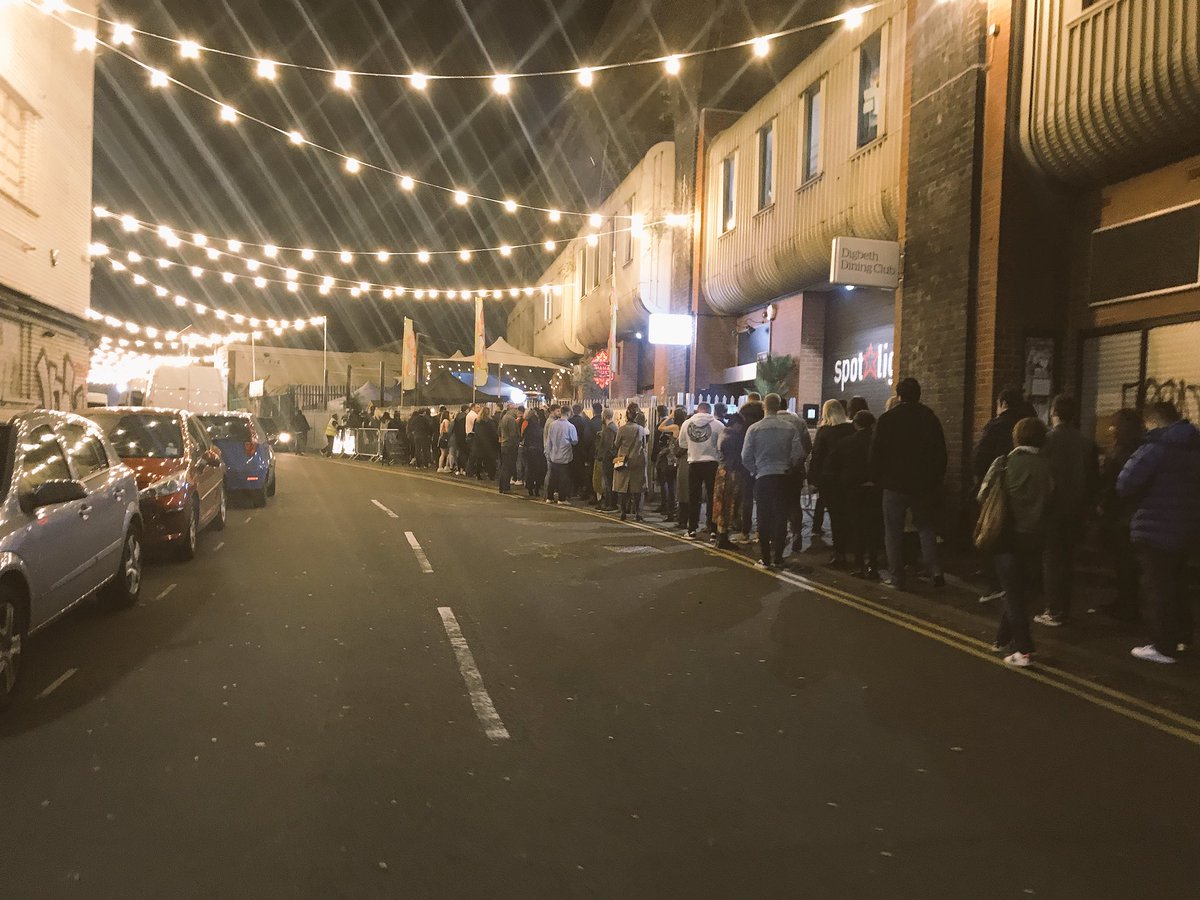
Those of you who haven’t heard of Digbeth Dining Club must be deaf. Being such a large collective of individual retailers, I have not known how to broach the subject on Cedric Suggests. It dawned on me, mid munch, that I should just review each individual stall. This approach has two main benefits. Firstly, you get to read in depth reviews about stalls to better inform your Digbeth purchases. Secondly, I get to eat a lot of food at each stall. Winner winner, burger for dinner. That’s how it goes, right?
The monstrosity you see before you is called the Piggy Bank. The rather moribund title derives from the black pudding, pork crunch and bacon which top the generous beef patty. Now, before you spit out your tea, consider that this was my second course. Now you may spit out your tea.
The seeded brioche bun was a thing of beauty also. The burger was held together by mustard, mayonnaise, ketchup and gherkins, all of which only added to the brilliance and cholesterol of this burger. I recommend it to those of you who are up for a challenge. You get a lot for your £8.
The first time I went to this place, I had a sweet burger. Now, having eaten burgers all over the world, this was a first for me. The Sweet Freak consists of a beef patty, bacon, peanut butter, sweet chilli jam, caramel, a waffle, cheese and maple syrup. If you thought the first one was unhealthy, you were right. This one too is a shock to the cistern.
Digbeth is a wonderful part of town and ought to be spoken of more often and more highly. I encourage you to go and sample the Dining Club’s fine wares on your next weekend evening. Please note they are not open in the week.